
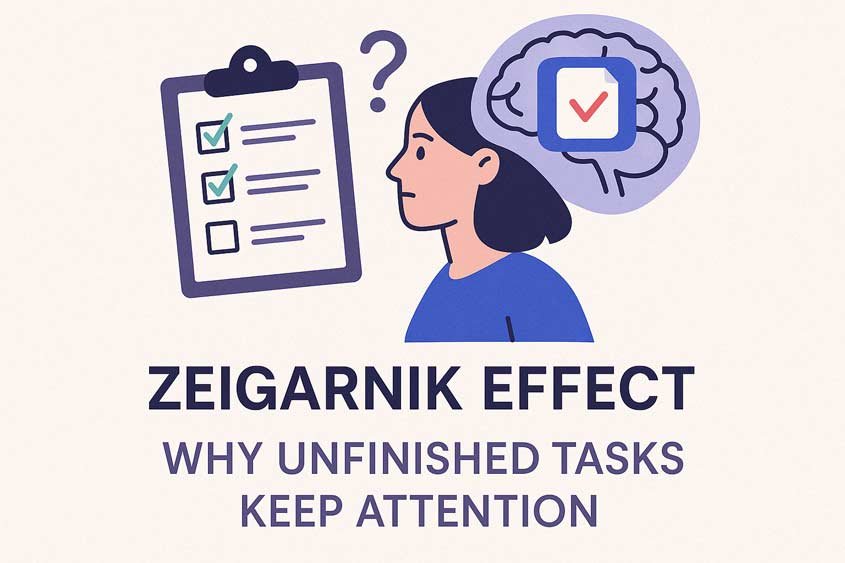
Imagine scrolling through your favorite streaming app and seeing a series with a cliffhanger ending. You can’t help but click “next episode,” even if you promised yourself only one. That itch you feel—that nagging pull to finish what you started—is exactly what the Zeigarnik Effect taps into. Named after Russian psychologist Bluma Zeigarnik, this effect highlights a simple yet powerful truth about human attention: unfinished tasks stick in your mind far longer than completed ones.
In marketing, this isn’t just trivia. It’s a tool to guide choices, influence behavior, and keep potential customers engaged. You’ve probably encountered it more than once without even realizing. Think about those quizzes that stop at “Step 3 of 5” or subscription pop-ups that say, “You’re almost there!” They leverage your brain’s natural discomfort with incompleteness to push you forward.
Table of Contents
The core of the Zeigarnik Effect is mental tension. When a task is incomplete, your mind holds it in a sort of limbo. This mental “open loop” makes the task top-of-mind, often subconsciously nudging your actions. It’s why we remember interrupted conversations more vividly than ones that concluded, why partially read books linger in our thoughts, and why a shopping cart left halfway through checkout haunts your browsing later.
Marketers pair this with other triggers—like scarcity or social proof—to maximize impact. For instance, a flash sale that “expires soon” combines incompleteness with urgency, giving your brain multiple nudges to act. Gamification apps use levels and progress bars to make you want to complete missions. Even email campaigns play the game subtly: an unfinished survey or a pending review request prompts return visits.
But there’s more than just clever tactics. The Zeigarnik Effect also offers insight into attention management. In a world overflowing with notifications, ads, and choices, creating a small unresolved task or hint can cut through the noise. It’s about creating an open loop that draws the mind back—without being manipulative. Done right, it feels natural. Done wrong, it feels pushy.
We’ll break down exactly how the Zeigarnik Effect works, explore why it matters in marketing, and show real-world examples that prove its power. You’ll see how brands use it strategically and what pitfalls to avoid, giving you actionable ways to ethically harness unfinished tasks to keep your audience engaged and your campaigns more effective.
We’ll also cover how consumers typically respond, and you’ll get practical tips to implement this in campaigns that make sense for your audience. By the end, you’ll understand why your brain refuses to forget incomplete tasks—and how marketers can ethically leverage that for attention, engagement, and conversions.
Understanding Zeigarnik Effect
The Zeigarnik Effect isn’t some obscure psychological trivia—it’s a window into how your mind clings to unfinished business. In simple terms, it’s the tendency of people to remember incomplete or interrupted tasks better than completed ones. You might think memory is mostly about what we consciously focus on, but this effect shows your brain has its own way of prioritizing open loops. In marketing, that “open loop” becomes a subtle nudge, keeping your attention on a product, service, or idea long after the initial encounter.
Origins and Psychology Behind It
Bluma Zeigarnik, a Soviet psychologist in the 1920s, first observed this effect while watching waiters in a busy café. She noticed that they remembered orders that were in progress far better than orders that had already been served. It wasn’t just about task difficulty or interest; it was the incompleteness itself that made a task stick in memory.
From a cognitive perspective, unfinished tasks create a tension in your mind—a small mental itch that your brain wants to scratch. Once a task is complete, that tension disappears, and your attention moves on. This mental “holding pattern” is automatic. You don’t have to consciously think about it; your brain keeps looping the incomplete task in the background, nudging you to resolve it.
How It Influences Attention
In marketing terms, the Zeigarnik Effect is a goldmine. Your attention is a scarce resource, and brands constantly compete for it. When a task is left incomplete—say, a quiz stopped at question three or a shopping cart abandoned halfway through checkout—your mind naturally wants closure. This means that even if you walk away, the brand or product stays active in your thoughts.
The effect isn’t limited to obvious tasks. It also works with stories, hints, and unfinished narratives. A teaser video that stops just before a reveal, or a suspenseful social media post that leaves you hanging, triggers the same cognitive tension. Your mind keeps running the scenario, looking for resolution. That’s why marketers love cliffhangers—they’re mental placeholders that keep your attention.
Behavioral Triggers Linked to Zeigarnik Effect
The Zeigarnik Effect often interacts with other psychological triggers, creating compound influence:
1. Scarcity
An incomplete offer or limited-time deal doesn’t just tug on your sense of urgency. It also triggers the Zeigarnik Effect by leaving the opportunity unresolved. You remember it longer because it’s incomplete, increasing the chance of action.
2. Progress and Gamification
Completion bars, checklists, and step-by-step processes exploit the effect naturally. Each uncompleted step becomes a small mental tension point. Apps like Duolingo or fitness programs thrive on this—your brain wants to see the green progress bar all the way filled.
3. Curiosity
Curiosity itself feeds off incompleteness. If you only get part of a story or partial information, your brain wants closure. That’s why cliffhangers in content marketing or teaser campaigns are so effective—they leave you itching for resolution.
Examples Across Industries
- E-commerce: Abandoned shopping carts are classic Zeigarnik Effect triggers. Brands follow up with reminder emails, knowing your brain is still “holding” that incomplete purchase.
- Entertainment: Streaming services design shows with cliffhangers and multi-episode arcs. The unresolved plot hooks keep you binge-watching.
- Education and eLearning: Online courses show progress bars and incomplete modules to motivate users to finish. That tiny visual cue keeps attention and encourages return visits.
- Email Marketing: Partial surveys or “almost completed” profile setups remind you to come back, leveraging the discomfort of incompleteness.
Why Marketers Should Care
Understanding this effect isn’t just academic—it’s practical. It’s about predicting human behavior in real-world decision-making. When you know your audience is more likely to act on incomplete tasks, you can design campaigns that respect attention while subtly nudging action. This isn’t manipulation if applied ethically; it’s guiding natural cognitive tendencies.
The Zeigarnik Effect also reveals a deeper insight into consumer psychology: people are wired to finish what they start. That insight alone informs product design, content strategy, and even customer service. Any time your customer starts an interaction but doesn’t finish, you have an opportunity to create a gentle nudge, a reminder, or a reason to return.
The Psychology Behind It
The Zeigarnik Effect isn’t magic—it’s a very human response to unfinished tasks. To see why it works so reliably, you need to look under the hood of attention, memory, and motivation. Your brain treats incomplete tasks as unresolved tension, creating a mental “sticky note” that keeps resurfacing until closure is reached. In marketing, understanding this mechanism allows you to design campaigns that naturally pull attention and influence behavior. Let’s unpack how it works, step by step.
Mental Tension and Open Loops
At its core, the Zeigarnik Effect operates through mental tension. When you start a task but don’t finish it, your brain experiences a small, persistent stress signal. This isn’t anxiety in the traditional sense; it’s a low-level alert that says, “This isn’t done yet.” Your mind prioritizes incomplete tasks over completed ones, keeping them top-of-mind.
This “open loop” can apply to anything—a physical task, a decision, or even just partial information. For example, if you’re reading a compelling article that stops mid-story, your brain holds the narrative in memory, nudging you to return. This tension is the psychological engine that marketers exploit to maintain engagement.
Memory Enhancement Through Interruption
Another fascinating layer of the Zeigarnik Effect is how it enhances memory. Studies show that people recall interrupted tasks or events more vividly than completed ones. Your mind creates a stronger cognitive trace for tasks left unresolved.
Why does this happen? Partly because the tension generated by incompleteness engages your working memory continuously. While completed tasks fade into mental background, open tasks remain active. This effect isn’t just theoretical—it explains why cliffhangers in shows, suspense in storytelling, and “step-in-progress” features in apps all work so effectively.
Step-by-Step Process of the Zeigarnik Effect
Here’s a clear breakdown of how this trigger operates in practice:
- Step 1: Initiation – The task or experience begins. It could be reading an article, filling a form, or starting a purchase. Your brain engages attention to process the task.
- Step 2: Interruption or Partial Completion – The task remains unfinished, either intentionally (a marketing tactic) or naturally (distraction, delay). This creates cognitive tension.
- Step 3: Mental Retention – Your mind keeps the incomplete task active, often subconsciously, seeking closure. This is the “sticky note” effect.
- Step 4: Motivation to Complete – The tension generates an urge to finish what was started. You’re more likely to return to the task than if it had been completed immediately.
- Step 5: Closure and Reward – Once the task is completed, the tension resolves. Your brain experiences satisfaction, reinforcing the behavior for future interactions.
Interaction With Other Psychological Triggers
The Zeigarnik Effect doesn’t operate in isolation. Marketers often combine it with complementary triggers to amplify results:
1. Curiosity
Curiosity thrives on incompleteness. A teaser ad, a suspenseful narrative, or a partially revealed feature activates both Zeigarnik tension and curiosity. You want closure not just because it’s unfinished, but because your brain craves understanding.
2. Commitment and Consistency
When someone starts a process, they’re more likely to continue to maintain internal consistency. This plays directly into the Zeigarnik Effect: once started, an unfinished action becomes psychologically uncomfortable, motivating completion.
3. Social Proof
If your task involves seeing others engage, the effect intensifies. Watching peers complete a challenge or interact with a product makes your brain more sensitive to your own incomplete status.
Why Your Brain Hates Leaving Things Unfinished
The underlying psychology is surprisingly simple: humans evolved to monitor incomplete tasks for survival and efficiency. Remembering unfinished actions—like gathering food or maintaining social bonds—was advantageous. Today, that same mechanism shows up in everyday behaviors: you leave a form half-filled online, forget a chore at home, or skip part of a video—but your brain keeps nudging you to finish.
In marketing, this is a powerful lever. You’re not forcing someone to act—you’re working with an automatic cognitive bias. It’s about guiding attention and creating gentle nudges that feel natural, even enjoyable.
Practical Implications for Marketers
Understanding this process is key to designing campaigns that actually work. Consider:
- Gamified Apps: Progress bars, incomplete missions, or levels leverage tension and reward cycles.
- E-Commerce: Abandoned cart emails are classic, leveraging both tension and mild FOMO (fear of missing out).
- Content Marketing: Cliffhangers, partial information, and multi-part series keep readers engaged over time.
- Email and Surveys: Reminders for “almost completed” forms or unfinished profile setups tap directly into the effect.
Each use follows the same psychological path: engagement → partial completion → tension → motivation → resolution. This process can be repeated across touchpoints, making your marketing both sticky and effective.
Why It Matters in Marketing
The Zeigarnik Effect isn’t just an interesting psychological quirk—it’s a tool with real impact on how people make decisions. In marketing, attention is currency, and incomplete tasks are like magnets for the mind. They create mental tension that keeps your audience engaged, nudging them toward action without feeling pushy. Understanding this effect allows marketers to design campaigns that guide behavior naturally, ethically, and effectively.
Driving Engagement Through Unfinished Experiences
At its core, marketing is about engagement. Whether you’re building awareness, encouraging a purchase, or fostering loyalty, you need the audience to stay focused on your brand. The Zeigarnik Effect makes this easier because incomplete experiences stick in memory.
Think about a quiz that stops mid-way, a product demo that only hints at benefits, or a multi-step registration process. These unfinished tasks leave an “open loop” in your audience’s mind. The discomfort isn’t negative—it’s motivating. People naturally seek closure, which means they’re more likely to return, interact, and eventually convert.
Influencing Consumer Decisions
The Zeigarnik Effect subtly shapes decision-making by creating an internal push to complete tasks. Your brain prefers resolution, which makes unfinished processes psychologically uncomfortable. Marketers leverage this tension to guide behavior:
- Purchase Completion: Abandoned cart emails remind you that your checkout is unfinished, often nudging a purchase.
- Content Consumption: Multi-part blog series, video episodes, or cliffhangers keep readers or viewers returning for more.
- Lead Generation: Partial surveys or incomplete sign-ups prompt follow-ups, increasing conversion rates.
This isn’t manipulation—it’s alignment with natural cognitive tendencies. By leaving small tasks unfinished, brands help consumers focus, prioritize, and follow through.
Integrating With Other Marketing Triggers
The Zeigarnik Effect often works best alongside complementary psychological triggers. Combining it with these amplifies engagement and conversion:
Scarcity
When an offer is limited, incompleteness is heightened. For example, a “Finish your purchase before stock runs out” message blends Zeigarnik tension with urgency.
Social Proof
Showing that others are completing tasks—like seeing friends finish a challenge—creates a subtle pressure to act, reinforcing the need to complete unfinished actions.
Commitment and Consistency
Once someone starts a process, leaving it unfinished creates internal tension. People want to stay consistent with their behavior, so they are more likely to complete the task.
Curiosity
Partial information, teasers, and previews keep your audience mentally engaged. The Zeigarnik Effect makes the unresolved content memorable, while curiosity makes it compelling.
Examples Across Marketing Contexts
- E-Commerce: Half-filled shopping carts trigger follow-up emails, sometimes with incentives. Your brain remembers the uncompleted purchase, increasing the likelihood of return.
- Gaming and Apps: Progress bars, level completion, and mission tracking exploit mental tension to keep users active daily.
- Content Marketing: Series, cliffhangers, or “Part 1 of 3” labels hold attention across multiple sessions, ensuring the audience stays connected with the brand.
- Education Platforms: Online courses show incomplete modules or percentages completed to encourage continued engagement.
Practical Ways It Shapes Decisions
Here’s a breakdown of how the Zeigarnik Effect influences consumer choices:
- It keeps your brand top-of-mind without being intrusive.
- It encourages return visits or follow-ups by creating an internal nudge.
- It increases completion rates for forms, purchases, or subscriptions.
- It makes multi-step experiences more compelling and addictive in a positive way.
- It strengthens engagement with content by keeping partial stories or information active in memory.
Why Marketers Should Pay Attention
Ignoring the Zeigarnik Effect is like leaving money on the table. Most campaigns fail to capitalize on the mental tension your audience already experiences. By designing tasks or content that remain partially unresolved, you not only capture attention but also guide natural behavior. This effect gives you leverage without needing gimmicks or aggressive tactics. It’s subtle, ethical, and highly effective.
When used thoughtfully, it complements other behavioral triggers—like social proof, scarcity, and commitment—creating campaigns that feel organic while maximizing results. Consumers respond naturally because the tension isn’t forced; it’s intrinsic. That makes your marketing stick in memory, increase engagement, and ultimately, boost conversions.
Zeigarnik Effect Real Case Studies
The Zeigarnik Effect isn’t just theory—it’s actively shaping campaigns across industries. By creating small gaps or incomplete experiences, brands can engage consumers’ attention and nudge behavior without overt persuasion. Let’s look at a few real-world applications that show this trigger in action.
E-Commerce – Abandoned Cart Recovery
One of the clearest examples is e-commerce platforms targeting abandoned shopping carts. Studies indicate that roughly 70% of online shopping carts are left incomplete. Major retailers, including Amazon and Shopify-powered stores, send reminder emails within hours of abandonment. These messages often highlight the unfinished purchase with subject lines like “You left something behind” or “Your cart is waiting.”
The Zeigarnik Effect is at play here: your brain remembers the uncompleted task, creating mental tension. The reminder email acts as a gentle nudge, increasing the likelihood of completion. Data shows that abandoned cart emails can recover up to 10–30% of lost sales, demonstrating how unresolved tasks translate directly into revenue.
Streaming Platforms – Cliffhangers and Episodic Content
Streaming services like Netflix and Disney+ heavily rely on the Zeigarnik Effect. Multi-episode series with cliffhangers are designed so viewers leave a story unresolved at the end of each episode.
Research in media psychology confirms that viewers are more likely to continue watching when episodes end on suspenseful notes. Netflix’s auto-play feature further leverages this by starting the next episode immediately, reducing the friction of returning manually. The incomplete narrative engages attention and fosters binge behavior—demonstrating how the Zeigarnik Effect drives repeated interaction and keeps users subscribed over time.
Education and Gamified Platforms – Progress Bars and Levels
Online learning platforms like Duolingo or Coursera and gamified apps like Habitica exploit the Zeigarnik Effect through progress indicators. When users complete a portion of a course or a level, the system highlights what remains unfinished with visual cues like progress bars or checkmarks.
Studies in behavioral science show that these visual “open loops” increase completion rates. Users are motivated to finish modules or levels, not just for the content, but to resolve the cognitive tension created by the uncompleted progress. This strategy demonstrates the effect in action beyond traditional marketing, yet still directly shaping behavior through task completion.
Summary of Insights
Across these examples, a pattern emerges:
- E-commerce uses unfinished purchase reminders to recover revenue.
- Streaming platforms create narrative tension to increase engagement.
- Educational and gamified apps leverage progress tracking to boost completion.
In each case, the Zeigarnik Effect turns incomplete tasks or experiences into mental nudges that influence action. The key is subtlety: the consumer is motivated by natural cognitive tendencies rather than external pressure.
By studying these cases, marketers can understand how to ethically apply the effect across industries. Whether it’s a small purchase, a long-form content series, or an interactive app, leaving tasks unfinished creates engagement that lasts beyond the initial interaction.
How Consumers React
When brands use the Zeigarnik Effect effectively, the responses aren’t theoretical—they’re observable in behavior, engagement, and even purchase patterns. Understanding how consumers respond allows marketers to predict actions, design better campaigns, and avoid potential pushback. This section breaks down typical audience reactions, showing what happens in real-world scenarios when attention is held by unfinished tasks.
Mental Stickiness and Recall
One of the most immediate reactions is what psychologists call “mental stickiness.” Incomplete tasks remain active in memory far longer than completed ones. Consumers often recall unfinished experiences without consciously trying to.
For example:
- You browse a product catalog but don’t finalize a purchase. Hours or days later, you still think about the item.
- You start a quiz or survey but leave it mid-way; you remember the questions and feel a subtle urge to complete it.
- You watch the first episode of a suspenseful series; the unresolved ending keeps the story fresh in your mind.
This heightened recall is a direct result of cognitive tension created by incompleteness. It ensures that brands remain top-of-mind without constant advertising or intrusive reminders.
Motivation to Complete
The Zeigarnik Effect generates an internal pull toward closure. Consumers often feel an almost subconscious drive to finish what they started. This is observable in multiple ways:
- Returning to complete an abandoned shopping cart.
- Clicking through to finish a multi-step registration process.
- Resuming a course or game level left incomplete.
This motivation is stronger when paired with positive reinforcement or small rewards. The tension created by the incomplete task becomes a nudge that feels natural, not manipulative.
Increased Engagement Patterns
Beyond recall and motivation, incomplete tasks can increase engagement frequency. Consumers often check back more than once, re-engaging with the brand or platform.
- Multi-step content series: readers or viewers return to consume the next installment.
- Gamified apps: daily logins increase as users aim to complete progress bars or levels.
- Email campaigns: reminder emails for unfinished forms, profiles, or purchases see higher click-through rates than general promotional messages.
Behavioral Observations in Everyday Contexts
The Zeigarnik Effect manifests in both online and offline environments. Some common observable behaviors include:
- Revisiting websites or apps without external prompts.
- Completing tasks that were left partially done, even when the initial motivation has faded.
- Experiencing minor cognitive tension—thinking about unfinished tasks during unrelated activities.
- Engaging with follow-up prompts, notifications, or reminders at a higher rate.
Understanding these responses allows marketers to ethically leverage the Zeigarnik Effect. You can design campaigns that guide attention and action naturally, creating satisfying experiences rather than pushing consumers with aggressive tactics.
How Brands Use It Effectively
Brands that understand the Zeigarnik Effect don’t just create unfinished tasks—they craft experiences that guide attention, increase engagement, and encourage action ethically. This trigger works best when it aligns with consumer goals rather than forcing behavior. When applied thoughtfully, it helps brands maintain top-of-mind presence, boost conversions, and enhance loyalty.
Creating Open Loops
The first step in practical application is designing open loops—moments or tasks that remain incomplete. Brands do this by giving just enough information, stopping short of full resolution, or structuring experiences in stages.
Examples include:
- Teaser Campaigns: Ads that hint at a product feature or benefit without revealing everything, prompting curiosity and return visits.
- Progressive Disclosure: Multi-step forms, surveys, or onboarding sequences that reveal information gradually.
- Content Series: Blog posts, video episodes, or newsletters released in installments, keeping the audience mentally engaged.
By intentionally leaving a small gap, brands create a gentle tension that encourages consumers to come back and complete the task or consume the next piece of content.
Gamification and Progress Tracking
Progress bars, achievement badges, and levels are powerful applications of the Zeigarnik Effect. By showing what’s completed and what’s left unfinished, brands turn completion into a visible, motivating goal.
- E-learning Platforms: Modules show progress and unfinished lessons, encouraging users to complete courses.
- Fitness Apps: Workouts or streaks are tracked visually, nudging users to maintain momentum.
- Gaming Apps: Levels, missions, and incomplete challenges use cognitive tension to increase daily engagement.
These tools make the effect actionable while providing intrinsic reward, not just external pressure.
Abandoned Task Reminders
One of the most widely used ethical applications is follow-up messaging for incomplete actions. This is especially effective in e-commerce, subscriptions, and service sign-ups.
- Shopping Carts: Reminder emails highlighting items left in carts leverage both the Zeigarnik Effect and mild urgency to recover lost sales.
- Incomplete Forms or Profiles: Notifications encouraging completion of surveys, account setups, or preferences tap into natural tension.
- Trial Expirations: Alerts that your free trial is halfway through, or that features remain unused, motivate action without coercion.
This approach respects the consumer while aligning with natural cognitive tendencies, making it highly effective and trustworthy.
Storytelling and Narrative Design
Unfinished narratives are a subtle but impactful application. Storytelling naturally benefits from the Zeigarnik Effect because unresolved plots hold attention and spark curiosity.
- Email Series or Newsletters: Cliffhangers or “to be continued” messages encourage readers to open subsequent emails.
- Content Marketing: Multi-part guides or video series leave the audience wanting the next installment.
- Product Launch Campaigns: Teasers showing partial features or benefits keep potential buyers mentally engaged until full reveal.
Here, incompleteness feels like discovery, not manipulation, making engagement authentic.
Bullet List of Practical Methods
- Use teasers and partial information to spark curiosity.
- Implement progress bars, levels, or visual indicators of unfinished tasks.
- Send gentle reminders for incomplete actions, such as abandoned carts or partial surveys.
- Structure content in multi-step or serialized formats to keep attention.
- Design narratives or campaigns with small unresolved elements to create open loops.
These strategies all work because they respect natural human behavior. They leverage the Zeigarnik Effect to keep attention, increase engagement, and guide action ethically.
Mistakes to Avoid
The Zeigarnik Effect is powerful, but it isn’t a magic wand. Misuse can backfire, creating frustration instead of engagement. Consumers notice when brands force incompleteness or interrupt experiences artificially. Knowing the common pitfalls helps marketers maintain trust while still leveraging unfinished tasks to guide attention and action.
Overloading With Incomplete Tasks
One of the biggest errors is creating too many open loops at once. When every interaction feels unresolved, your audience can experience cognitive overload rather than healthy engagement.
For example:
- Multiple pop-ups asking you to finish tasks or complete forms on the same site.
- Emails that constantly remind about unfinished activities without meaningful context.
- A content series with too many cliffhangers stacked together, leaving readers confused rather than intrigued.
Overuse dilutes the effect and can lead to abandonment. The Zeigarnik Effect works best when open loops are targeted and intentional.
Making Completion Difficult
Another mistake is leaving tasks incomplete but also difficult to resolve. If closure requires too many steps or feels confusing, tension turns into frustration.
Examples include:
- Multi-step checkout processes with unclear navigation.
- Quizzes or surveys where progress is not clearly tracked.
- Partial information teasers that never resolve in a meaningful way.
Consumers will disengage if the effort to finish outweighs the internal motivation to complete the task.
Using the Effect Unethically
Ethical misuse is also a risk. The Zeigarnik Effect is meant to guide attention naturally, not manipulate or coerce.
- Creating fake scarcity combined with incomplete offers.
- Leaving crucial information deliberately vague to trap consumers.
- Exploiting tension for products that don’t provide value once completed.
These strategies damage trust and brand reputation. The effect should enhance, not exploit, the consumer experience.
Ignoring Context and Audience
Not all audiences react the same way. Ignoring context can reduce effectiveness or even create backlash.
- Some consumers may be highly sensitive to repetitive reminders, viewing them as spam.
- Overusing incomplete narratives in industries that demand transparency, like finance or healthcare, can undermine credibility.
- Misaligned incentives or poorly timed nudges can frustrate rather than engage.
Avoiding these mistakes ensures the Zeigarnik Effect enhances engagement naturally, without alienating your audience. Done right, it keeps attention, motivates completion, and strengthens trust.
Practical Tips
The Zeigarnik Effect is most effective when applied thoughtfully. It’s not about creating frustration, but guiding attention and action naturally. Brands that use it strategically create experiences that are engaging, satisfying, and aligned with consumer goals. Here are actionable tips to integrate this trigger successfully.
Plan Strategic Open Loops
Open loops are the foundation of the Zeigarnik Effect. Start by identifying key points where leaving a task or narrative partially unresolved adds value.
- Use multi-step experiences like quizzes, forms, or tutorials to introduce small gaps.
- Tease upcoming features or content without withholding essential information.
- Balance the number of unfinished tasks so tension motivates rather than overwhelms.
Strategic planning ensures open loops feel natural and encourage voluntary engagement.
Make Completion Easy and Rewarding
For the effect to work, consumers need to be able to close the loop without friction. Streamline pathways to completion and offer small rewards that reinforce the behavior.
- Ensure navigation and instructions are clear for multi-step processes.
- Highlight progress visually, such as with completion bars or checkmarks.
- Offer tangible rewards or acknowledgment when tasks are finished, whether it’s points, badges, or access to exclusive content.
Ease and satisfaction amplify the impact of cognitive tension, making the experience motivating rather than frustrating.
Leverage Storytelling and Narrative Hooks
Stories are a natural way to leave open loops that engage the mind. Narrative hooks keep audiences curious, prompting return visits and continued interaction.
- Use cliffhangers in blog posts, videos, or email series.
- Break larger stories into digestible installments to maintain attention.
- Combine storytelling with product messaging subtly, so curiosity ties back to the brand.
This approach keeps engagement organic and reinforces brand recall.
Combine With Complementary Triggers
The Zeigarnik Effect works even better when paired with other psychological triggers. Thoughtful combination enhances impact without pushing consumers.
- Curiosity: Partial information or teasers spark the desire for closure.
- Progress and Gamification: Visual indicators make unfinished tasks tangible and motivating.
- Scarcity: Time-limited incomplete offers increase urgency naturally.
- Commitment and Consistency: Once someone starts a process, unfinished tasks create internal pressure to continue.
These complementary triggers amplify engagement while keeping the experience ethical and consumer-friendly.
Applying these strategies ensures the Zeigarnik Effect functions as a subtle, ethical tool for maintaining attention, boosting engagement, and guiding behavior. Done correctly, it strengthens consumer relationships and encourages repeated interaction.
Spot The Trigger
The Zeigarnik Effect thrives on unfinished tasks and open loops. To see if you can spot it in marketing, consider these hypothetical scenarios. Think carefully about whether the advertiser is leveraging incomplete experiences to guide attention or action.
Exercise 1
A sportswear brand launches a new campaign with the slogan “Run for the Planet.” For every pair of shoes sold, they promise to plant two trees. The ad shows runners of all backgrounds, smiling, connecting, and jogging through green parks. You feel good just watching it—and you start wondering if your next pair should come from them.
Question: Is the brand using the Zeigarnik Effect trigger? (True or False) | Check Answer
Exercise 2
An online learning platform introduces a multi-step course with visual progress bars. You start the first module, but when the session ends, it highlights 40% completed and shows what’s left to finish. You notice a subtle urge to return and complete the remaining lessons over the next few days.
Question: Is the platform using the Zeigarnik Effect trigger? (True or False) | Check Answer
Exercise 3
A streaming service releases a mystery thriller series. Each episode ends on a suspenseful cliffhanger, and the next episode automatically starts with a countdown timer. You catch yourself thinking about the unresolved story during your day and can’t wait to continue watching.
Question: Is the streaming service using the Zeigarnik Effect trigger? (True or False) | Check Answer
Final Thoughts
The Zeigarnik Effect is a subtle yet powerful psychological trigger that shapes how people pay attention, engage, and ultimately act. Its strength lies in the natural human tendency to remember and respond to unfinished tasks. When marketers design experiences with small gaps, incomplete narratives, or multi-step processes, they tap into this intrinsic cognitive pull. The effect doesn’t coerce—it guides behavior by leveraging mental tension in ways that feel natural to the consumer.
Across industries, the applications are diverse. E-commerce brands recover abandoned carts by highlighting incomplete purchases. Streaming platforms use cliffhangers to keep viewers returning for the next episode. Educational apps motivate users to finish lessons or track progress visually. Even simple reminders of unfinished surveys or forms leverage the same principle: an open loop in the mind creates attention, engagement, and action.
What makes the Zeigarnik Effect particularly valuable is its ability to work alongside other psychological triggers. Scarcity, social proof, curiosity, and commitment all complement it, amplifying engagement without overwhelming the audience. When applied thoughtfully, incomplete tasks and open loops increase completion rates, strengthen memory, and keep your brand top-of-mind in a way that feels authentic.
However, its effectiveness depends on careful execution. Too many open loops can overwhelm, tasks that are difficult to finish can frustrate, and manipulative applications can erode trust. Successful use balances tension with ease of completion, rewards closure, and maintains ethical standards. By understanding consumer responses—motivation to finish, attention to incomplete narratives, and heightened recall—marketers can design experiences that feel intuitive and rewarding.
Ultimately, the Zeigarnik Effect reminds us that human behavior isn’t always about conscious decision-making. Much of what drives attention and action is subtle, psychological, and internal. Brands that harness unfinished tasks effectively don’t just sell products or content—they guide experiences, create meaningful engagement, and respect the natural cognitive tendencies of their audience.
What you should remember is simple: leaving something incomplete is not a flaw—it’s a feature. When used strategically, it becomes a tool to keep attention, motivate action, and build deeper connections with consumers. The Zeigarnik Effect turns the natural need for closure into a powerful, ethical lever in marketing psychology. It’s a reminder that sometimes, the most effective nudge isn’t a push—it’s a carefully crafted unfinished journey.

Gabriel Comanoiu is a digital marketing expert who has run his own agency since 2016. He learned marketing by testing, analyzing, and refining campaigns across multiple channels. In his book series Impulse Buying Psychology, he shares the psychological triggers behind every purchase, showing how to create marketing that connects, persuades, and converts.