
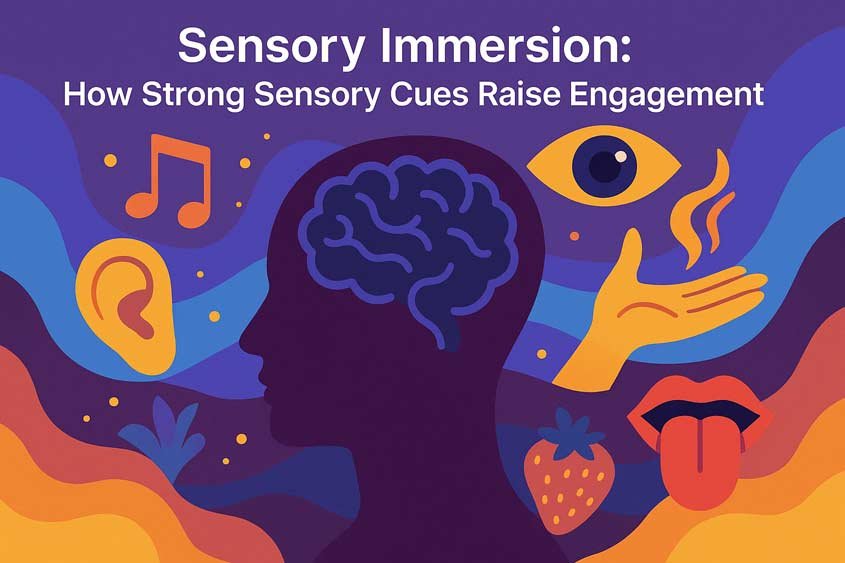
Marketing is evolving fast, and one thing is clear: people don’t just respond to words or visuals—they respond to experiences. Sensory immersion is all about creating a world where your audience doesn’t just see your brand, they feel it, hear it, even smell or taste it. This isn’t a gimmick—it taps directly into how our brains process emotions, memories, and decision-making.
Think about walking into a high-end chocolate shop. You’re greeted by the smell of cocoa, soft background music, and displays that make each piece look irresistible. You don’t just notice the product—you’re inside the experience. That’s the power of sensory immersion. It’s an emotional and experiential engagement trigger that goes beyond traditional persuasion.
Table of Contents
Sensory immersion works because our brains are wired to respond to experiences over facts. When you see a product in a flat image online, your brain registers it, but the impact is limited. Introduce multiple senses, and the engagement spikes. Think of it as layering stimuli: sight, sound, touch, even smell and taste. Each layer reinforces the other, making the overall experience more compelling and memorable.
Brands have been quietly using this trigger for decades. The faint scent of vanilla in a retail store, carefully chosen background music, packaging that feels luxurious to touch—all of these are deliberate choices to immerse a consumer. Even in digital marketing, sensory immersion can happen. Videos with ambient sound, interactive elements that simulate touch, or storytelling that evokes taste or smell can create strong emotional connections.
The effect goes beyond the moment of engagement. Sensory immersion shapes memory. You remember how a product made you feel more than the product itself. That emotional imprint is crucial because emotions drive buying behavior more reliably than logic alone. Consumers who are emotionally engaged are more likely to spend more, return to the brand, and even advocate for it.
This trigger isn’t just for luxury products. Fast food chains know the smell of fries is irresistible. Fitness brands use upbeat music and immersive visual campaigns to make workouts feel energetic. Automotive companies highlight engine sounds, interior textures, and the feel of the steering wheel. Even tech brands design devices with tactile satisfaction in mind—the subtle click of a well-designed keyboard or the smooth glide of a phone screen.
Sensory immersion also amplifies other psychological triggers. For example, coupling it with scarcity makes an experience feel urgent and exclusive. Pair it with social proof, and seeing others immersed makes you want to join in. The trigger is versatile but powerful because it directly engages your senses, which are gateways to emotion.
Keep reading, and you’ll learn not just what sensory immersion is, but how it works, why it matters, real-world examples, and how to apply it ethically in marketing. We’ll break down the psychology step by step and show practical strategies to make your campaigns stick in the mind—and the heart—of your audience.
Sensory immersion isn’t optional anymore. In a world flooded with messages, the brands that craft experiences that can be felt win. Are you ready to create those experiences?
Understanding Sensory Immersion
Sensory immersion is more than just a marketing buzzword—it’s a deliberate way to make your audience experience your brand rather than simply see or read about it. At its core, sensory immersion is about engaging multiple senses—sight, sound, touch, smell, and sometimes even taste—to create a memorable and emotionally resonant experience. When executed correctly, it moves people from passive observers to active participants.
It doesn’t matter if your product is physical or digital, sensory immersion works. Your goal is to connect with your audience on an emotional level so that your brand isn’t just noticed—it’s felt.
The Definition in Practice
Sensory immersion involves crafting experiences that stimulate the senses in a coherent and memorable way. For example, a coffee shop doesn’t just sell coffee—it sells the smell of fresh beans, the feel of a warm cup, the sound of milk frothing, and the sight of perfectly poured latte art. Each sensory input reinforces the others, creating a full experience that your brain remembers.
In marketing psychology terms, sensory immersion is part of the “Emotional and Experiential Engagement” category. It works because emotions are powerful drivers of behavior. Consumers are more likely to buy when their emotional brain, rather than their rational brain, takes the lead. The more senses you engage, the stronger the emotional imprint.
How It Influences Decision-Making
Sensory immersion directly affects consumer behavior in several ways:
Heightened Attention
When multiple senses are engaged, attention increases. You notice the subtle details: the texture of packaging, the tone of music, the visual design. Your brain treats these combined signals as more important than a single stimulus, making it more likely you’ll remember and respond to the product.
Emotional Connection
Immersive experiences evoke feelings. A retail store with calming scents and soft lighting can make a shopper feel relaxed and generous. A sports ad with energetic music and visuals makes viewers feel motivated and excited. These emotions prime you to act—often subconsciously.
Memory Encoding
Experiences that involve multiple senses create stronger memories. When you can see, hear, smell, and touch something, your brain encodes it more vividly. Later, when faced with a choice, you’re more likely to recall the brand positively, increasing the likelihood of purchase.
Cross-Trigger Reinforcement
Sensory immersion also strengthens other triggers like scarcity, social proof, and authority. For example, a visually rich, interactive product demo can highlight limited availability (scarcity) while showing satisfied customers (social proof). Engaging the senses makes the combination of triggers even more persuasive.
Examples Across Industries
Let’s break down some practical examples to illustrate how sensory immersion works:
Retail
High-end clothing stores often play soft music, diffuse subtle scents, and design spaces where the texture of fabrics is irresistible. Each sense reinforces the others, creating a luxurious experience that goes beyond price or functionality.
Food & Beverage
Fast food chains intentionally design the aroma of cooking to reach outside the store, triggering cravings before a customer even steps inside. Premium restaurants focus on plating, ambient sounds, and even temperature of plates to engage multiple senses simultaneously.
Technology
Tech brands focus on tactile satisfaction—keyboards that click, phones that glide smoothly under your fingers, or laptops with subtle haptic feedback. Combined with visual design and sound cues, these experiences make the product more appealing and “sticky” in memory.
Digital Marketing
Even online, sensory immersion is possible. Interactive videos, animated microinteractions, background sounds, and storytelling that evokes sensory experiences can simulate real-world immersion. Gamification, for example, often uses visual, auditory, and even haptic feedback to create a fully immersive digital experience.
The Sensory Hierarchy
Not all senses carry the same weight for every product. Some experiences rely heavily on visual cues, while others depend on touch, smell, or sound. Understanding your audience and product category helps prioritize which senses to focus on. Here’s a rough guide:
- Sight: Universal, affects first impressions, branding, and product recognition.
- Sound: Shapes emotion, reinforces brand identity, can create urgency or calm.
- Touch: Influences perceived quality, satisfaction, and ownership.
- Smell: Strongly linked to memory and emotion, especially in food, beauty, or lifestyle products.
- Taste: Critical for food and beverage brands, also reinforces enjoyment and loyalty.
When Sensory Immersion Backfires
While powerful, sensory immersion must feel authentic. Forced experiences or mismatched stimuli can reduce trust or create cognitive dissonance. Imagine a luxury perfume ad paired with overly loud, chaotic music—it clashes with expectations and can push consumers away.
Sensory immersion is about designing experiences that engage multiple senses to create attention, emotional engagement, and memorable impressions. Its influence stretches across industries, and when combined with other psychological triggers like scarcity or social proof, it becomes even more potent. It’s not just about flashy effects—it’s about making your audience feel your brand in a way that drives behavior.
The Psychology Behind It
Sensory immersion works because it taps directly into how your brain processes information, emotion, and memory. Understanding the mechanism helps you see why some campaigns feel irresistible while others are quickly forgotten. Let’s break it down step by step, from perception to decision.
Perception: The First Contact
Every sensory experience starts with perception. Sight, sound, touch, smell, and taste send signals to the brain simultaneously. These signals don’t just travel to your conscious mind—they also trigger the subconscious areas responsible for emotion and memory.
For example, a luxury car ad might combine glossy visuals with the rumble of an engine and a smooth leather interior shot. Even if you don’t consciously focus on every detail, your brain is absorbing the sensory signals. These signals create a context, a mood, and an emotional baseline before you even consider features or price.
Attention Amplification
Multiple senses working together capture attention more effectively than a single cue. Think about it: a static image may be glanced at and forgotten, but when movement, sound, and color are layered together, it’s hard to ignore.
Bullet points to visualize the attention boost:
- Visuals grab initial focus.
- Sound sustains attention and adds emotional weight.
- Touchable elements (or the illusion of them in digital) create a sense of interaction.
- Smell and taste tie experiences to memory and pleasure.
The combined effect is a heightened state of focus that prepares the consumer to engage more deeply with the message.
Emotional Activation
Emotions are the main driver behind consumer decisions. Sensory immersion engages the limbic system—the part of the brain that processes emotions—directly. When your senses are activated in harmony, emotional intensity increases.
Here’s how it unfolds:
- Positive emotions: A cozy café with warm lighting and the smell of baked goods triggers comfort, pleasure, and nostalgia.
- Excitement: High-energy music, bold visuals, and tactile interactions create adrenaline, engagement, and a sense of urgency.
- Trust and loyalty: Subtle sensory cues like consistent textures or scents build brand familiarity, which translates into trust.
Memory Encoding and Retrieval
Memories linked to multiple sensory inputs are stronger and easier to recall. Sensory immersion doesn’t just make an experience enjoyable—it makes it stick. When you walk past a familiar scent or hear a signature jingle, your brain retrieves associated memories and emotions, often unconsciously influencing behavior.
For instance, the aroma of cinnamon in a store might trigger holiday memories, leading you to linger and buy more, even if you weren’t initially planning to. This is sensory memory in action: it’s automatic, subconscious, and highly persuasive.
Reinforcing Other Triggers
Sensory immersion doesn’t operate in isolation—it strengthens other marketing triggers:
- Scarcity: An immersive, limited-time pop-up store experience feels urgent because every sense is engaged, making you less likely to postpone purchase.
- Social Proof: Watching others enjoy a sensory-rich experience reinforces desirability.
- Authority: Expert-led demos with sensory engagement (think cooking shows or product tastings) increase trust in expertise.
Step-by-Step Process Behind Sensory Immersion
- Stimulus Initiation: The campaign introduces multi-sensory cues—visual, auditory, tactile, olfactory, or gustatory.
- Subconscious Processing: Signals travel to emotional and memory centers before rational thought intervenes.
- Heightened Attention: Multiple stimuli command focus and reduce distractions, making your message stick.
- Emotional Triggering: Limbic system activation evokes feelings aligned with your brand goals.
- Memory Formation: The experience encodes in memory with strong emotional association.
- Decision Influence: The consumer recalls these positive, immersive experiences when evaluating products, increasing likelihood of engagement or purchase.
- Behavior Reinforcement: Repeated sensory encounters reinforce brand loyalty and advocacy.
The Subtle Power of Unseen Senses
One reason sensory immersion is so effective is that not all senses need to be explicit. Implied sensations—like imagining the warmth of sunlight in a travel ad or the crunch of fresh vegetables in a cooking video—can activate the brain’s sensory pathways just as strongly as real-world stimuli. This is particularly useful in digital marketing, where touch, smell, and taste are harder to deliver physically.
Practical Implications
Understanding the psychology helps marketers craft campaigns with precision:
- Focus on emotional priming first—what feeling do you want to evoke?
- Layer sensory elements strategically—don’t overwhelm, but reinforce.
- Connect sensory cues to decision triggers—scarcity, social proof, or authority amplify the effect.
- Test the hierarchy of senses for your audience—visual may dominate for some, scent or touch for others.
When you combine these steps, sensory immersion becomes more than a marketing tactic—it’s a cognitive shortcut. Consumers don’t need to consciously analyze the message. Their senses, emotions, and memory work together to nudge behavior naturally, subtly, and powerfully.
The Role of Sensory Immersion in Marketing
Sensory immersion isn’t just a fancy term marketers toss around—it has real, measurable effects on consumer behavior. It shapes how people notice, feel, remember, and ultimately buy products. In a crowded market, brands that use sensory cues effectively stand out not just visually but emotionally and experientially.
When you understand why sensory immersion matters in marketing, you begin to see why some campaigns feel irresistible, while others fall flat despite having a solid product. It’s not the product alone—it’s the experience surrounding it.
Creating an Emotional Connection
One of the biggest reasons sensory immersion is so powerful in marketing is its ability to create emotion. Consumers don’t just buy products—they buy feelings, experiences, and memories. By engaging multiple senses, brands craft a scenario where the product isn’t just functional, it’s emotionally meaningful.
For instance, think about a boutique hotel advertisement. The visuals show sunlit rooms, soft linens, and a sparkling pool. The soundtrack evokes calm waves. The ad describes the smell of fresh flowers in the lobby. Even though you’re seeing it on a screen, your brain processes it as a holistic experience. Emotionally, you’re already “there.” This makes decision-making faster because the emotional brain is leading.
Shaping Perception of Value
Sensory immersion also alters perceived value. When a product or experience is designed to engage the senses fully, it feels more premium. High-end chocolate brands, for example, use textured packaging, subtle music in stores, and carefully staged displays. Each sense reinforces the notion that the product is luxurious, which can justify higher prices.
Driving Engagement Across Channels
Sensory immersion works in physical spaces, but it’s equally valuable in digital marketing. Interactive online ads, videos with immersive audio, or virtual try-ons can simulate sensory experiences. The more senses you engage—even virtually—the more your audience interacts with the brand, increasing time spent and attention, which directly correlates with higher conversion rates.
Reinforcing Other Triggers
Sensory immersion doesn’t work alone—it amplifies other psychological triggers:
- Scarcity: Experiencing a limited-time pop-up with appealing smells, visuals, and sounds makes the urgency feel tangible.
- Social Proof: Seeing people visibly enjoying a sensory-rich experience reinforces desirability.
- Authority: Expert-led, multi-sensory demos increase trust and credibility.
- Endowment Effect: Feeling or interacting with the product (even digitally) enhances ownership perception, making a purchase more likely.
Practical Marketing Impacts
Let’s break down the tangible ways sensory immersion influences marketing results:
- Higher Attention: Multi-sensory cues reduce cognitive distractions and make your campaign hard to ignore.
- Stronger Brand Recall: Sensory experiences create memories that are easily retrieved when a consumer evaluates products.
- Faster Decisions: Emotional engagement speeds up decision-making. When a consumer feels connected, they spend less time rationalizing.
- Increased Loyalty: Positive sensory experiences create long-term emotional bonds with the brand.
- Improved Cross-Selling: Engaged consumers are more likely to explore complementary products because the experience encourages curiosity.
Sensory Immersion Across Industries
Different industries leverage this trigger differently, but the principle is the same: engage multiple senses to influence behavior.
Retail
Stores design layouts, lighting, music, and even scent to make customers feel comfortable and happy. Apple, for example, creates tactile satisfaction through its products while designing bright, spacious stores with clean, modern visuals—an immersive experience that reinforces quality and desirability.
Food & Beverage
Restaurants and cafes rely on smell, sight, and even sound to enhance appetite and mood. A bakery displaying fresh pastries with warm lighting and subtle scent cues encourages impulse buying.
Entertainment
Theme parks are masters of sensory immersion. Sight, sound, touch, and sometimes even smell combine to make visitors feel like they’re part of another world, enhancing satisfaction and repeat visits.
Digital Marketing
Even online, sensory immersion can be achieved through interactive videos, sound design, and storytelling that evokes taste, smell, or touch. For instance, a cooking app may use sizzling sounds, visuals of bubbling ingredients, and descriptive text to make you feel like you’re cooking alongside the chef.
Ethical Considerations
It’s important to remember that sensory immersion must respect consumer autonomy. Overloading the senses to manipulate emotions aggressively can backfire. The most effective campaigns create memorable experiences without misleading or coercing.
Summary
Sensory immersion matters in marketing because it shapes attention, emotions, memory, and decisions. By engaging multiple senses, brands create experiences that feel real, memorable, and valuable. It strengthens other psychological triggers, drives engagement, and increases both short-term conversions and long-term loyalty.
In practice, this means every touchpoint—visuals, sounds, textures, smells, and tastes—should be considered part of the marketing strategy. The brands that succeed aren’t just selling a product; they’re selling a multi-sensory, emotionally engaging experience that resonates deeply with their audience.
Sensory Immersion Real Case Studies
Understanding sensory immersion is one thing, but seeing it in action makes it undeniable. Let’s look at a few concrete examples across industries where multi-sensory engagement dramatically shaped consumer behavior. These cases demonstrate how effectively integrating sight, sound, touch, smell, and even implied taste can drive engagement and loyalty.
Case Study 1: Starbucks – Aroma and Atmosphere
Starbucks has long been a pioneer in creating immersive sensory experiences in retail. They don’t just sell coffee—they sell a mood, a comfort zone, a multi-sensory environment that keeps customers coming back.
- Sight: Warm lighting, clean store layouts, visually appealing cups and packaging.
- Sound: Carefully curated playlists that match the brand’s relaxed and welcoming atmosphere.
- Smell: The scent of freshly ground coffee beans is subtly distributed throughout the store.
- Touch: High-quality seating and furniture that encourage lingering.
The result? Customers often linger longer than they originally planned, leading to higher sales per visit. Starbucks’ multi-sensory approach also creates strong brand recall. When people smell coffee outside, they often unconsciously think of Starbucks, demonstrating memory activation through sensory cues.
Case Study 2: Apple – Tactile Satisfaction and Visual Minimalism
Apple stores offer a different kind of sensory immersion. Their goal isn’t comfort—it’s engagement, curiosity, and admiration.
- Sight: Minimalist store design with clean lines, open space, and product displays that focus attention.
- Touch: Interactive products encourage visitors to pick up and explore devices. The tactile feel of each device is intentionally satisfying.
- Sound: Ambient noise is controlled, often allowing the subtle hum of tech devices to be heard.
This combination creates a powerful sense of ownership and desire. Customers are more likely to purchase products after interacting with them physically, a real-world demonstration of the endowment effect amplified by sensory immersion. It’s why Apple stores often outperform expectations despite higher price points—the experience makes the product feel worth it.
Case Study 3: Disneyland – Full Multi-Sensory Storytelling
Disneyland’s theme parks offer arguably the most comprehensive sensory immersion examples in marketing. Every ride, street, and attraction is designed to engage multiple senses to transport visitors into another world.
- Sight: Highly detailed sets, vibrant colors, and lighting designed to create specific moods.
- Sound: Background music, ride sounds, and character voices contribute to the narrative.
- Smell: Certain rides and areas are infused with scents that match the environment (e.g., cinnamon in a bakery area, ocean breeze near water rides).
- Touch: Simulated elements on rides, interactive displays, and tactile textures enhance realism.
- Implied Taste: Restaurants and snack stands reinforce the theme, making visitors feel fully immersed.
This full-spectrum sensory approach strengthens memory, emotional attachment, and social proof—people share experiences with others, increasing brand visibility and loyalty. Even after leaving the park, visitors often recall these multi-sensory experiences vividly, influencing return visits and merchandise purchases.
Key Lessons from Real-World Examples
These cases share common patterns that make sensory immersion effective:
- Integration Across Senses: It’s not just one element; it’s the combination of sight, sound, touch, smell, and taste cues.
- Emotional Resonance: Experiences are designed to evoke specific emotions—comfort, excitement, curiosity—that drive decisions.
- Memory Activation: Sensory-rich experiences stick in memory, influencing future behavior.
- Enhancement of Other Triggers: Scarcity, social proof, and authority are naturally reinforced when the sensory experience is strong.
From coffee shops to tech stores and theme parks, sensory immersion proves its value. Starbucks makes you linger with scent and comfort. Apple makes you want to own through tactile and visual engagement. Disneyland transports you with full multi-sensory storytelling. In each case, the consumer isn’t just observing a product or service—they’re feeling, interacting with, and remembering it.
These examples show that sensory immersion is not a gimmick—it’s a measurable, intentional strategy that increases engagement, shapes perception, and drives behavior across industries.
How Consumers React
Sensory immersion isn’t just a clever tactic—it provokes observable, measurable responses from consumers. When done well, it can change behavior immediately, influence decision-making subtly, and create long-term loyalty. Understanding how people respond allows marketers to design experiences that feel natural, enjoyable, and persuasive without being manipulative.
Immediate Engagement
The first reaction to a sensory-rich experience is almost always increased engagement. When multiple senses are stimulated, attention spikes. People linger longer in stores, spend more time on websites, or interact with content more actively.
- Longer Dwell Time: Shoppers in a store with appealing visuals, scent, and music stay longer.
- Increased Interaction: Digital campaigns with audio-visual cues and interactive elements lead to higher click-through rates.
- Curiosity-Driven Behavior: Consumers are more likely to explore complementary products or features when their senses are engaged.
This immediate engagement is crucial because attention is a limited resource. If you capture it effectively, you dramatically increase the chance of conversion.
Emotional Responses
Emotions are the core driver of consumer behavior, and sensory immersion targets them directly. Different sensory combinations evoke distinct emotional reactions:
- Comfort and Relaxation: Warm lighting, soft textures, and gentle music make people feel safe and open to purchasing.
- Excitement and Energy: Bright visuals, upbeat sounds, and interactive elements trigger enthusiasm and urgency.
- Nostalgia and Connection: Familiar scents or sounds can evoke memories that strengthen brand affinity.
Consumers often aren’t fully conscious of these responses—they just feel compelled to act. This is why sensory immersion is so effective when paired with other triggers like scarcity or social proof.
Observable Behavioral Patterns
When sensory immersion works, it manifests in predictable patterns that can be tracked and measured.
- Impulse Purchases: Multi-sensory cues make products feel more desirable and urgent, increasing the likelihood of immediate purchase.
- Brand Exploration: Consumers interact with more products, watch more videos, or navigate deeper into an app or website.
- Advocacy and Sharing: People who experience strong sensory engagement often share their experience on social media or recommend it to friends.
- Repeat Visits: Positive sensory experiences encourage loyalty, leading to repeat store visits, app engagement, or recurring subscriptions.
The Role of Memory
Memory plays a crucial role in how consumers respond after the initial interaction. Sensory-rich experiences are more likely to be remembered vividly. When faced with a purchase decision later, the consumer recalls not just the product, but the entire experience surrounding it—how it looked, smelled, sounded, and felt. This recall can subconsciously nudge the consumer toward the brand, reinforcing loyalty and repeat purchases.
Subconscious Influence
Not all responses are overt. Sensory immersion also works at a subconscious level:
- Priming Behavior: Subtle scents or sounds can influence behavior, such as encouraging people to spend more time in a store or engage more online.
- Mood Shaping: Ambient elements like lighting or background music subtly affect mood, which in turn affects buying choices.
- Perceived Quality: Tactile and visual cues create a perception of higher quality, even if the product itself is unchanged.
Common Reactions Across Industries
Retail
Shoppers are more likely to explore products, spend longer, and make higher-value purchases when stores are sensorially engaging.
Food & Beverage
Customers linger, order more, and often return because aroma, presentation, and ambient music influence appetite and satisfaction.
Technology
Consumers interact with products more, feel ownership sooner, and show higher willingness to buy after tactile and visual engagement.
Entertainment
Visitors are more likely to share experiences and return when rides, environments, and shows engage multiple senses.
Consumers respond to sensory immersion in ways that are immediate, emotional, and measurable. From lingering longer to making purchases, from exploring products to sharing experiences, sensory-rich campaigns create observable behavior changes. By understanding these reactions, marketers can design experiences that feel authentic, memorable, and persuasive, reinforcing both short-term conversions and long-term loyalty.
How Brands Use It Effectively
Sensory immersion isn’t just theory—it’s a tool that brands can wield deliberately to create engagement, loyalty, and stronger sales. The key is using it ethically: designing experiences that feel natural, enhance value, and respect the consumer’s autonomy. Let’s explore how brands apply this trigger in ways that are both effective and responsible.
Designing Multi-Sensory Experiences
Brands that use sensory immersion effectively focus on creating experiences that engage multiple senses in harmony. It’s not enough to add one element—sight, sound, or smell alone has limited impact. The real magic happens when these elements are layered to reinforce emotion and memory.
- Retail Spaces: From music to scent to tactile textures, stores like Abercrombie & Fitch and Lush create atmospheres that draw customers in and encourage exploration.
- Events and Pop-Ups: Brands design temporary experiences that immerse attendees in themed environments—think interactive product demonstrations, tasting sessions, or live demonstrations that activate sight, sound, and touch simultaneously.
- Digital Platforms: Interactive websites, immersive video content, or apps that simulate sensory experiences bring the same principles online. Subtle animation, sound cues, and visually guided interactions can replicate a tactile or emotional experience digitally.
Ethical Principles in Action
It’s easy to overdo sensory immersion. Pushing people too hard with overstimulation or misleading cues can backfire. Ethical use focuses on enhancing the experience without manipulating or coercing the audience.
- Transparency: Make sure sensory elements align with the product’s actual quality and function. A scent that suggests freshness should correspond to a genuinely fresh product.
- Consent and Comfort: Avoid overwhelming consumers. Not every environment or audience responds the same way to strong smells, loud music, or intense visuals. Respect personal boundaries.
- Authenticity: Sensory cues should reinforce the brand’s story, values, and product quality rather than artificially inflate perception.
Sector-Specific Applications
Retail
Stores use sensory immersion to extend dwell time and increase conversions. Examples include:
- Diffusing brand-specific scents to trigger recognition and emotional connection.
- Playing curated music to match the brand identity and influence shopping pace.
- Designing tactile packaging or product displays that invite interaction.
Food & Beverage
Restaurants, cafes, and packaged food brands create sensory-rich experiences that elevate appetite and enjoyment. Strategies include:
- Aroma marketing: subtly dispersing smells of fresh food or coffee to trigger cravings.
- Interactive tastings: allowing customers to try products while experiencing textures, sounds, and aromas.
- Presentation-focused plating and packaging to engage sight and implied taste.
Technology
Tech brands engage consumers’ curiosity and ownership tendencies by combining visual appeal with tactile satisfaction. Examples include:
- Hands-on demonstrations in stores that emphasize product feel and responsiveness.
- Sleek visual design and minimalism to focus attention and signal quality.
- Product sounds and haptic feedback that reinforce functional satisfaction.
Entertainment and Hospitality
Theme parks, hotels, and event spaces use sensory immersion to enhance memorability and emotional engagement:
- Multi-sensory environments that blend sight, sound, smell, and touch to tell a story.
- Ambient elements like lighting and scent cues that subtly influence mood and pace.
- Interactive activities that encourage audience participation and personal connection.
Step-by-Step Approach for Brands
- Identify Desired Emotional Response: Decide what feeling you want consumers to associate with your brand or product.
- Select Relevant Senses: Prioritize senses that will most effectively convey the emotion or story.
- Layer Sensory Elements: Ensure sight, sound, touch, smell, and taste cues complement each other without overwhelming.
- Integrate with Other Triggers: Reinforce social proof, scarcity, authority, or endowment effect through sensory engagement.
- Test and Refine: Observe consumer reactions and adjust sensory cues to maximize engagement without crossing ethical boundaries.
Brands that use sensory immersion effectively don’t just rely on flashy gimmicks—they create coherent, multi-sensory experiences that evoke emotion, enhance memory, and influence behavior. Ethical application ensures that consumers feel engaged and respected rather than manipulated. Across retail, food, tech, and entertainment, sensory immersion becomes a practical tool for driving measurable results, deepening brand affinity, and shaping purchasing decisions.
Common Errors
Sensory immersion is powerful, but it’s not foolproof. If misused, it can backfire, reduce engagement, or even create negative perceptions of your brand. Understanding common errors helps you avoid mistakes that undermine the effectiveness of your campaigns. Let’s break down the pitfalls and how to navigate them.
Overloading the Senses
One of the most frequent mistakes is trying to hit every sense at once without considering harmony or relevance. Too many cues can overwhelm the audience and cause cognitive fatigue, leading to disengagement instead of attraction.
For example, a retail store pumping in strong scents, loud music, and flashing visuals simultaneously may irritate shoppers, driving them out rather than encouraging purchases. Effective sensory immersion balances intensity with comfort and relevance.
Ignoring the Brand Story
Sensory cues need to align with your brand identity and messaging. Random or inconsistent cues confuse consumers and dilute your message.
- A luxury brand using overly casual music or artificial scents can clash with the perceived premium image.
- Fast-food restaurants using high-end design elements may confuse expectations and weaken brand recall.
Every sensory element should reinforce the story you want consumers to experience.
Neglecting the Target Audience
Not every sensory experience works for every demographic. Preferences, sensitivities, and cultural factors affect how consumers perceive sensory cues. Ignoring your audience can lead to pushback or disengagement.
- Intense aromas might be appealing in one market but overwhelming in another.
- Certain sound levels or music genres may alienate specific age groups.
Testing with representative segments is critical before scaling campaigns.
Failing to Integrate with Other Triggers
Sensory immersion alone is rarely enough to drive action. It works best when paired with other psychological triggers like scarcity, social proof, or the endowment effect. Failing to integrate reduces impact and can make the experience feel superficial.
- A beautifully immersive pop-up with no social proof may attract attention but fail to convert visitors.
- An online ad with striking visuals but no clear authority or recommendation may be memorable but not actionable.
Short-Term Focus
Some brands focus on immediate engagement without considering long-term effects. Sensory immersion can build loyalty and recall, but short-term campaigns that neglect follow-through often fail to capitalize on the investment.
- A one-off interactive experience without ongoing reinforcement won’t create lasting brand affinity.
- Lack of consistency in sensory branding across channels reduces memory retention and recognition.
Consequences of Missteps
When sensory immersion is poorly executed, the consequences can range from mild disengagement to active avoidance. Consumers may feel manipulated or uncomfortable, which harms trust and can negatively affect perception of the brand. Awareness of these pitfalls ensures campaigns remain both effective and ethical.
Avoiding mistakes is as important as designing effective sensory experiences. Overstimulation, misaligned cues, ignoring your audience, poor integration with other triggers, and short-term thinking are common errors that reduce impact. By understanding and preventing these missteps, marketers can harness sensory immersion to its full potential—creating memorable, engaging, and positive experiences that influence behavior without backfiring.
Practical Tips
Using sensory immersion effectively requires intentional design, thoughtful layering of cues, and alignment with your brand’s message. When applied correctly, it can enhance engagement, boost memory recall, and influence purchasing behavior. Here are practical tips to help you implement this trigger successfully.
Identify the Right Emotional Goal
Before designing sensory elements, clarify what feeling you want to evoke in your audience. Sensory immersion works because it triggers emotion first, rational thought second.
- Comfort and trust: Use warm lighting, soft textures, and gentle music.
- Excitement and energy: Bright visuals, upbeat sounds, and interactive elements.
- Curiosity and exploration: Surprising textures, unexpected sounds, or unique scents.
Knowing the target emotion ensures that your sensory cues align with the desired consumer response.
Prioritize Relevant Senses
Not all senses are equally important for every product or campaign. Focus on the ones that enhance the experience meaningfully.
- Sight: Always essential, but combine with other senses for deeper impact.
- Sound: Music, ambient noise, or product sounds can reinforce emotion.
- Touch: Physical interaction, textures, or haptic feedback increases engagement.
- Smell and taste: Powerful for food, beverage, and retail experiences, or can be implied in digital formats.
Selecting relevant senses prevents overstimulation and ensures each cue reinforces the experience.
Layer Sensory Elements Strategically
Effective sensory immersion requires layering cues rather than presenting them in isolation. Layering should feel natural and coherent, not chaotic.
- Visual + Sound: A video ad with compelling visuals paired with a fitting soundtrack increases attention and retention.
- Touch + Sight: Product displays or samples encourage tactile exploration while reinforcing visual appeal.
- Smell + Emotion: Ambient scents aligned with brand values evoke emotional associations and memory.
Strategic layering amplifies engagement and strengthens memory encoding.
Test and Refine
Sensory immersion is highly context-dependent. Testing with real audiences allows you to refine intensity, timing, and combinations of cues for maximum impact.
- Conduct small-scale experiments in-store or online.
- Observe dwell time, interaction rates, and engagement metrics.
- Gather qualitative feedback on emotional response and perceived value.
Iterative testing ensures the experience is optimized without overwhelming or alienating consumers.
Ethical and Authentic Application
Sensory immersion should enhance the experience without misleading consumers. Ethical application maintains trust and long-term brand loyalty.
- Align sensory cues with the actual product or service.
- Avoid overstimulation or manipulative tactics.
- Ensure accessibility, considering sensory sensitivities and cultural factors.
Practical application of sensory immersion is about precision, coherence, and ethical alignment. By defining emotional goals, prioritizing relevant senses, layering elements effectively, testing rigorously, and maintaining authenticity, you can create experiences that captivate consumers, enhance memory recall, and drive behavior. The key is intentionality—every sound, sight, touch, or scent should serve the larger purpose of engagement and connection.
Spot The Trigger
Recognizing sensory immersion in marketing can sharpen your ability to analyze campaigns and spot when brands are using multiple senses to influence behavior. The following exercises challenge you to identify whether sensory immersion is at play.
Exercise 1
A sportswear brand launches a new campaign with the slogan “Run for the Planet.” For every pair of shoes sold, they promise to plant two trees. The ad shows runners of all backgrounds, smiling, connecting, and jogging through green parks. You feel good just watching it—and you start wondering if your next pair should come from them.
Question: Is the brand using the Sensory Immersion trigger? (True or False) | Check Answer
Exercise 2
A bakery creates a new store layout designed to fully engage customers. The smell of fresh bread wafts through the air, soft lighting highlights golden pastries, and subtle background music creates a cozy, inviting atmosphere. Customers are encouraged to touch samples and observe the careful presentation of each baked good.
Question: Is the brand using the Sensory Immersion trigger? (True or False) | Check Answer
Exercise 3
A car company releases a digital ad for its latest model. The video shows the sleek lines of the vehicle, the metallic shine of the paint, and the dashboard interface. The narration describes performance metrics and fuel efficiency. While visually polished, the ad includes no interactive, tactile, or auditory enhancements that simulate a real driving experience.
Question: Is the brand using the Sensory Immersion trigger? (True or False) | Check Answer
What You Should Remember
Sensory immersion is more than a buzzword in marketing psychology—it’s a potent trigger that directly influences how people perceive, engage with, and ultimately decide to buy a product or service. At its core, it’s about creating experiences that speak to multiple senses simultaneously, generating emotional and cognitive responses that guide behavior.
When done well, sensory immersion makes a brand memorable. It doesn’t just inform consumers about what a product does; it makes them feel the product’s value. Sight, sound, touch, smell, and even implied taste combine to form an experience that sticks in the mind. This immersive approach strengthens recall and nudges decision-making in subtle but powerful ways. Think about a bakery where the smell of fresh bread draws you in, or a tech store where touching and exploring a device makes ownership feel immediate. These moments aren’t accidents—they’re carefully designed triggers in action.
Sensory immersion also interacts seamlessly with other psychological triggers. For instance, when a sensory-rich experience is paired with social proof, it reinforces the feeling that others are enjoying and valuing the product. When combined with scarcity or urgency, sensory cues amplify the emotional response, increasing the likelihood of immediate action. This interplay shows why sensory immersion is such a valuable tool: it doesn’t work in isolation, but when integrated thoughtfully, it multiplies the effectiveness of other engagement strategies.
Another critical point is consumer perception and trust. Ethical use of sensory immersion ensures that the experience aligns authentically with the product or service. Overstimulation, misleading cues, or irrelevant sensory additions can backfire, causing frustration or distrust. When applied with care, it enhances brand credibility while making the experience enjoyable and compelling.
From retail to technology, food, and entertainment, sensory immersion shapes observable behaviors—people linger longer, explore more deeply, buy more willingly, and share their experiences. The value lies not just in immediate engagement but in building long-term loyalty and memory recall. In other words, the impact isn’t fleeting; it has measurable effects on decision-making and brand affinity over time.
The takeaway is simple: sensory immersion works because it appeals directly to human perception and emotion. By designing experiences that authentically engage multiple senses, marketers can influence decisions in ways that feel natural, enjoyable, and memorable. It’s a reminder that the most effective marketing isn’t just about information—it’s about experience. Creating these experiences thoughtfully allows your brand to connect deeply with consumers, influence their choices, and leave lasting impressions that drive both immediate and long-term results.
Sensory immersion is a tool, but it’s also a philosophy: understand your audience, appeal to their senses authentically, and watch how engagement, loyalty, and decision-making shift in response.

Gabriel Comanoiu is a digital marketing expert who has run his own agency since 2016. He learned marketing by testing, analyzing, and refining campaigns across multiple channels. In his book series Impulse Buying Psychology, he shares the psychological triggers behind every purchase, showing how to create marketing that connects, persuades, and converts.