
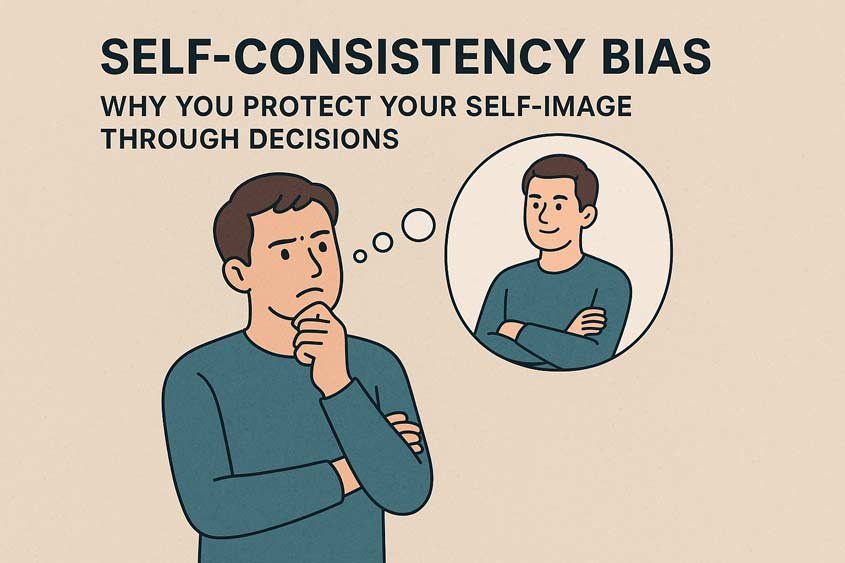
You probably don’t think much about why you choose one product over another, or why certain ads make you pause, smile, or even reach for your wallet. But behind your everyday decisions, there’s a subtle psychological trigger silently steering you: self-consistency bias. It’s the part of your brain that nudges you to protect your self-image and make choices that “fit” with who you believe you are. It’s not flashy, it doesn’t scream for attention, yet it’s one of the most powerful motivators in consumer behavior.
Self-consistency bias is rooted in your need to see yourself as reliable, consistent, and morally upright. You like to think, “I’m the kind of person who makes thoughtful choices” or “I’m someone who cares about my health.” When a marketing message aligns with that image, it resonates instantly. It’s like the universe saying, “Hey, you’re being you, and that’s great.” On the flip side, when an ad or product threatens that self-image, you recoil, sometimes without even realizing why. You don’t want to act in ways that feel inconsistent with the story you tell yourself about who you are.
Table of Contents
Think about loyalty programs or long-term subscription services. Often, they work not because they’re the cheapest option, but because once you’ve started using them, leaving would feel like breaking a personal contract with yourself. You’ve already told yourself, explicitly or implicitly, “I value consistency.” Brands tap into this bias because it turns everyday purchases into actions that reinforce identity. A customer isn’t just buying a fitness app; they’re buying a reaffirmation that they are committed to health and self-improvement.
You can see self-consistency bias in political campaigns, too. A person who identifies strongly with a cause is more likely to support related products, endorsements, or donations—even when alternatives are objectively better—because they want to remain consistent with their self-image. That same principle applies to small daily decisions: choosing eco-friendly packaging, supporting local businesses, or preferring premium over budget options. Each choice is like a tiny signature on the story of who you are.
Marketers know this. They frame decisions to make customers feel like acting differently would create internal conflict. You might notice copy that says, “People who care about [value] choose this,” or “As a savvy shopper, you deserve this.” It’s subtle, but it’s effective because it gives your mind a gentle nudge toward alignment. You aren’t just buying a product; you’re confirming your own narrative.
Self-consistency bias also interacts with other psychological triggers. Scarcity works because missing out could make you feel inconsistent with your image of being smart or proactive. Social proof works because if others like you are doing something, not doing it could feel out of step with your identity. Commitment triggers overlap here too: once you’ve publicly or privately committed to an action, maintaining consistency becomes psychologically important.
Understanding self-consistency bias isn’t just for marketers—it’s practical for you, too. Once you recognize the patterns, you can see when decisions are genuinely yours and when they’re influenced by the subtle pressure to protect an image. Ever notice yourself hesitating over a purchase, questioning whether it “fits” the kind of person you believe you are? That hesitation isn’t indecision—it’s your bias at work.
From luxury brands to fitness apps, sustainable products to subscription boxes, the principle is universal. It’s in how brands word their ads, how they design customer journeys, and how they frame choices. Even without thinking, your brain craves consistency. You’re wired to seek alignment between your past decisions, your current actions, and the identity you hold dear. That’s why self-consistency bias is such a powerful tool: it taps into your psychology, guiding behavior in ways that feel natural and self-directed.
By the end of this article, you’ll not only understand what self-consistency bias is but also how it works, why it matters in marketing, and how brands ethically leverage it to influence decisions. More importantly, you’ll be able to spot it in action—both in your own behavior and in the strategies used to capture attention, drive choices, and reinforce identities. You’ll see that every ad, campaign, or product placement is subtly asking, “Does this fit with the story you tell about yourself?” And your brain, quietly, says yes or no.
The key is that self-consistency bias isn’t manipulative in a sneaky way. It’s natural. Everyone wants to act in ways that match their self-image. Marketing just meets you where you already are, aligning offers with your internal narrative. Understanding it helps you make more informed choices and lets marketers create campaigns that resonate on a deeper, more meaningful level. It’s a psychological trigger that works quietly but powerfully, shaping behavior, guiding decisions, and reinforcing the story you tell yourself every day.
Self-consistency bias is everywhere in decision-making. Whether you’re choosing a brand of coffee, committing to a charity, or deciding which gym to join, it’s influencing your choices. Once you understand it, you’ll notice its fingerprints on almost every decision—and that awareness alone gives you more control over your own behavior. And if you’re a marketer, it’s a reminder: people don’t just buy products—they buy consistency, reassurance, and validation of their own self-image.
Understanding Self-Consistency Bias
You’ve probably noticed that once you commit to an idea, a brand, or even a habit, it feels uncomfortable to backtrack. That’s self-consistency bias in action. At its core, this psychological trigger nudges you to make choices that align with your self-image. It’s not just about stubbornness or habit; it’s about maintaining a coherent narrative about who you are. You want your actions to match your beliefs, values, and the identity you’ve built. When they don’t, you experience friction—subtle unease, guilt, or doubt.
What Self-Consistency Bias Really Means
Self-consistency bias is a mental shortcut. Your brain prefers harmony between thought and action because inconsistency creates cognitive dissonance—a feeling you’d rather avoid. Essentially, this bias ensures your decisions, purchases, and even small daily actions reinforce your sense of self.
For example, imagine you consider yourself a health-conscious person. You’re more likely to choose a low-calorie snack over a high-sugar option, not because you analyzed every nutritional fact at that moment, but because your choice needs to match the identity you’ve adopted. It’s a safeguard for your self-image, making you feel internally aligned and “true” to who you believe you are.
In marketing psychology, this is a goldmine. Brands that position their products in ways that resonate with a consumer’s self-image effectively leverage this bias. You’re not being pushed to buy a product because it’s the cheapest or even the best—it’s because buying it aligns with your story of yourself.
How Self-Consistency Bias Influences Decisions
This bias operates subtly, yet its influence is broad. It affects decisions across industries, from subscription services to fashion, tech, and beyond. Here’s how it manifests:
- Purchase Decisions: You choose brands or products that match your identity. A sustainable shopper picks eco-friendly brands, a tech-savvy individual gravitates toward innovative gadgets.
- Commitment Maintenance: Once you publicly or privately commit to a choice, consistency urges you to continue. This explains the effectiveness of subscription models, memberships, and long-term loyalty programs.
- Moral and Ethical Alignment: Your self-image includes moral values. Ads framed around these values can guide choices, making you feel that supporting a brand reflects your principles.
Subtle Psychological Mechanisms
While self-consistency bias might feel intuitive, it’s deeply rooted in psychology. Your brain is wired to seek internal harmony. When your actions and beliefs misalign, the resulting tension triggers cognitive dissonance. You respond by either changing your beliefs or adjusting your behavior. Most often, it’s easier to adjust behavior because your core beliefs are central to your identity.
Consider this: if you see yourself as an early adopter of tech, you’re likely to buy a new smartphone even if your current one works fine. Refusing to do so would create subtle discomfort—an inconsistency your mind wants to resolve. Brands exploit this by crafting messages that align with identities, emphasizing traits like “innovative,” “responsible,” or “trendy.”
Examples Across Marketing Contexts
Self-consistency bias isn’t limited to one type of purchase. It’s everywhere.
- Fitness and Health: Brands selling workout programs, supplements, or gym memberships often target identity-based motivations. You don’t just want results; you want to feel like the type of person who prioritizes health.
- Luxury Products: High-end fashion and accessories appeal to the consumer’s self-image. Owning a designer bag isn’t merely functional—it signals sophistication, taste, and success. Choosing the product reinforces that self-perception.
- Sustainability and Ethics: Eco-conscious consumers often make purchases that demonstrate their values. Brands highlighting environmental responsibility tap directly into self-consistency bias.
Even small interactions reflect this principle. Signing a loyalty card, joining an exclusive club, or taking a pledge can create a subtle commitment that aligns your future decisions with your self-image.
The Connection to Other Marketing Triggers
Self-consistency bias doesn’t operate in isolation. It interacts with other psychological triggers to reinforce behavior:
- Commitment: Once you’ve taken an action, like subscribing to a newsletter, the drive for consistency makes continued engagement more likely.
- Social Proof: Observing peers who share your identity reinforcing certain choices strengthens your tendency to act consistently.
- Scarcity and Urgency: Limited-time offers can pressure you to act in ways consistent with your self-image of being proactive or savvy.
By combining self-consistency bias with these triggers, marketers subtly create multi-layered influence that feels natural and self-directed to the consumer.
Why Understanding It Matters
Recognizing self-consistency bias helps you make sense of your behavior. When you understand that a choice aligns with your self-image, you can see why you might feel compelled toward a product or service without analyzing every detail. Conversely, marketers gain insight into designing campaigns that speak directly to identity-based motivations, enhancing engagement and loyalty.
In short, self-consistency bias shapes decisions by linking actions to identity. It tells your brain, “If this feels right for who I am, it’s worth doing.” Ignore it at your own risk—because whether you notice it or not, it’s quietly guiding many of your daily choices.
How This Trigger Operates
Self-consistency bias isn’t a flashy mechanism—it works quietly, weaving itself into everyday decisions. Yet its subtlety is exactly why it’s so effective. Once you understand how it functions, you can see the step-by-step process guiding choices across industries, from subscriptions and tech to fashion and sustainable products.
Step 1: Establishing Identity
The first step is identity. Before any action takes place, you already have an internal narrative: “I am the kind of person who makes thoughtful choices,” or “I care about the environment.” This self-perception acts as a mental reference point for all decisions. When a decision aligns with this identity, your brain experiences a sense of harmony; when it doesn’t, tension appears.
Marketing taps into this step by clearly defining the audience identity. Ads that open with statements like, “For people who care about their health” or “As a smart investor, you’ll want this tool” instantly signal that alignment is possible. Even subtle cues—images, tone, and product placement—reinforce identity recognition.
Step 2: Perceived Action Alignment
Once identity is acknowledged, your brain evaluates potential actions against that self-image. Here’s where the bias starts to steer decisions: if an action feels consistent with your identity, it becomes far more appealing. If it feels inconsistent, it triggers discomfort.
For example, a person who sees themselves as eco-conscious will be drawn to reusable products over single-use alternatives, even when convenience might suggest otherwise. That alignment isn’t just preference—it’s self-reassurance.
Step 3: Cognitive Dissonance Avoidance
Cognitive dissonance is the uncomfortable tension that arises when actions contradict beliefs or self-perception. Self-consistency bias acts as a protective filter: it reduces the likelihood of choices that might create dissonance.
You’ve probably experienced this in small ways: skipping a sale because the product didn’t “feel like you” or doubling down on a choice to avoid second-guessing. Your brain prioritizes consistency because dissonance is mentally costly—it triggers stress and internal questioning.
Step 4: Reinforcement of Past Choices
Self-consistency bias doesn’t only influence immediate decisions; it reinforces past actions. Once you’ve acted in a way that aligns with your identity, continuing along that path feels natural.
- Subscriptions: After signing up for a membership, you’re more likely to continue using it because quitting would feel inconsistent.
- Brand loyalty: Choosing a favorite brand repeatedly confirms the story you tell yourself: “I make smart choices.”
- Ethical behavior: Supporting a socially responsible brand encourages repeat purchases to maintain moral alignment.
Step 5: Interaction with Other Triggers
The mechanism becomes even more potent when paired with other marketing psychology triggers. Self-consistency bias rarely works alone. Here’s how it interacts:
- Commitment: Initial engagement, like signing a pledge or subscribing to a newsletter, sets up a behavioral expectation that aligns with identity.
- Social Proof: Seeing peers or influencers with similar values reinforces consistent behavior.
- Scarcity and Urgency: Limited offers make you feel that acting now is consistent with being proactive or decisive.
Step 6: Outcome – Decision Alignment
Finally, the process culminates in a choice that matches self-image. By the time a decision is made, your brain has gone through identity recognition, action evaluation, dissonance avoidance, past reinforcement, and interaction with other triggers. The result feels natural and self-directed, even if it was subtly guided.
A Bullet-Point Summary of the Mechanism
- Identify self-image: Recognize the traits and values the individual associates with themselves.
- Align options with identity: Present choices that reinforce that identity.
- Trigger cognitive dissonance avoidance: Avoid actions that conflict with self-perception.
- Reinforce past decisions: Encourage consistency by leveraging previous actions.
- Leverage complementary triggers: Combine with commitment, social proof, or urgency to strengthen influence.
- Facilitate aligned action: Guide the person toward decisions that feel internally coherent.
Real-World Illustration
Consider a fitness app promoting consistency. The marketing first establishes identity: “You’re the type of person who values health and progress.” Then, it aligns actions: daily tracking, small workout goals, and community check-ins reinforce this identity. Missing a day creates minor dissonance, nudging users back into consistent behavior. Social proof shows peers completing routines, and gamified streaks act as subtle urgency triggers. The user’s actions ultimately feel self-directed, but the process is carefully structured to leverage self-consistency bias.
In another example, a luxury brand targets consumers who see themselves as sophisticated and discerning. Ads highlight elegance, exclusivity, and refined taste. Purchasing a product becomes a reinforcement of identity. Once ownership occurs, cognitive dissonance avoidance encourages brand loyalty, while subtle scarcity cues (“Limited edition”) strengthen the decision’s urgency without undermining self-consistency.
By following this step-by-step mechanism, marketers can ethically guide consumers toward choices that align with their self-image, creating both satisfaction for the buyer and lasting engagement for the brand. Consumers, on the other hand, can begin to recognize why they feel compelled toward certain choices, giving them insight into their own decision-making patterns.
The Role of Self-Consistency Bias in Marketing
Self-consistency bias is a cornerstone of marketing psychology. It doesn’t just influence what people buy—it shapes how they perceive brands, interact with campaigns, and remain loyal over time. Understanding this bias isn’t abstract theory; it has direct, practical implications for marketers who want to guide decisions without coercion, and for consumers who want to understand their own behavior.
Shaping Consumer Behavior
At its core, self-consistency bias works by making people act in ways that align with their self-image. For marketers, this means that successful campaigns aren’t just about features or discounts—they’re about identity alignment. A consumer doesn’t just purchase a product; they’re making a statement about who they are.
Consider an eco-friendly detergent brand. The ad might highlight the environmental impact of each purchase. Consumers who identify as responsible and eco-conscious feel an instant connection. Buying the detergent isn’t just functional; it reinforces their moral identity. The purchase becomes a reaffirmation of who they see themselves as.
How Brands Influence Decisions
Marketing campaigns tap into self-consistency bias by crafting messages and experiences that make choices feel identity-aligned. There are several practical strategies marketers use:
- Identity-Based Messaging: Using language and visuals that reflect the audience’s self-perception. For example, “For the health-conscious professional” or “Smart investors choose this plan.”
- Behavior Reinforcement: Encouraging small commitments that nudge ongoing engagement. A free trial, pledge, or loyalty card acts as a stepping stone to larger actions.
- Social and Moral Alignment: Highlighting peer behavior or ethical dimensions that align with consumer values. Consumers often act consistently with how they perceive others like them.
By framing products and experiences around the consumer’s identity, marketers reduce resistance, make the purchase decision easier, and increase the likelihood of long-term loyalty.
The Practical Value for Marketing Campaigns
Self-consistency bias isn’t just a nice-to-have in marketing; it directly impacts results. Here’s why:
- Higher Conversion Rates: When consumers feel a product aligns with who they are, they’re more likely to act.
- Increased Customer Retention: Decisions that reinforce identity encourage repeat behavior. Breaking a streak would feel inconsistent, so consumers naturally stay engaged.
- Deeper Emotional Connection: Aligning offers with self-perception builds a psychological bond between brand and consumer.
Subtle but Powerful Applications
This bias can be leveraged across industries without manipulation. Some practical examples:
- Subscription Services: Highlighting progress or status (e.g., reading streaks in learning apps) taps into consistency to encourage continued use.
- Fitness and Lifestyle Brands: Marketing that frames participation as part of a “healthy you” identity reinforces behavior.
- Sustainable and Ethical Products: Making purchases a reflection of values strengthens both moral and self-consistency alignment.
Bullet-Point Summary of Marketing Benefits
- Guides consumers toward identity-aligned decisions.
- Reduces resistance to purchase by framing options as natural extensions of self-image.
- Encourages ongoing engagement through reinforcement of previous actions.
- Strengthens loyalty by making abandonment feel inconsistent with self-perception.
- Enhances campaign effectiveness by combining with triggers like commitment, social proof, or scarcity.
Real-World Illustration
Imagine a tech company launching a smart home device. Instead of focusing solely on technical features, the campaign highlights how the device empowers “efficient, modern homeowners.” The messaging aligns with the audience’s self-perception of being forward-thinking and organized. Once the consumer buys the device, using it daily continues to reinforce that identity, and leaving or ignoring the product would create subtle cognitive dissonance. Add in social proof—testimonials from other “modern homeowners”—and the self-consistency effect strengthens further.
Similarly, a fashion brand might position a handbag or watch not just as a luxury item, but as a symbol of taste, refinement, or success. Each purchase and use reinforces identity. Over time, the brand becomes more than a product—it becomes part of the consumer’s personal narrative.
Why Marketers Prioritize This Bias
The beauty of self-consistency bias in marketing lies in its subtlety. Unlike overt persuasion techniques, it doesn’t make consumers feel pressured or manipulated. Instead, it gently aligns choices with who they already believe themselves to be. Campaigns that leverage this bias are more effective because they feel natural, authentic, and internally motivated to the consumer.
Recognizing the power of this bias allows marketers to design campaigns that not only drive immediate action but also foster long-term engagement. It’s about creating a relationship with the consumer that feels coherent, rewarding, and self-affirming—rather than transactional or forced.
Self-Consistency Bias Real Case Studies
Seeing theory in action is the best way to understand self-consistency bias. When applied strategically, this trigger can dramatically shape decisions, engagement, and loyalty. Here are three real-world examples demonstrating its impact across different industries.
Case Study 1: Fitness Apps and Health Commitment
Several fitness apps use self-consistency bias to keep users engaged long-term. Take the example of MyFitnessPal, a widely-used health and nutrition app. When users log their first meals, track workouts, or set daily goals, the app frames these actions as part of the user’s identity: “You’re someone committed to health.”
- Mechanism: Early engagement and goal-setting create a sense of commitment aligned with self-perception.
- Outcome: Users are more likely to maintain tracking and continue subscriptions because skipping actions feels inconsistent with the identity they’ve adopted.
- Psychological Impact: The bias reduces drop-off rates. People stick to the app to avoid dissonance between “I am health-conscious” and their inaction.
This case illustrates that even small initial commitments can create long-term behavioral alignment, turning casual users into loyal participants.
Case Study 2: Sustainable Products and Ethical Identity
Brands like Patagonia leverage self-consistency bias to appeal to environmentally conscious consumers. Their messaging emphasizes moral responsibility and sustainable choices. Customers aren’t just buying a jacket—they’re affirming their identity as ethical and eco-friendly individuals.
- Mechanism: Marketing emphasizes shared values: social proof (other eco-conscious customers), ethical production processes, and environmental impact.
- Outcome: Customers are more likely to choose Patagonia over less sustainable alternatives, even if cheaper options exist. Repeat purchases and brand loyalty increase because the decision reinforces identity.
- Psychological Impact: Self-consistency bias interacts with moral alignment. Customers feel compelled to maintain behavior consistent with their values, reinforcing engagement.
This example shows that aligning products with moral and ethical self-perception strengthens both immediate purchase decisions and long-term loyalty.
Case Study 3: Subscription Services and Commitment
Streaming platforms like Netflix or learning platforms such as Duolingo utilize self-consistency bias subtly but effectively. For instance, Duolingo emphasizes streaks and daily progress tracking. Users see themselves as consistent, disciplined learners. Breaking a streak creates mild dissonance, nudging users to continue engagement.
- Mechanism: Visual reinforcement of past behavior (streaks, progress bars) creates a sense of identity alignment.
- Outcome: High daily engagement and long-term retention rates.
- Psychological Impact: Consumers act consistently to maintain their self-image as committed learners or active participants.
The combination of commitment cues, progress tracking, and identity affirmation creates a feedback loop that reinforces consistent behavior without overt coercion.
Why These Examples Work
Across all three cases, the pattern is clear:
- Identity Establishment: Each campaign or product positions the consumer in a specific identity—health-conscious, ethical, committed.
- Action Alignment: Early and ongoing actions are framed as consistent with that identity.
- Reinforcement: Tools like streaks, pledges, or ethical storytelling encourage repetition, reinforcing self-consistency.
Key Takeaways from Real-World Applications
- Self-consistency bias can be applied in digital, physical, and service-based industries.
- Small actions that reflect identity (logging a meal, choosing a sustainable jacket, maintaining a streak) can drive long-term engagement.
- Combining self-consistency with complementary triggers (social proof, commitment, moral alignment) amplifies effectiveness.
These examples confirm that self-consistency bias is not abstract—it’s a measurable force shaping choices, driving loyalty, and enhancing marketing outcomes. Marketers who recognize this can design campaigns that feel authentic and empowering to the consumer while achieving strategic goals.
How Consumers React
Self-consistency bias doesn’t just influence decisions—it shapes the way consumers behave, engage, and respond to marketing campaigns. Understanding these reactions is critical for both marketers and consumers who want to recognize the subtle forces at play. Observing behavior in real-world contexts reveals patterns that are predictable yet deeply personal.
Immediate Responses to Identity-Aligned Messaging
When a marketing message aligns with a consumer’s self-image, the reaction is often immediate and subconscious. You might notice behaviors like:
- Paying closer attention to ads that “speak to you”
- Feeling a subtle sense of affirmation or pride in considering a purchase
- Increased likelihood of taking the first step, such as signing up for a trial or joining a loyalty program
For example, someone who sees themselves as environmentally conscious will immediately react to a campaign emphasizing sustainable products. They might pause longer on the page, read product details, or share the ad with friends—all actions reflecting a desire to act consistently with self-perception.
Behavioral Patterns Over Time
Self-consistency bias doesn’t only trigger immediate reactions—it shapes long-term habits. Observing consumers over weeks or months shows predictable patterns:
- Commitment Reinforcement: Once consumers make a choice consistent with their identity, they continue similar behavior to maintain internal harmony.
- Resistance to Contradictory Options: Consumers tend to ignore or reject alternatives that conflict with their self-image.
- Repeat Engagement: Actions that align with identity become habitual because breaking them would create dissonance.
For instance, a fitness enthusiast using a tracking app is likely to log workouts consistently. Missing a day feels uncomfortable, so the behavior persists. A consumer loyal to a sustainable brand tends to choose eco-friendly options across categories to avoid internal inconsistency.
Observable Reactions in Different Contexts
Self-consistency bias manifests in multiple consumer contexts, and each reveals unique behavior patterns:
- Retail: Shoppers often select brands or products that reinforce identity. Someone identifying as a “fashion-forward professional” may consistently choose stylish clothing lines over basic or budget options.
- Digital Platforms: Online users may engage more with content that reflects their beliefs or self-perception. Subscribing, commenting, or sharing content becomes a form of identity affirmation.
- Services and Memberships: People stick with memberships or subscriptions they’ve publicly committed to, such as learning platforms or gym memberships, because dropping out would feel inconsistent.
Common Behavioral Indicators
Consumers influenced by self-consistency bias often exhibit behaviors that are both measurable and observable:
- Selecting products that match their values or identity
- Following through on small initial commitments, like trials or surveys
- Seeking reinforcement through community engagement or social proof
- Showing reluctance to explore options that contradict self-image
- Displaying pride or satisfaction when making aligned choices
Why These Responses Matter
Observing these reactions explains why self-consistency bias is so powerful in marketing. Consumers don’t simply respond to features or pricing—they respond to how a product or campaign resonates with their internal narrative. Their observable behavior—loyalty, engagement, repeat purchases—reflects the psychological drive to remain consistent.
Recognizing these patterns also helps marketers ethically design campaigns. By framing actions in ways that align with consumer identity, businesses can guide behavior without coercion. For the consumer, understanding these reactions provides insight into why certain choices feel “natural” and others feel uncomfortable—even when they’re minor, everyday decisions.
How Businesses Apply This Trigger
Self consistency bias gives brands a reliable way to guide decisions without pressure. When used correctly, it respects the consumer and strengthens long term trust. You can apply this trigger in predictable ways that support ethical communication and transparent value exchange.
Build Identity Based Positioning
You can shape product communication so that buyers see the offer as a direct reflection of who they believe they are. This works when the message stays factual and avoids emotional manipulation. Once the message fits the consumer identity, your audience responds with higher attention and stronger recall.
You can do this through:
- Clear statements of who the product is for
- Evidence that supports why this group benefits
- Examples of real users who match that identity
This approach works best when backed by verifiable data and honest user descriptions. When consumers recognize themselves in the message, they feel more confident exploring the product.
Encourage Small, Low Risk Commitments
You can guide behavior by inviting people to take small actions that match their self image. These actions must stay optional, simple, and easy to stop. After people take a first step that aligns with identity, they often continue the behavior because it feels consistent.
This may include actions such as:
- Creating a profile
- Completing an assessment
- Saving preferred items
- Joining a free informational newsletter
Each action should offer real value. If early steps provide useful information or helpful tools, consumers continue with confidence.
Reinforce Positive Identity After Engagement
Consumers respond strongly when brands acknowledge behavior that aligns with identity. You can strengthen engagement by showing the user how their choices match the identity they care about. This must remain factual and free from exaggeration.
For example:
- A fitness platform can display data about consistency
- An education service can show learning streaks
- A budgeting tool can highlight progress on saving
- A sustainability brand can show the verified impact of choices
You reinforce the self perception without pressure. This helps users stay engaged for longer periods.
Use Transparent Personalization
You can personalize communication to reflect the consumer profile. Personalization works only when data use is fully disclosed and the logic is simple to understand. People react when messages mirror their values or goals. The key is clarity.
You can personalize through:
- Product suggestions based on past choices
- Content recommendations based on saved topics
- Reminders tied to the user’s ongoing goals
All suggestions must include clear explanations so users can verify why they received them. This avoids confusion and builds trust.
Create Consistency Based Paths
You can design user journeys that match declared preferences. When someone expresses an interest or selects a goal, you can guide them through steps that support that goal. Each step must include value and remain optional.
For example:
- When a user chooses a productivity goal, offer them a series of tools that support it
- When a user selects a style preference, display products that fit that style in an organized sequence
- When a user states a learning objective, show a structured path with factual descriptions of difficulty and outcomes
This design supports the consumer rather than steering them into unrelated offers.
Maintain Ethical Standards
Ethical use of self consistency bias requires transparency and respect. You must avoid tactics that exploit insecurity or attempt to alter identity. The goal is to support the consumer with accurate information and clear reasoning.
You can maintain ethical standards by following these principles:
- State the purpose of data collection
- Keep all commitments optional
- Ensure all claims are verifiable
- Avoid overstating community behavior
- Present identity language as a choice rather than an expectation
- Focus on user goals rather than pressure
This keeps the interaction fair and improves long term satisfaction.
Why These Practices Work
These practices work because consumers want their actions to match their self view. When brands provide tools that help them act with consistency, users feel more confident and in control. The behavior becomes natural because it fits what they already believe.
Clear communication also reduces doubt. When users understand why a message reaches them and see verifiable evidence, they make decisions based on facts rather than impulse. This strengthens trust and supports repeated engagement.
Common Errors
You can apply self consistency bias in effective ways, but certain mistakes weaken results or create consumer resistance. These mistakes usually come from unclear communication, exaggerated claims, or actions that ignore how people protect their identity. You can avoid these problems by understanding the errors and their impact.
Using Identity Claims Without Evidence
One common mistake is presenting identity statements without factual support. When a brand claims that a product fits a certain type of person but cannot show why, consumers notice the gap. This reduces credibility and creates distance. People want verification because identity statements feel personal. If the message does not match their experience or known facts, they lose trust.
You avoid this mistake by offering measurable information. Use real customer data, actual user examples, or product features that clearly match the identity described. When the link between identity and product is proven, consumers feel comfortable engaging.
Creating Pressure Instead of Support
Another mistake is using the trigger to pressure users into choices. When the message creates a sense of duty or obligation, people react negatively because the tactic touches their self image. If they feel forced, they often reject the brand.
Pressure appears when messages state expectations about who the consumer should be. It can also appear when brands imply that not acting makes someone inconsistent or unreliable. This type of framing causes defensiveness and weakens future engagement.
A supportive approach works better. You present the product as a tool that helps the user act in ways they already value. The consumer stays in control, and the interaction remains respectful.
Oversimplifying Consumer Identity
Some brands make the mistake of treating identity as a single factor. People see themselves through many roles and values. When a campaign reduces identity to one dimension, it feels inaccurate. This damages trust and limits message reach.
For example, a consumer can care about health, technology, convenience, and cost at the same time. If you focus on only one of these aspects and ignore the rest, the message feels incomplete. A better approach is to connect the product with one clear identity dimension while acknowledging the user’s broader needs. This creates a balanced and realistic message.
Creating Inconsistent User Journeys
A frequent error appears when the claim at the start of the journey does not match later steps. This creates friction. If the first message positions the consumer as goal driven or detail oriented, but later steps offer unclear instructions or irrelevant suggestions, the experience feels inconsistent.
People expect messaging, design, and product flow to match the identity the brand highlights. When the journey breaks from this pattern, consumers disengage. You avoid this error by checking every step of the process for alignment. This includes onboarding, recommendations, follow up emails, and support communication.
Ignoring the Consumer’s Stated Preferences
Brands often collect user preferences but forget to apply them. This weakens the effect of self consistency bias because users notice the mismatch between what they said and what the brand delivers.
For example, if a user selects two preferred product categories but later receives unrelated recommendations, they feel unseen. The result is a drop in engagement and a reduction in trust.
You avoid this error by using preference data only when it is accurate and relevant. Make sure all automated messages reflect actual user choices and explain why the recommendations appear.
Misinterpreting Public Commitment
Some brands assume that public commitment always strengthens engagement. This is a mistake. Public commitments work only when the consumer wants visibility. If a person prefers privacy or sees the topic as personal, public commitment triggers discomfort. Instead of reinforcing identity, it creates avoidance.
A better approach is to give consumers control. Offer private or public options. Explain what each option means. When people choose the level of visibility, they feel respected.
Using Vague Identity Labels
Vague labels weaken the effect of self consistency bias. When brands use unclear categories, consumers cannot determine whether the message fits them. This causes confusion and reduces engagement. Labels must be precise, grounded in observable behavior, and supported by factual product attributes.
For example, a message that says the product is for active people is too broad. A message that states the product is for people who track steps daily is concrete and verifiable. Precision increases relevance.
Ignoring Cultural or Personal Context
Self consistency bias depends on how people view themselves, and this view varies across cultures and personal histories. A message that fits one group may not fit another. If a brand applies one identity frame to all regions or segments, the message loses accuracy.
You avoid this mistake by studying the specific group you address. Use reliable data about the region, the audience, and the behavior. This ensures the identity message follows real user patterns.
Overusing the Trigger
Some brands apply identity statements in every message. Overuse makes the communication predictable and reduces its effect. Consumers start ignoring the framing because it feels repetitive.
A better method is selective use. Apply identity framing only when it supports decision making. Combine it with practical details, clear product advantages, and evidence. This keeps the trigger effective and balanced.
How to Maintain Accuracy and Respect
You avoid most errors by focusing on facts, clarity, and user control. Present the identity link as an option, not a requirement. Give users information that helps them verify claims. Make the journey consistent across all steps.
This approach protects consumer autonomy while allowing the brand to communicate with precision. It produces better results because trust increases when people feel respected and see evidence for every claim.
Best Practices
Using self consistency bias well means understanding how people protect their identity and how your message can align with that protection. When you use this trigger with accuracy, respect, and a bit of finesse, you create smoother decision paths and stronger brand attachment. These best practices help you apply the trigger in ways that feel natural, supportive, and persuasive without crossing ethical lines or overplaying your hand.
Start With Who Your Audience Believes They Are
Before you craft any identity based message, you need a clear picture of how your audience sees themselves. People make choices that match their self image. If your message lands in the wrong identity zone, it feels off. Consumers notice these mismatches quickly, and once they feel misunderstood, reengaging them becomes harder.
You can avoid this by observing actual user behavior. Watch what they buy, what they search for, what they repeat, and what they avoid. This shows who they think they are, not who they tell you they are. Self consistency bias works strongest when the identity frame reflects a consistent pattern over time.
When you base your message on what users already prove through action, they feel understood. A fitness app can speak to users who complete daily logs. A budgeting platform can speak to users who track expenses regularly. These behaviors reveal identity. You simply mirror what already exists.
Make the Identity Link Clear but Subtle
The trigger works well when the identity message feels accurate and smooth, not forced. If you make the identity statement too bold, people sense manipulation. They might still agree with the idea, but the delivery feels uncomfortable. The real power comes from subtle alignment.
A well executed identity link sounds like a natural acknowledgement. You describe what the user values, and you show how the product supports that value. The connection appears obvious, almost inevitable. When consumers encounter this type of framing, they rarely question it. They simply follow through with the action the message supports.
This works in many contexts. A productivity tool can reference the user’s preference for organized work. A sustainable fashion brand can reference the user’s interest in long lasting items. Subtle framing feels like recognition instead of persuasion.
Support the Identity With Verifiable Information
Self consistency bias becomes stronger when the identity statement includes facts users can check. You reinforce the identity by showing measurable evidence. Consumers feel secure because the message mirrors their real behavior.
You can support the identity by referencing product features, usage statistics, or simple attributes that match the identity. If you claim the product fits people who value detail, offer concrete examples. If you claim the product suits committed learners, show a feature that encourages long term skill building.
Verification protects the message. It ensures the consumer sees the product fit as genuine rather than convenient. This matters because identity claims feel personal. People want proof.
Build Consistent Journeys That Match the Identity
One of the strongest ways to use the trigger is by designing a user journey that supports the identity at every step. If the message at the start frames the user as methodical, but the next step is confusing or messy, the effect breaks. People feel a subtle friction when the journey contradicts the identity the brand suggests.
The best method is to create alignment across the experience. The ads, onboarding, product interface, recommendations, and follow up communication should all support the same identity pattern. This produces a seamless flow that strengthens the trigger with every interaction.
Brands that do this well create a sense of natural belonging. The consumer moves through the journey without noticing how the identity framing guides each step.
Use Identity Frames to Encourage Voluntary Action
The purpose of this trigger is not to pressure people into choices but to help them act in ways that already feel right to them. Identity framing works best when it respects user autonomy.
You can do this by positioning the product as a tool that supports their preferred behavior. Instead of pushing them into a decision, you let them see how the decision matches who they already are. This creates smoother motivation and higher follow through.
For example, a learning platform can speak to users who call themselves curious. A brand selling durable tools can speak to users who prefer practicality. You’re not telling them who to be. You’re aligning with who they already believe themselves to be.
Keep the Identity Frames Accurate and Respectful
Accuracy matters because people guard their identity strongly. If you misrepresent someone’s self image, they pull back. Respect matters for the same reason. You can reinforce identity without praising or criticizing it. The best identity messages feel like observations, not judgments.
The more neutral the framing, the safer it feels. You describe a pattern in the user’s behavior, and you show how the product supports it. This keeps the relationship intact and avoids triggering resistance.
Encourage Long Term Engagement Through Identity Reinforcement
Self consistency bias is especially effective for long term behavior. If someone sees themselves as a committed customer or a careful researcher, they are more likely to stay engaged with brands that reinforce these traits.
You can strengthen long term engagement by recognizing small repeat actions. Each repetition becomes a piece of identity. When you acknowledge these steps in subtle ways, users feel seen. This encourages them to continue.
For example, if a user checks in regularly, you highlight their consistency. If they prefer detailed comparisons, you offer more detailed breakdowns. These small touches show the consumer that the brand understands their behavior.
Use the Trigger Across Multiple Formats
Identity framing is not limited to ads. You can integrate it into emails, product pages, onboarding flows, packaging, and follow up questions. When the identity message repeats in natural ways, it becomes part of the brand’s voice.
People respond more strongly when the message appears in multiple contexts. The key is keeping the delivery quiet and accurate, not overdone. This steady reinforcement creates a pattern that consumers internalize over time.
Know When Not to Use Identity Framing
Self consistency bias should not appear in every piece of communication. If the message does not need identity framing, or if it touches a sensitive area, you leave it out. Accuracy matters more than frequency.
When the identity message feels unnecessary or unfocused, it weakens the effect. Use the trigger only when the identity connection improves clarity, trust, or decision-making.
Spot The Trigger
Being able to recognize when a brand uses identity based persuasion gives you sharper instincts as a marketer. Some ads look like they lean on self-consistency bias, but once you slow down and study the structure, you notice the underlying trigger isn’t identity-focused at all. These three exercises help you train that muscle. Each scenario sounds reasonable on the surface, yet none rely on the self-consistency pattern you’ve been learning.
Exercise 1
A sportswear brand launches a new campaign with the slogan “Run for the Planet.” For every pair of shoes sold, they promise to plant two trees. The ad shows runners of all backgrounds, smiling, connecting, and jogging through green parks. You feel good just watching it, and you start wondering if your next pair should come from them.
Question: Is the brand using the Moral Alignment trigger? (True or False) | Check Answer
Exercise 2
A subscription cleaning product promotes a new bundle that claims to reduce single-use waste by half. The ad highlights biodegradable materials, refillable bottles, and a cheerful group of friends tidying their homes. The message focuses on environmental responsibility and community impact rather than personal identity.
Question: Is the brand using the Self-Improvement trigger? (True or False) | Check Answer
Exercise 3
A meal planning app launches a campaign showing families cooking together. The message emphasizes saving food, spending less, and avoiding last-minute takeout. The ad stresses practical benefits. No reference to who the consumer believes themselves to be, no nod to personal values or identity. Just efficiency.
Question: Is the brand using the Practical Value trigger? (True or False) | Check Answer
Recap
Self consistency bias shapes many decisions you see in daily life. You stay aligned with past actions, stated preferences, and personal commitments because you want your choices to match the identity you present to yourself and others. This pattern influences how you buy products, support causes, and evaluate brands. The pressure to remain consistent does not feel forced. It works through automatic judgments that guide what you choose and what you ignore.
Marketers use this trigger because it affects predictable touchpoints. When you make a small declaration, take a minor step, or join a program, you tend to repeat the behavior that fits your earlier choice. A brand can encourage that alignment through clear requests, transparent follow up, and reminders that highlight past actions. When done ethically, it helps reduce confusion and gives you a smoother path toward decisions that already fit your stated position.
You react strongly to consistency when the initial action carries personal meaning. This may include sharing a preference, joining a list, selecting an option, or participating in a small trial. If the brand then asks for a related step, the request feels natural and even helpful. You evaluate the follow up through the lens of your last choice, so the behavior continues with less resistance. This chain works best when every step feels reasonable, voluntary, and proportional.
Your decision pattern shifts when brands misuse the trigger. If the initial ask feels unclear, manipulative, or heavy, the process breaks. You notice pressure and question intent. You also pull back when a follow up request exceeds your comfort level or conflicts with your goals. These reactions show that the trigger does not override judgment. It supports decisions only when the path stays aligned with your interests.
Brands that use the trigger responsibly create environments where each action builds on the last. They avoid exaggerated claims or hidden steps. They confirm that you understand the choice you made and what it leads to next. They also give you control. You can opt out, slow down, or adjust the level of engagement. This control increases trust and protects long term relationships.
You can identify proper use of the trigger by checking for a few signals. The brand makes a clear initial request. They stay transparent about why the next step matters. They show how your previous choice connects to the current message. They avoid emotional pressure. They focus on behavior rather than status. They frame each request around your goals instead of their own short term gain.
The central idea is simple: you want your actions to match your stated preferences. You prefer alignment because it reduces uncertainty and helps you maintain a stable sense of self. Marketers can support that drive by giving you structured choices that build on one another. When applied with fairness and clarity, the trigger becomes a practical tool that helps people move through decisions with confidence.
If you remember one thing, keep this: consistency drives action when each step respects your autonomy.

Gabriel Comanoiu is a digital marketing expert who has run his own agency since 2016. He learned marketing by testing, analyzing, and refining campaigns across multiple channels. In his book series Impulse Buying Psychology, he shares the psychological triggers behind every purchase, showing how to create marketing that connects, persuades, and converts.