
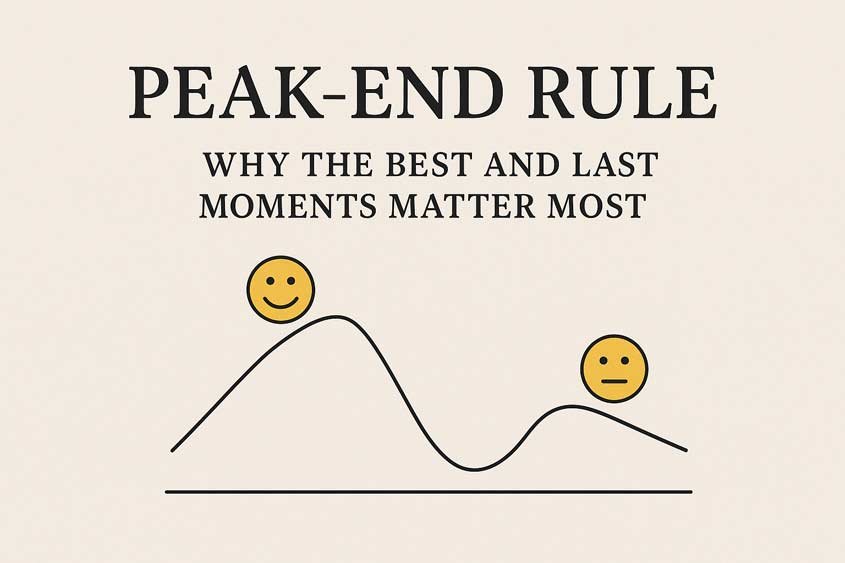
When you think back on an experience—a concert, a vacation, even buying a new gadget—what do you remember most? Surprisingly, it’s rarely every little detail. Research in behavioral psychology shows that your mind doesn’t record events evenly. Instead, two moments dominate memory: the peak, the most intense point, and the end, the final impression. This phenomenon is called the Peak End Rule, and it’s a powerful tool for marketers aiming to influence your decisions.
Marketers have known for decades that human memory is selective. The Peak End Rule explains why. Even if an overall experience was mediocre, an extraordinary finale or a memorable high point can leave you with a lasting positive impression. Conversely, a poor ending can sour your memory, no matter how great the rest of the experience was. Imagine a theme park with thrilling rides but slow checkout lines. If your final interaction is frustrating, it might overshadow all the fun you had earlier.
Table of Contents
Understanding this rule helps marketers craft experiences that stick. Whether it’s a limited-time offer, a promotional event, or the way a product packaging reveals itself, focusing on the peak and the end of a customer journey can drive loyalty and purchase decisions. It’s not magic—it’s psychology in action.
For you as a consumer, awareness of the Peak End Rule is equally powerful. It explains why certain brands or campaigns leave a strong emotional imprint, while others fade from memory. For instance, a streaming service might engineer a series finale or a cliffhanger that maximizes enjoyment at the high point and leaves a lasting positive memory. You’re more likely to subscribe, share, and discuss because the experience was memorable, even if not every moment was perfect.
This article will guide you through the what, why, and how of the Peak End Rule in marketing. You’ll learn the psychological mechanisms behind it, real-world applications across industries, and practical ways brands use it ethically to influence your decisions. Along the way, we’ll touch on other psychological triggers—like scarcity, novelty, and social proof—to see how they complement the Peak End Rule. By the end, you’ll understand why marketers obsess over moments that make or break your memory of an experience, and how you can spot the tactics being used on you.
Understanding Peak End Rule
The Peak End Rule is a psychological principle that explains how people remember experiences. Instead of recalling every detail of an event, your mind focuses primarily on two moments: the peak, which is the most intense or emotionally charged part, and the end, the final impression before the experience concludes. It’s not about duration or the sum of moments—it’s about intensity and closure.
Imagine you’re watching a two-hour movie. There might be slow scenes, subplots that are forgettable, and background details you barely notice. Yet when someone asks you about the film, you’ll likely describe the most thrilling sequence and the ending—maybe the plot twist, the emotional farewell, or the final dramatic reveal. The rest fades. That selective memory pattern is the essence of the Peak End Rule.
This principle doesn’t just apply to entertainment. It shapes how consumers perceive products, services, and brands. Every interaction, from unboxing a gadget to using a mobile app, leaves traces in memory—but the peak moments and final impressions dominate your overall evaluation. A customer might tolerate minor inconveniences if the experience ends positively. Conversely, a strong negative ending can overshadow otherwise satisfying interactions.
Why the Peak End Rule Matters in Decision-Making
The rule influences emotional evaluation more than rational analysis. Human brains rely heavily on memory shortcuts—heuristics—when making judgments. Instead of processing every detail, your mind summarizes experiences based on emotional highs and the closing impression. This is why people might rate a vacation as excellent despite minor annoyances or view a hotel stay negatively even if the majority of the visit was pleasant but ended poorly.
Marketers leverage this by designing experiences that maximize memorable peaks and satisfying endings. For example:
- E-commerce checkout: The purchase process might be smooth overall, but a personalized thank-you message or a surprise discount at the end leaves a stronger positive impression.
- Events and webinars: Organizers often plan a standout moment, like a guest speaker or an interactive activity, plus a closing gesture—like a digital takeaway or a recap video—to make the experience memorable.
- Product launches: Apple’s product reveals create suspense (the peak) and deliver a polished demonstration and packaging experience (the end). Your memory of the launch lingers long after the event concludes.
The Peak End Rule also explains why repeat behavior occurs. A customer who recalls positive high points and a strong finish is more likely to return. Memory drives perception, and perception drives action.
The Psychology Behind Peaks and Ends
Peaks aren’t limited to positive experiences. Negative peaks—painful, frustrating, or shocking moments—also dominate memory. Likewise, a negative ending can sour the entire experience. Consider customer support calls: even if a problem is resolved efficiently, a rude farewell from a representative can leave the consumer frustrated and unlikely to return.
This dual nature makes the Peak End Rule a powerful influence on loyalty and advocacy. Companies that understand it can shape memories in ways that encourage repeat engagement and positive word-of-mouth. They intentionally highlight emotional highs and craft smooth, satisfying conclusions.
What It Influences in Marketing
The Peak End Rule directly impacts:
- Customer satisfaction ratings: Consumers often base survey responses on peaks and endings rather than the full experience.
- Brand loyalty: Memorable peaks and endings foster attachment and preference.
- Purchase decisions: Experiences that end positively increase the likelihood of conversion, repeat purchase, or subscription renewal.
- Emotional storytelling: Advertising that creates a strong climax or emotional payoff taps into memory patterns dictated by this rule.
It also interacts with other psychological triggers. For instance:
- Scarcity: Limited-time offers create a peak of urgency, which is remembered more vividly.
- Social proof: Highlighting positive reactions from others can serve as a memorable peak.
- Novelty: Unique experiences become peaks in your memory, standing out against routine interactions.
Everyday Examples of Peak End Rule
- Dining experiences: A meal with ordinary courses but an exceptional dessert leaves a lasting positive memory.
- Retail experiences: A shopping trip with minor delays can be redeemed by a courteous farewell and packaging presentation.
- Streaming platforms: Series finales are remembered far more than mid-season episodes, shaping overall satisfaction.
In essence, the Peak End Rule is a memory-driven lens through which your experiences are evaluated. It explains why your recollection of a brand, service, or event often feels inconsistent with the objective quality of every individual moment. Marketers who exploit this intelligently design experiences so that your peak moments and endings create a strong emotional imprint, subtly influencing decisions in their favor.
The takeaway? You rarely remember everything—you remember what stood out most and how it ended. For marketers, this is not just a quirk of human memory—it’s a predictable, actionable pattern. For you as a consumer, knowing about it can help you recognize why certain campaigns or experiences stick with you and others fade.
The Psychology Behind It
The Peak End Rule works because of how your brain processes experiences. Human memory does not operate like a video recorder. Instead of capturing every moment equally, your mind prioritizes emotional intensity and final impressions. This creates shortcuts in how experiences are remembered, which marketers can leverage to influence your perception and behavior.
Understanding the psychological mechanism behind the Peak End Rule helps explain why some experiences stick in your mind while others vanish almost instantly. Here’s a closer look at how it operates.
Step 1: Emotional Peaks Capture Attention
During any experience, your brain scans for emotionally significant moments. These moments can be extremely positive—like a surprise gift or an exciting product reveal—or intensely negative, such as a long wait or a frustrating checkout process. The brain flags these peaks because emotionally charged events are more important for learning and survival than neutral ones.
- High-intensity moments trigger strong neural activity in the amygdala, the brain region responsible for processing emotions.
- The more emotionally charged the peak, the stronger the memory trace.
- Peaks can be positive (joy, excitement, satisfaction) or negative (frustration, fear, disappointment).
For marketers, this explains why dramatic or memorable moments in campaigns are far more effective than mundane details. A well-designed advertisement, product launch, or customer interaction creates a peak experience that consumers remember long after other details fade.
Step 2: The End Shapes Overall Evaluation
After the peak, your brain weighs the final moments of an experience heavily. The ending acts as a summary lens, influencing how the experience is recalled in its entirety. This is why even a great event can be remembered poorly if it concludes on a frustrating note.
- The recency effect plays a role here: recent events are easier to recall than those in the distant past.
- A smooth, enjoyable ending can buffer minor negative peaks earlier in the experience.
- Conversely, a negative ending can overshadow a positive peak, leaving an overall unpleasant memory.
Marketers exploit this by planning final impressions carefully. Examples include post-purchase thank-you emails, surprise gifts, or a visually striking conclusion in an ad campaign. These elements shape your memory of the entire experience.
Step 3: Memory Compression Simplifies Evaluation
Once the experience ends, your brain condenses the memory. This process, sometimes called memory compression, retains only the most salient peaks and the final moments. Everything else—routine, uneventful, or neutral—is largely forgotten.
- This is why a three-hour concert might be remembered as “amazing” even if parts were dull.
- Your rating or evaluation is based on emotional snapshots, not a frame-by-frame playback.
- The Peak End Rule operates as a natural shortcut for decision-making.
The simplification allows humans to make judgments efficiently. Instead of analyzing every detail, your brain stores a mental summary weighted toward intensity and closure, which informs future choices, like whether to revisit a brand or recommend a product.
Step 4: Emotional Memory Bias Reinforces Behavior
Once a peak or end moment is encoded in memory, it exerts a bias on future behavior. Positive experiences lead to repeated engagement; negative experiences lead to avoidance.
- Consumers often generalize based on the strongest or final impression rather than the overall experience.
- Marketing campaigns that engineer emotional peaks and satisfying endings increase the likelihood of repeat purchases or brand advocacy.
- Even small, well-timed positive moments—like a personalized thank-you or fast customer support—can have an outsized effect on memory.
Step 5: Interaction With Other Psychological Triggers
The Peak End Rule rarely works in isolation. Marketers often pair it with complementary triggers:
- Scarcity: A limited offer creates a peak of urgency that’s remembered.
- Social Proof: Positive testimonials serve as emotional reinforcement, acting as a peak.
- Novelty: Unique experiences stand out in memory, amplifying both peak and end.
The combination creates a layered memory effect, making the experience even more memorable and persuasive.
Key Mechanisms Summarized
To recap, the Peak End Rule operates through a step-by-step psychological process:
- Identify emotional peaks: The brain flags moments with strong positive or negative intensity.
- Focus on the ending: Recent events weigh heavily in memory and evaluation.
- Compress memory: The brain retains snapshots rather than full sequences.
- Influence future behavior: Memory bias shapes decisions, loyalty, and advocacy.
- Leverage complementary triggers: Peaks and endings work better when paired with scarcity, novelty, or social proof.
These steps explain why marketers invest time in designing memorable highs and satisfying finales. They are not creating artificial excitement for its own sake—they are tapping into the brain’s natural memory shortcuts to influence perception and action.
Why Marketers Care About This Process
From a marketing perspective, understanding this psychological mechanism is crucial:
- You can predict which moments will dominate memory and prioritize them in campaigns.
- You can engineer experiences that create emotional peaks at strategic points.
- You can design endings that leave customers satisfied, boosting retention and advocacy.
- You can combine other triggers strategically, enhancing the impact of both peak and end moments.
By mapping the emotional highs and endpoints, marketers transform otherwise ordinary experiences into memorable, influential journeys. A carefully orchestrated peak-end strategy can determine whether a customer raves about a brand or forgets it entirely.
The Role of Peak End Rule in Marketing
The Peak End Rule isn’t just a psychological curiosity—it’s a practical, powerful tool in marketing. It influences how customers perceive experiences, brands, and products. By understanding and applying this trigger, marketers can design campaigns and customer journeys that leave lasting positive impressions, increase loyalty, and drive sales.
The key insight is simple: people don’t remember your entire campaign or product interaction in detail. They remember the most exciting or emotional moment and the final impression. That’s why carefully crafting peaks and endings can shape behavior far more than any uniform effort throughout the experience.
How Peaks and Ends Influence Consumer Decisions
Consumers rely on memory shortcuts to make judgments. The emotional peaks and final impressions stored in memory act as anchors for future decisions. This explains why:
- A single highly positive moment in a service can outweigh minor inconveniences.
- A frustrating ending can undo hours of positive engagement.
- Consumers’ post-experience ratings, reviews, and recommendations reflect these key moments rather than the full experience.
For example, consider an online shopping experience. If the product arrives quickly and in perfect condition (peak), and the unboxing experience is smooth with a personalized thank-you (end), the consumer is more likely to return. Conversely, if the delivery is late but everything else was fine, the negative ending may dominate memory, reducing repeat purchase likelihood.
Peaks and Ends in Marketing Campaigns
Marketers strategically design campaigns to maximize emotional intensity at peaks and ensure satisfying closures. Here’s how this often plays out:
- Advertising: Ads with dramatic storytelling or emotionally charged scenes create peaks that stick in memory. The closing image or tagline reinforces the final impression.
- Product Experiences: Product launches, in-store demonstrations, or unboxing experiences are crafted to deliver high-impact moments and memorable conclusions.
- Customer Service: Positive resolutions, courteous farewells, or unexpected extras serve as memorable peaks and endings that boost satisfaction and loyalty.
These moments are deliberately designed because they directly influence customer behavior, from immediate purchase decisions to long-term brand attachment.
Why Marketers Use This Trigger
The Peak End Rule allows marketers to:
- Shape perception: Even ordinary products or services can feel exceptional when peaks and endings are optimized.
- Increase retention and loyalty: Customers remember the emotional highs and satisfying conclusions, making them more likely to return.
- Enhance word-of-mouth marketing: Memorable experiences are shared more often, amplifying brand reach.
- Drive conversion: Strategic peaks and positive endings nudge consumers toward taking desired actions, like signing up, subscribing, or purchasing.
Practical Applications Across Industries
The Peak End Rule is used in various marketing contexts. Here are a few examples:
- Retail: Flagship stores often design visually dramatic sections (peaks) and friendly checkout experiences (end) to maximize memory impact.
- Hospitality: Hotels ensure peak moments through signature amenities, personalized surprises, or exclusive offers, and focus on a smooth checkout for a positive ending.
- Entertainment: Movie trailers and finales are designed to leave a strong emotional imprint, ensuring audience engagement and discussion.
- E-commerce: Pop-up notifications for special offers or last-minute discounts create memorable peaks, while a simple, satisfying checkout process serves as the positive ending.
Step-by-Step Marketing Value
To break it down, here’s why this trigger is invaluable in practice:
- Step 1: Identify high-impact moments in the customer journey that can act as emotional peaks.
- Step 2: Ensure the conclusion of the experience leaves a positive, satisfying impression.
- Step 3: Reinforce both peaks and endings with complementary triggers like novelty, social proof, or scarcity.
- Step 4: Monitor feedback and engagement metrics to evaluate the effectiveness of peak-end design.
- Step 5: Adjust campaigns to maximize the memory impact, increasing conversion, retention, and advocacy.
Benefits of Applying the Peak End Rule
- Enhanced customer satisfaction scores
- Increased brand loyalty and repeat purchases
- Stronger emotional attachment to products or services
- More effective word-of-mouth marketing
- Higher likelihood of positive reviews and recommendations
By focusing on peaks and endings, marketers can transform ordinary interactions into memorable, influential experiences. The Peak End Rule gives a predictable way to shape memory and influence future decisions, making it one of the most actionable psychological triggers in marketing.
Peak End Rule Real Case Studies
The Peak End Rule is not just theory—it has been demonstrated in real marketing campaigns across multiple industries. Companies that understand how memory emphasizes peaks and endings design experiences to leave lasting impressions. Let’s explore some verifiable examples of this trigger in action.
Case Study 1: Disney Theme Parks
Disney is often cited as a master of emotional experience design, and the Peak End Rule is central to their strategy. Every ride and attraction is crafted to create emotional peaks—whether it’s the thrill of a rollercoaster, the excitement of a live character encounter, or the wonder of immersive storytelling.
- Peak moments: Rides like Space Mountain or immersive parades generate high-intensity emotional engagement.
- Ending moments: Disney ensures smooth exits, friendly staff farewells, and memorable photo opportunities.
Research into theme park experiences shows that visitors’ overall satisfaction is strongly correlated with their memories of the peak and end moments, rather than minor inconveniences during the day. A study published in the Journal of Consumer Research found that guests rated experiences more positively when the final moments were pleasant, regardless of earlier minor frustrations.
By deliberately engineering these peaks and ends, Disney fosters brand loyalty, repeat visits, and word-of-mouth promotion, illustrating the Peak End Rule’s effectiveness in long-term customer strategy.
Case Study 2: Netflix Series Finales
Netflix has leveraged the Peak End Rule to maximize engagement and subscriptions. Popular series often focus on crafting emotionally charged climaxes and satisfying conclusions. Consider the marketing of shows like Stranger Things:
- Peak moments: Key episodes feature cliffhangers, plot twists, and high-tension sequences.
- Ending moments: Each season finale provides emotional resolution or dramatic payoff, leaving a strong memory imprint.
Subscriber surveys and engagement metrics show that the most-discussed aspects of shows are these peaks and endings, which drive binge-watching, repeat subscriptions, and social media buzz. The Peak End Rule explains why viewers may forget filler episodes but vividly remember season finales, influencing both perception and behavior.
Case Study 3: Starbucks Customer Experience
Starbucks applies the Peak End Rule in everyday customer interactions. Their approach is subtle but deliberate:
- Peak moments: Personalized service, baristas remembering regular customers, and seasonal offerings create emotional highs.
- Ending moments: The clean store environment, polite farewells, and small touches like decorated cups or loyalty rewards leave a satisfying final impression.
Research in service marketing confirms that these peak-end strategies contribute to customer retention and repeat purchases. A 2019 study in the International Journal of Contemporary Hospitality Management highlighted that memorable positive moments during service interactions significantly influence future visits, more than the overall service duration.
Key Takeaways from Real-World Applications
Across these examples, several patterns emerge:
- Emotional peaks drive memorability: Whether it’s a rollercoaster ride, a thrilling plot twist, or a personalized service interaction, intense moments stick in the consumer’s mind.
- Endings determine overall evaluation: Consumers often judge the entire experience based on how it finishes. A strong ending can redeem minor flaws; a poor ending can negate earlier positives.
- Integrated design maximizes impact: Successful brands coordinate peaks and endings intentionally, often reinforcing them with other triggers like novelty, social proof, or scarcity.
These case studies show that the Peak End Rule is actionable, evidence-based, and widely used. Marketers who understand this principle can structure experiences to create lasting emotional impressions, driving engagement, loyalty, and ultimately, revenue.
How Consumers React
Understanding the Peak End Rule isn’t just about creating memorable marketing campaigns—it’s about observing how consumers respond to them. When brands design experiences that optimize emotional peaks and endings, the effects are visible in both behavior and decision-making. Consumers naturally act in ways that reflect their memory of high points and final impressions, often without realizing it.
Emotional Responses Shape Behavior
The first reaction consumers display is emotional. Peaks trigger strong feelings—excitement, joy, surprise, or even fear—while the end moment determines the lasting sentiment. These emotions directly influence:
- Perceived satisfaction: People rate experiences more positively when peaks and endings are memorable, even if the majority of the experience was neutral or slightly negative.
- Purchase intent: Emotional highs can create immediate impulses, while positive endings reinforce long-term intentions.
- Advocacy behavior: Consumers are more likely to share experiences that had remarkable peaks or satisfying conclusions.
For example, a restaurant that offers an extraordinary dessert (peak) and a friendly farewell (end) often sees customers leaving positive reviews or recommending it to friends, even if the main course was average.
Observable Patterns in Consumer Reactions
Consumers’ responses to peak-end optimized experiences often follow consistent patterns:
- Selective memory: They recall the most intense moments and final impressions, often forgetting routine or unremarkable parts of the experience.
- Emotional amplification: Peaks and endings can exaggerate positive or negative feelings, shaping how the experience is discussed or shared.
- Behavioral alignment: Positive peak-end experiences increase repeat purchases, subscriptions, or engagement. Negative endings lead to complaints, disengagement, or churn.
Examples Across Industries
- E-commerce: A seamless checkout process paired with a personalized thank-you email creates a peak-end memory that increases repeat buying.
- Travel: Airlines that offer smooth boarding and a friendly landing crew generate positive impressions that outweigh minor delays.
- Entertainment: Moviegoers may forget slow scenes but remember a dramatic climax and a satisfying resolution, influencing whether they see the sequel.
Typical Consumer Reactions in Action
Consumers often act in ways that marketers can predict:
- Positive peaks and ends:
- Share experiences on social media
- Leave favorable reviews
- Return for repeat purchases or visits
- Recommend the brand to others
- Negative peaks or ends:
- File complaints or negative reviews
- Avoid repeat engagement
- Influence peers’ opinions negatively
- Reduce brand loyalty
Key Insights for Marketers
Observing these reactions highlights several practical insights:
- Consumers rely on emotional memory more than factual details. The intensity and conclusion of the experience dominate perception.
- Behavior is memory-driven: purchase decisions, loyalty, and advocacy are strongly shaped by peak and end impressions.
- By creating controlled peaks and endings, marketers can guide behavior predictably, making positive actions more likely.
Actionable Takeaways
To summarize, here are observable consumer reactions that marketers should expect and leverage:
- Emotional highs and satisfying endings dominate feedback and word-of-mouth.
- Customers’ overall satisfaction often ignores neutral moments, focusing on standout experiences.
- Positive peak-end memories boost loyalty, repeat purchases, and recommendations.
- Negative endings can undo hours of positive interaction.
- Memory-driven behaviors are predictable and can be ethically influenced through experience design.
By understanding how consumers react, marketers can fine-tune experiences to maximize impact. Observing reactions in real time—through reviews, social media engagement, and behavioral metrics—allows brands to continuously optimize peaks and endings. The more strategically these moments are managed, the stronger the influence on decision-making and loyalty.
How Brands Use It Effectively
Brands that understand the Peak End Rule don’t leave customer perception to chance. They strategically design experiences to create emotional peaks and satisfying endings, ensuring consumers leave with a positive memory. When applied ethically, this trigger enhances loyalty, satisfaction, and long-term engagement without manipulating or misleading customers.
Creating Emotional Peaks
The first step in applying the Peak End Rule is to design moments that evoke strong, positive emotions. Peaks can occur at any stage of the customer journey, but they are most effective when tied to meaningful interactions.
- Retail environments: Stores often use striking visual displays, live demonstrations, or product sampling to create memorable moments.
- E-commerce: Interactive features, such as virtual try-ons or personalized recommendations, provide excitement and engagement.
- Events and experiences: Brands can create peaks through unique offerings, entertainment, or limited-time perks.
The goal is to make customers feel genuinely engaged and emotionally connected. Peaks that are authentic and enjoyable reinforce trust and positive associations, rather than artificial hype.
Ending on a High Note
Equally important is the final impression of the experience. A satisfying conclusion ensures the memory of the interaction is positive, even if minor issues occurred earlier.
- Customer service: Polite farewells, follow-up emails, or small gestures like discount codes leave a strong positive ending.
- Product packaging: Thoughtful, aesthetically pleasing packaging can make the unboxing memorable.
- Digital experiences: Smooth checkout flows, confirmation emails, or personalized thank-you messages ensure a positive finish.
The ending should feel authentic, convenient, and thoughtful, reinforcing the emotional peak and leaving the consumer with a strong, favorable impression.
Integrating Ethical Triggers
Ethical application of the Peak End Rule means using it to enhance genuine value for the consumer, not manipulate decisions through deception. Combining it with other positive triggers can amplify results:
- Novelty: Introduce small surprises or unique experiences to create memorable peaks.
- Social proof: Highlight authentic testimonials or user-generated content that reinforces positive emotions.
- Scarcity (truthful): Limited-time offers or exclusive perks can enhance excitement, provided they are real and transparent.
By integrating these elements, brands can create experiences that feel meaningful, memorable, and valuable.
Examples of Brands Applying the Peak End Rule
- Apple: Product launches are crafted for high-impact emotional peaks (keynote reveals, product demos) and polished endings (packaging, customer service follow-ups).
- Starbucks: Personalized service, seasonal offerings, and friendly farewells create both peaks and satisfying endings in everyday interactions.
- Disney: Theme parks and entertainment experiences are meticulously designed around emotional highlights and smooth, memorable exits.
These brands engineer experiences with attention to emotional flow, ensuring that the memory of the interaction drives loyalty, advocacy, and repeat business.
Practical Action Steps for Marketers
To apply the Peak End Rule effectively, brands can follow these actionable steps:
- Map the customer journey and identify opportunities for emotional peaks.
- Design memorable endings that leave a strong positive impression.
- Ensure all peaks and endings are authentic and value-driven, avoiding manipulation.
- Test and gather feedback to refine experiences, measuring satisfaction, engagement, and loyalty.
- Integrate complementary triggers like novelty, social proof, and scarcity ethically to amplify impact.
When used thoughtfully, the Peak End Rule allows brands to shape memory, influence perception, and drive behavior without compromising ethics. By designing experiences that combine emotional highs with satisfying conclusions, businesses can strengthen customer relationships, increase loyalty, and create memorable brand interactions that consumers genuinely enjoy.
Mistakes to Avoid
Even the most well-intentioned use of the Peak End Rule can backfire if brands make common mistakes. Missteps often result in consumer dissatisfaction, reduced trust, or missed opportunities to create memorable experiences. Understanding what not to do is as important as knowing how to design peaks and endings effectively.
Ignoring the End Moment
A frequent error is focusing on peaks but neglecting the ending. Marketers may invest heavily in creating excitement or dramatic moments, yet overlook how the experience concludes.
- Even an amazing peak can be overshadowed by a poor final impression.
- Long waits, confusing checkout processes, or unhelpful follow-ups can leave a negative lasting memory.
- Customers often judge the entire experience based on the ending, not the peak alone.
Overloading With Peaks
Some brands try to pack too many peaks into a single experience. While it might seem like more excitement equals better memory, this approach can overwhelm consumers or dilute impact.
- Too many highs can reduce the distinctiveness of each moment.
- Consumers may become desensitized, making it harder for any peak to stand out.
- The experience risks feeling chaotic rather than memorable.
Manipulative Tactics
Using the Peak End Rule to mislead or manipulate consumers is another critical mistake. Artificially engineered highs or false scarcity can harm trust and brand reputation.
- Exaggerated claims or deceptive marketing can create temporary excitement but generate long-term backlash.
- Consumers are quick to notice inauthenticity, particularly when emotional peaks feel forced.
- Negative word-of-mouth often spreads faster than positive feedback when manipulation is detected.
Ignoring Customer Feedback
Failing to monitor how consumers actually experience peaks and endings reduces the effectiveness of any campaign. Brands might assume a moment is memorable, but without testing and feedback, it may not resonate.
- Skipping surveys or engagement metrics can leave marketers blind to problem areas.
- Peak-end designs that miss the mark can result in neutral or even negative memories.
- Continuous observation and adjustment are necessary to align the experience with consumer perception.
Common Errors in Practice
Here’s a concise list of mistakes that reduce the impact of the Peak End Rule or provoke pushback:
- Neglecting the ending of the experience, allowing minor issues to dominate memory.
- Creating too many peaks, which overwhelms or desensitizes consumers.
- Using artificial or manipulative peaks that feel inauthentic.
- Ignoring customer feedback, leading to assumptions about what is memorable.
- Focusing only on the peak and overlooking overall journey cohesion.
Lessons for Marketers
Avoiding these mistakes ensures that the Peak End Rule works as intended—ethically and effectively. Peaks and endings must feel authentic, well-timed, and integrated into the overall experience. By listening to customers, testing assumptions, and refining experiences, marketers can prevent missteps and maximize the impact of memory-driven behavior.
When used correctly, the Peak End Rule enhances loyalty, satisfaction, and advocacy. When misused, it can lead to frustration, complaints, or even distrust. Awareness of common pitfalls helps brands maintain long-term, positive relationships with consumers while leveraging the powerful psychological principle effectively.
Best Practices
Applying the Peak End Rule effectively requires thoughtful planning, creativity, and attention to detail. This trigger works best when brands strategically design experiences that highlight emotional peaks and satisfying conclusions, while maintaining authenticity and value for the consumer.
The goal is simple: leave an impression that lasts. Consumers may forget routine or mundane parts of an interaction, but the emotional highs and the final moments will shape their memory, opinions, and future behavior. By following practical tips, marketers can leverage this principle consistently and ethically.
Design Experiences Around Emotional Peaks
The first step is to identify opportunities for peaks in the customer journey. Peaks are moments of heightened emotion—positive experiences that consumers will remember long after the interaction ends.
- Focus on moments that naturally excite, surprise, or delight.
- Personalization can amplify peaks: tailored recommendations, customized messaging, or recognizing customer preferences.
- Use storytelling in campaigns or product experiences to build emotional resonance.
Peaks are most effective when they feel genuine, valuable, and memorable, rather than forced or artificial.
Ensure a Strong Ending
Equally critical is the final impression. Even if the peak is remarkable, a poor ending can dominate memory and undo the impact.
- Smooth, convenient, and thoughtful conclusions leave lasting positive impressions.
- Examples include clear follow-ups, personalized thank-you messages, or seamless post-purchase experiences.
- Ending moments should reinforce the brand’s value and create a sense of satisfaction.
Test and Measure Responses
To maximize the Peak End Rule’s effectiveness, brands must monitor how consumers actually perceive peaks and endings. Testing and feedback help refine the experience.
- Collect surveys, ratings, and reviews immediately after an interaction.
- Track behavior metrics such as repeat purchases, retention rates, or social engagement.
- Identify which moments generate the strongest emotional responses and optimize accordingly.
Integrate With Complementary Triggers
The Peak End Rule works best when combined with other psychological triggers, creating a layered effect on memory and behavior.
- Novelty: Unique or unexpected elements enhance emotional peaks.
- Social proof: Customer testimonials or user-generated content reinforce memorable moments.
- Scarcity (truthful): Limited-time offers or exclusive perks increase urgency and emotional intensity.
This combination strengthens the overall impact while remaining ethical and value-driven.
Short List of Actionable Tips
Here’s a concise set of practical tips you can apply to use the Peak End Rule effectively:
- Identify key moments in the customer journey that can act as emotional peaks.
- Ensure the final interaction or conclusion leaves a positive, memorable impression.
- Personalize experiences to increase emotional resonance.
- Monitor feedback and behavior to validate which peaks and endings are most effective.
- Combine with complementary triggers like novelty, social proof, or truthful scarcity to amplify impact.
Maximizing Long-Term Value
When applied strategically, the Peak End Rule shapes lasting consumer behavior. Positive peaks and endings encourage repeat engagement, brand loyalty, and word-of-mouth promotion. Ethical application ensures that consumers genuinely enjoy the experience, reinforcing trust and long-term relationships.
Marketers who consistently integrate peak-end design into campaigns, services, and product experiences create memories that stick, turning ordinary interactions into influential touchpoints that drive action.
Spot The Trigger
The Peak End Rule is all about how experiences are remembered, focusing on the emotional highs and the final moments. The exercises below will help you spot whether advertisers are leveraging this psychological trigger in their campaigns. Pay attention to which moments are emphasized, and how the experience concludes.
Exercise 1
A luxury hotel launches a new weekend package. Guests arrive to a personalized welcome note in their room, enjoy an exciting rooftop cocktail event (with live music), and end their stay with a complimentary spa treatment before departure. You leave feeling relaxed, pampered, and impressed by the thoughtful send-off.
Question: Is the brand using the Peak End Rule? (True or False) | Check Answer
Exercise 2
An online electronics retailer runs a standard summer sale. All products are discounted, but the website experience is identical to previous sales, with no special visuals, messaging, or extra perks. Customers browse and purchase as usual, with no particularly memorable moments during the process.
Question: Is the brand using the Peak End Rule? (True or False) | Check Answer
Exercise 3
A streaming platform releases a new original series. The marketing emphasizes the most dramatic and emotionally intense episodes, building anticipation for the finale. The final episode resolves the story in a highly satisfying and emotional way, leaving viewers talking about it for days.
Question: Is the brand using the Peak End Rule? (True or False) | Check Answer
What You Should Remember
When you step back and look at the Peak End Rule as a whole, the idea becomes pretty straightforward: people remember experiences based on the most intense moment and the final moment. Everything else fades into background noise. This tiny quirk in human memory shapes how you judge brands, how you talk about products, and whether you return to an experience again.
Marketers love this trigger because it influences decisions without feeling pushy. You can’t force someone to remember every detail of an interaction, but you can guide which two moments become the headline in their mind. If you get those right, you change how they feel about your brand long after the experience is over.
The peak doesn’t have to be dramatic. It just needs to be meaningful enough that your brain flags it as important. A personalized message, an unexpected perk, a friendly human interaction, or a moment of delight can carry the emotional weight needed to stand out. When brands pair that with a smooth, thoughtful, satisfying ending, the memory becomes sticky. It’s the same reason you remember the last scene of a great movie or the best joke in a comedy show.
From a marketing psychology point of view, this rule is powerful because it blends seamlessly with other triggers. Novelty amplifies peaks. Social proof helps people feel confident about their final impression. Emotional contagion can make the peak feel stronger. Anchoring can frame the ending more favorably. When these triggers work together, they reinforce a memory that’s hard to shake.
This isn’t manipulation. It’s design. You’re structuring the experience in a way that respects how the human brain naturally works. What you highlight becomes what consumers remember. What they remember becomes what they believe. And what they believe ultimately influences how they buy.
The Peak End Rule also comes with a subtle message for anyone building a brand: most people won’t remember the hours you spent obsessing over every detail. They’ll remember just a few key moments that define everything else. This frees you to put your creative energy where it matters most. Instead of trying to make every second perfect, you focus on creating an emotional high and a great finish. That’s how you shape loyalty. That’s how you turn casual buyers into fans.
If you want to influence decisions ethically, this principle gives you a reliable blueprint. Ask yourself:
Is there a moment in your customer journey that creates a strong emotional highlight?
Is the ending pleasant, smooth, and satisfying?
Do the final seconds of the interaction reinforce the story you want people to remember?
When the answers are yes, your marketing becomes more memorable. More persuasive. More human.
The Peak End Rule isn’t complicated, but it’s powerful. It reminds you that experiences aren’t judged by their averages—they’re judged by their defining moments. And when you create moments that matter, people carry them with them. They think differently, feel differently, and yes—they often buy differently.

Gabriel Comanoiu is a digital marketing expert who has run his own agency since 2016. He learned marketing by testing, analyzing, and refining campaigns across multiple channels. In his book series Impulse Buying Psychology, he shares the psychological triggers behind every purchase, showing how to create marketing that connects, persuades, and converts.