
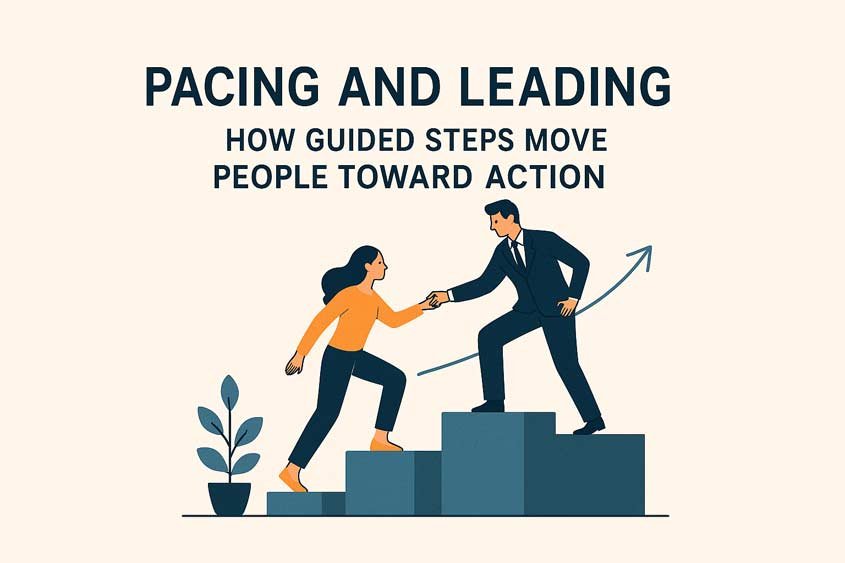
When it comes to influencing decisions, marketers often rely on subtle psychology rather than overt persuasion. One of the most powerful tools in this arsenal is pacing and leading. You’ve probably experienced it without even realizing: a brand or salesperson starts by mirroring your current feelings or situation, then gradually nudges you toward a desired action. It’s like being walked through a journey without noticing the guide, and before you know it, you’re ready to act.
Pacing and leading works because humans respond strongly to familiarity and validation. The first step—pacing—establishes common ground. It says, in effect, “I understand you. I see where you’re coming from.” That validation triggers a subtle sense of trust, which is one of the most underappreciated drivers of decision-making. Once the pacing feels natural, the leading begins: your emotions, perceptions, and sometimes even actions are guided gently toward a decision, whether it’s signing up, buying a product, or simply engaging more deeply.
Table of Contents
Think about a streaming service you’ve browsed. At first, the interface shows suggestions that match your previous choices. That’s pacing: the service acknowledges your tastes. Then, it starts recommending shows slightly outside your usual genre but with elements you enjoy. That’s leading. By the time you pick the next series, the decision feels entirely your own—but it was guided, step by step. The magic lies in the seamless transition from recognition to influence.
This principle doesn’t just apply to digital interfaces. In retail, sales associates often pace customers by discussing familiar concerns: sizing, style, price range. Once rapport is established, the associate introduces options that elevate the purchase or subtly guide the customer toward complementary items. In high-stakes B2B contexts, pacing may involve acknowledging current business challenges or existing processes before proposing a new solution. Leading then nudges the client toward a recommendation, making the path to commitment feel logical and comfortable.
Pacing and leading taps directly into emotional and experiential engagement, a category of marketing triggers that relies on immersion and resonance rather than just rational argument. It’s a technique that acknowledges how human attention and action aren’t purely logical. People buy not only because a product solves a problem, but because they feel understood, aligned, and gradually led to a point where action feels natural. That’s why pacing and leading is so effective across industries—it doesn’t fight the human decision-making process, it works with it.
Consider a fitness app. The first few days might focus on what the user already does comfortably: walking, light stretching, or logging water intake. This is pacing—meeting users where they are. Over time, the app introduces small challenges that push habits in a productive direction. Users rarely feel coerced; they feel motivated because the progression matches their experience. Here, pacing and leading isn’t manipulation—it’s strategic empathy. It guides without creating resistance.
Even in marketing campaigns aimed at emotion, the principle is crucial. Ads that immediately hit a consumer with high-pressure sales rarely work as well as those that acknowledge the audience’s current mindset, then slowly lead them toward curiosity, engagement, or purchase. Emotional resonance combined with stepwise guidance triggers a natural alignment: consumers feel seen first and guided second. That sequence is critical. Reverse it, and the audience may resist or disengage.
Another layer is social proof, which often integrates naturally with pacing and leading. If you pace the audience with scenarios or testimonials they relate to, you create familiarity. Leading can then involve showing broader adoption, success stories, or benefits that feel reachable because the audience already identifies with the starting point. This interplay between pacing, emotional resonance, and social proof strengthens both trust and the likelihood of action.
Ultimately, pacing and leading is about storytelling, empathy, and strategic influence. It respects the audience’s existing reality, validates it, and then carefully guides them toward new possibilities. Whether you’re designing a landing page, a retail experience, or a multi-step campaign, understanding this process gives you a framework to shape behavior without overt pressure. It’s one of the few triggers that feels natural to the consumer while delivering measurable marketing impact.
Understanding Pacing and Leading
Pacing and leading is one of those marketing psychology concepts that sounds complex but is really about reading your audience and walking them toward a decision. At its core, it’s a subtle two-step dance: first, you meet people where they are (pacing), and then you gently guide them to a desired outcome (leading). The trick is that pacing earns trust and understanding, while leading leverages that trust to influence behavior without triggering resistance.
What Pacing Really Means
Pacing is all about alignment. You’re not forcing a message on someone; you’re acknowledging their current mindset, preferences, or emotions. It could be as simple as mirroring their language, addressing a concern they have, or reflecting a familiar scenario. In marketing, pacing creates a psychological handshake: “I get you.”
For example, imagine a luxury skincare brand introducing a new line. Their ad might start by validating a common concern: “We know how frustrating dry skin can be in winter.” That sentence alone is pacing—it shows awareness and empathy. Consumers instantly feel recognized, and that’s critical because humans are naturally drawn to entities that appear understanding and relatable.
Pacing often involves emotional and experiential engagement. It can be visual, auditory, or narrative. Think about videos or imagery that reflect the audience’s lifestyle, or copy that mirrors how they talk. Pacing doesn’t push action; it builds resonance. It creates comfort and a sense of familiarity. Without it, leading may feel abrupt or manipulative, and the audience might resist entirely.
The Shift to Leading
Once pacing has established connection, leading begins. Leading is the subtle step where you guide people toward a decision or action. It leverages the trust and alignment built during pacing to gently introduce new ideas, products, or behaviors.
In practice, leading might look like a series of progressively engaging suggestions. Using the skincare example, after acknowledging dry skin frustrations, the brand might introduce a solution: “Here’s a hydrating cream that nourishes your skin for 24 hours.” Notice the transition—first recognition, then gentle guidance. By pacing first, the brand ensures the lead doesn’t feel pushy.
Leading doesn’t coerce; it nudges. It uses familiarity, social proof, and anticipation to make choices feel intuitive. The consumer’s own reasoning feels responsible for the action, even though it was guided. This is why pacing and leading is often categorized under emotional and experiential triggers: it shapes perception and behavior via experience rather than logic alone.
Influence Across Decision-Making
Pacing and leading impacts multiple stages of the buyer journey. At the awareness stage, pacing draws attention and builds initial trust. At consideration, leading introduces options, features, or benefits in a digestible way. And at conversion, it guides the decision while minimizing friction.
This influence extends beyond sales. In email campaigns, pacing might involve empathizing with the reader’s day-to-day struggles before suggesting a product that eases those challenges. In social media marketing, it could involve curating content that reflects common interests or concerns, followed by subtle prompts toward interaction, sharing, or purchase.
Pacing and Leading in Everyday Experiences
You encounter pacing and leading constantly, often without noticing it. Retail associates mirror your body language and repeat your phrasing—pacing—before showing items you hadn’t considered but are likely to like—leading. Streaming services show content based on your past choices (pacing) and then introduce slightly different genres or trending titles (leading). Even restaurants pace diners with small appetizers and lead them toward main dishes or desserts that maximize satisfaction and spend.
The common thread is gradual alignment. People resist abrupt changes or aggressive sales tactics, but they respond to incremental guidance that matches their current state and gently nudges them forward.
Psychological Mechanisms Behind Influence
Pacing and leading leverages several key psychological principles:
- Trust and familiarity: People are more likely to act when they feel understood. Pacing builds this foundation.
- Commitment and consistency: Once someone identifies with the pacing stage, they tend to follow through with the guided steps to remain consistent with that alignment.
- Emotional engagement: By connecting to current feelings, pacing sets the stage for emotional resonance, which increases responsiveness during leading.
- Social proof integration: Leading often introduces examples of peers or success stories that reinforce the suggested action.
Each of these mechanisms amplifies the impact of pacing and leading. The first step (pacing) primes the brain for influence, and the second step (leading) channels that readiness toward action.
When It Works Best
Not every campaign or context benefits equally from pacing and leading. It’s most effective when the audience has some initial hesitation, curiosity, or emotional investment. If consumers are indifferent or unaware, pacing may fail to establish meaningful connection, making the leading step less effective. Conversely, if the audience is already fully committed, pacing and leading can feel redundant or condescending.
Industries that rely on emotional or experiential engagement see the strongest results: lifestyle brands, consumer tech, fitness, wellness, travel, and high-involvement retail sectors. In these contexts, pacing and leading can be layered with other triggers like scarcity, social proof, and authority to guide choices naturally and ethically.
Understanding pacing and leading isn’t just about knowing the terminology; it’s about recognizing when and how to connect with people on a human level and then gently guide their decisions. It’s one of the few triggers that respects both the consumer’s autonomy and the marketer’s goals.
How It Works
Pacing and leading isn’t magic—it’s psychology in motion. It operates by leveraging fundamental patterns in how people think, feel, and make decisions. To use it effectively, you need to understand the sequence and the triggers that make each step compelling. Let’s break it down step by step.
Step 1: Meet the Audience Where They Are
The first phase, pacing, begins by observing and acknowledging the audience’s current state. You reflect what they’re experiencing, feeling, or thinking. This could be through tone, language, imagery, or context. It’s about showing you understand, without pushing for anything yet.
Example: A travel brand might open an ad with, “Dreaming of a weekend escape but worried about crowded spots?” That simple question mirrors the audience’s concern. It’s recognition, not persuasion. The brain responds positively to this: familiarity reduces cognitive resistance and opens the door for influence.
Step 2: Build Trust Through Alignment
Once you’ve mirrored their state, you strengthen the connection. People tend to trust entities that feel familiar or “in sync” with them. This trust isn’t shallow; it’s rooted in the brain’s social wiring. Humans are wired to follow those who understand and reflect their experiences.
This is why pacing is critical. If skipped, leading can feel pushy or manipulative. Without trust, attempts to guide the audience are more likely to be ignored or resisted.
Step 3: Introduce Subtle Guidance
After pacing establishes alignment and trust, leading begins. This is where you introduce options, ideas, or actions in a way that feels natural. Leading is incremental; you don’t force a leap, you suggest small steps that feel logical and attainable.
Example: A fitness app might first acknowledge a user’s current routine—“You’re keeping up with your daily walks, great job!” Then it leads with a tiny progression—“Try adding a five-minute stretch after your walk to enhance results.” The user feels encouraged, not pressured.
Step 4: Reinforce Decisions Through Emotional Resonance
Pacing and leading works best when it engages emotions. The process taps into feelings of satisfaction, curiosity, excitement, or security. When the audience feels good about a small step, they’re more likely to take the next. Emotional reinforcement strengthens both trust and compliance.
Bullet points of key mechanisms:
- Mirroring current thoughts or behaviors reduces resistance.
- Validation and empathy build trust and lower defensiveness.
- Gradual nudging makes action feel natural, not forced.
- Emotional resonance amplifies engagement and readiness to act.
- Social proof or relatable examples reinforce the suggested steps.
Step 5: Encourage Consistency
Humans have a natural desire for consistency. When someone identifies with a behavior, belief, or emotion during pacing, leading leverages this by guiding actions that align with the initial alignment. Once the first small step is taken, each subsequent step feels consistent with prior behavior.
Example: A subscription service might pace by acknowledging your reading habits: “You’ve loved our weekly updates on tech trends.” Then it leads with, “Upgrade to premium to get exclusive deep dives every day.” The progression feels coherent with your previous engagement.
Step 6: Make the Outcome Feel Self-Directed
The brilliance of pacing and leading is that the final action feels like the consumer’s own decision. Even though the marketer guided the steps, the individual perceives the choice as autonomous. This perception increases satisfaction, reduces buyer’s remorse, and encourages loyalty.
Step 7: Layer with Complementary Triggers
Pacing and leading is often reinforced by other marketing triggers. Scarcity, social proof, authority, and reciprocity can all work alongside it to deepen impact. But these should be introduced only after pacing establishes connection, otherwise they risk being dismissed as pushy.
Example: A beauty brand paces by acknowledging common skin concerns. It then leads with a recommended product, and finally adds subtle social proof: “Thousands of users have seen noticeable results in 30 days.” The combination nudges action while maintaining comfort and trust.
Step 8: Observe and Adjust
Successful application requires observation. Different audiences respond differently. Pacing must feel genuine; leading must feel achievable. Metrics, feedback, and behavioral observation help marketers fine-tune the balance between reflection and guidance.
Why This Sequence Works
The psychological mechanism of pacing and leading relies on a few core principles:
- Cognitive fluency – Familiarity makes new ideas easier to accept.
- Trust and rapport – Mirroring builds subconscious trust.
- Commitment and consistency – Small steps lead to larger commitments.
- Emotional engagement – Positive emotions increase receptiveness.
- Perceived autonomy – Choices feel self-directed, not imposed.
By respecting these principles, pacing and leading engages both logic and emotion in a way that feels natural to the audience. That’s why it’s so widely applicable—from retail and tech to health and lifestyle marketing.
In practical terms, you can think of the process like a gentle slope rather than a push. You align, you validate, you nudge, and by the time action is expected, it feels like the path was theirs all along.
Why It Matters in Marketing
Pacing and leading isn’t just a psychological curiosity—it’s a practical tool marketers rely on to shape decisions, drive engagement, and increase conversions. Its strength lies in subtly guiding behavior while making the consumer feel understood and autonomous. Let’s dig into why this trigger matters so much in real-world marketing.
Establishing Trust Before Influence
One of the biggest challenges in marketing is overcoming skepticism. Consumers are inundated with messages daily, so trust is a rare and valuable commodity. Pacing works to establish that trust by acknowledging the audience’s reality, concerns, and feelings.
Example: A financial services ad might start with, “We know planning for retirement can feel overwhelming.” This pacing signals empathy. Once the consumer feels understood, leading can introduce solutions or recommendations without resistance. Trust acts as the gateway—without it, even the most appealing offer may be ignored.
Shaping Perceptions Gradually
Pacing and leading allows marketers to shape perceptions in a controlled, subtle way. Rather than hitting the audience with a full sales pitch upfront, pacing establishes alignment, and leading gradually introduces the desired perspective or behavior.
Example: In tech marketing, a software company might first highlight the everyday challenges teams face (pacing), then show how their tool solves those problems step by step (leading). The shift feels natural, almost like the consumer came to the solution themselves.
Driving Emotional Engagement
Emotions drive a huge portion of purchasing behavior. Pacing and leading taps into this by meeting consumers where they are emotionally, then guiding them toward positive feelings associated with action. The result is higher engagement, stronger brand affinity, and a greater likelihood of conversion.
Influencing Multiple Touchpoints
This trigger works across various marketing channels—emails, landing pages, social media, in-person sales, and advertisements. It’s versatile because it adapts to both digital and experiential marketing.
- Emails: Start by acknowledging the reader’s context, then guide them toward click-throughs or sign-ups.
- Landing pages: Use familiar language and imagery to pace, then lead the visitor through clear next steps.
- Social media campaigns: Mirror user interests and habits, then introduce new ideas, products, or content gradually.
- Retail and in-person experiences: Salespeople pace with recognition of concerns, leading to product suggestions or upsells.
Leveraging Cognitive and Behavioral Principles
The effectiveness of pacing and leading is rooted in psychological principles that marketers can apply intentionally:
- Trust and rapport: People act when they feel understood.
- Commitment and consistency: Gradual steps make further action feel aligned with past decisions.
- Perceived autonomy: Consumers believe they are making their own choice, boosting satisfaction.
- Emotional resonance: Engaging feelings increases receptivity.
- Social proof integration: Showing that peers or others follow a behavior reinforces the guided steps.
By consciously structuring campaigns around these principles, marketers make decisions easier, faster, and more satisfying for consumers.
Increasing Conversion While Reducing Resistance
Unlike aggressive sales tactics, pacing and leading minimizes resistance. People rarely push back when the journey feels tailored to them. This makes the trigger particularly valuable for high-consideration products or services, where hesitation is natural.
Example: A luxury car brand might pace by acknowledging the importance of safety and reliability, then lead by highlighting advanced features that align with those priorities. Customers feel informed and guided rather than pressured, which increases confidence in the purchase.
Building Long-Term Relationships
Beyond immediate conversions, pacing and leading helps cultivate loyalty. When consumers feel consistently understood and gently guided, they’re more likely to trust the brand in future interactions. The result is repeat engagement and advocacy.
- Retention campaigns: Pace by recognizing user behavior, then lead with personalized offers.
- Brand storytelling: Mirror consumer values in content, then lead to emotional alignment and brand connection.
- Upselling or cross-selling: Start with familiar needs, then guide to complementary products naturally.
Pacing and leading matters in marketing because it aligns persuasion with human psychology. It makes influence feel natural, decisions feel self-directed, and campaigns more effective across the board. Brands that master this trigger can guide behavior without triggering resistance, creating both immediate results and lasting engagement.
Pacing and Leading Real Case Studies
Understanding pacing and leading in theory is one thing. Seeing it applied in real marketing campaigns shows how subtle guidance can drive action and shape consumer behavior. Let’s explore three examples across industries to see the trigger in action.
Case Study 1: Fitness and Wellness App
A fitness app wanted to increase user engagement for new subscribers. Their strategy centered on pacing and leading:
- Pacing: The app started by recognizing the user’s current activity level. Messages were personalized, such as “We see you’re logging daily walks—great consistency!” This reflection of existing behavior made users feel acknowledged without pressure.
- Leading: Once the initial engagement was established, the app suggested small next steps: adding a five-minute stretch after a walk or trying a beginner workout. Over time, these incremental nudges led to higher participation in premium workouts.
The psychological mechanism was clear: users were first validated (pacing) and then gradually guided (leading) into deeper app engagement. Engagement metrics rose by over 25% within the first month, demonstrating how small, guided steps increase action without coercion.
Case Study 2: Retail Fashion Campaign
A global fashion retailer launched a seasonal campaign aiming to increase sales of a new clothing line. They used pacing and leading to improve both engagement and conversions:
- Pacing: Social media ads highlighted common challenges, like “Finding outfits that feel stylish but comfortable can be tough.” This mirrored the audience’s concerns and created emotional alignment.
- Leading: The campaign then presented curated collections of outfits tailored to comfort and style, followed by lifestyle imagery showing satisfied customers wearing the clothes in everyday scenarios. This guided the audience from acknowledgment to purchase decision naturally.
Results showed a 17% increase in click-through rates on the curated collections and a measurable lift in conversion for the promoted items. The pacing step made the audience feel understood, while leading nudged them toward taking action without feeling pressured.
Case Study 3: Tech Product Launch
A consumer electronics company launched a smart home device aimed at tech-savvy but cautious early adopters. They structured their messaging around pacing and leading:
- Pacing: Early marketing emphasized common hesitations: privacy concerns, integration with existing devices, and ease of setup. Ads and email campaigns acknowledged these barriers, reflecting an understanding of the audience’s mindset.
- Leading: Following pacing, they introduced solutions step by step: security features, compatibility, and simple installation guides. Then, testimonials from other users reinforced the credibility of the device, showing peers already enjoying the benefits.
The results were measurable: pre-orders exceeded projections by 30%, and surveys showed that 85% of buyers felt confident in their purchase decision. By pacing first, the brand reduced resistance; by leading carefully, they created alignment with both logic and emotion.
Lessons from the Case Studies
Across these examples, several patterns emerge:
- Validation first, persuasion second: Every campaign began by pacing—mirroring existing behaviors, concerns, or emotions.
- Gradual guidance works: Leading was incremental, never forceful, increasing adoption and engagement over time.
- Emotional and experiential engagement is key: Pacing always involved recognition of feelings or experiences, and leading leveraged those emotions to guide action.
- Cross-industry applicability: From fitness apps to retail fashion to tech devices, pacing and leading is versatile and effective when applied correctly.
These real-world applications demonstrate that pacing and leading isn’t just theory—it’s a measurable, strategic approach that guides consumer behavior ethically and effectively.
How Consumers React
When pacing and leading is applied effectively, consumer responses are subtle but measurable. Observing these behaviors provides insight into how this trigger influences decisions and engagement. Let’s explore the patterns marketers can expect and how audiences typically respond.
Initial Engagement: Recognition and Comfort
The first reaction occurs during the pacing phase. Consumers feel acknowledged and understood. This recognition lowers resistance and increases openness to subsequent messaging.
For example, a reader who sees an ad or email reflecting their concerns—like, “Struggling to balance work and fitness?”—feels a psychological nod. Their attention is captured, and they are more likely to continue interacting with the content. This stage often results in:
- Longer dwell time on digital content
- Higher rates of initial clicks or engagement
- Positive emotional responses like relief, recognition, or curiosity
Gradual Acceptance During Leading
As leading begins, consumers start to explore solutions or recommended actions. Because pacing has already established trust, the audience is more receptive to suggestions. They may not immediately act, but they begin considering options seriously.
Observable behaviors include:
- Following step-by-step guidance in apps or platforms
- Reading additional content, guides, or product descriptions
- Adding items to a shopping cart or saving options for later consideration
Increased Willingness to Commit
Once the audience perceives alignment between their feelings and the guidance offered, commitment becomes easier. Pacing and leading encourages small, incremental actions that feel self-directed.
For instance, in a subscription service, initial pacing might validate the user’s interest in content. Leading then introduces incremental steps: trying a free trial, exploring premium features, or sharing feedback. Typical behavioral responses include:
- Opting into free trials or introductory offers
- Engaging in low-friction actions (e.g., “Add to wishlist,” “Try this now”)
- Sharing experiences with peers or social communities
Emotional Responses Amplify Action
Pacing and leading works because it taps into emotion. Observably, audiences often report or express feelings of confidence, relief, or satisfaction. This emotional reinforcement increases the likelihood of action and reduces post-decision doubt.
Behavioral signals include:
- Positive social media mentions or reviews
- Repeated visits to a website or app
- Increased engagement with follow-up campaigns
Consumer Resistance When Pacing or Leading Fails
It’s also instructive to look at what happens when pacing or leading is misapplied. If pacing doesn’t reflect the audience’s reality, or leading feels too abrupt, typical reactions include:
- Ignoring content or closing emails/webpages quickly
- Skepticism or questioning of messaging credibility
- Lower conversion or engagement rates
Observable Patterns Across Channels
Pacing and leading produces consistent behaviors regardless of platform:
- Email campaigns: Higher open rates and click-throughs when content mirrors subscriber interests before promoting offers.
- Landing pages: Gradual scrolling behavior, longer page time, and more completed forms when content aligns with user context.
- Social media: Comments, shares, and interactions increase when posts validate audience concerns before suggesting solutions.
- Retail experiences: Customers are more receptive to upsells when sales associates first acknowledge needs and preferences.
Understanding these responses allows marketers to fine-tune campaigns, ensuring pacing builds connection and leading produces action. When done correctly, it creates a natural flow that feels authentic to the consumer and effective for the brand.
How Brands Use It Effectively
Pacing and leading isn’t just theory—it’s a tool brands can apply deliberately to guide consumer decisions while maintaining trust and ethical standards. Done correctly, it feels natural, respects autonomy, and increases engagement, loyalty, and conversions. Here’s how brands use it effectively across different marketing contexts.
Aligning Messaging with Audience Reality
The first step in effective application is pacing. Brands study their audience to understand emotions, needs, and habits. Marketing messages then reflect this understanding, creating a foundation of trust before any attempt to influence behavior.
Example: A wellness brand selling meditation programs may begin by acknowledging stress: “We know life can feel overwhelming.” That single statement mirrors the audience’s current state and prepares them for suggested solutions without feeling pushy.
Gradual Introduction of Solutions
Leading is the next phase. Once pacing establishes alignment, brands introduce solutions in incremental steps. This ensures that recommendations feel logical and manageable rather than overwhelming.
Example: Following the wellness pacing, the brand might suggest a 5-minute guided meditation, then progress to longer sessions or premium packages. Each step feels natural, encourages consistent engagement, and avoids cognitive overload.
Integration with Multi-Channel Campaigns
Effective brands apply pacing and leading across multiple touchpoints. By creating a consistent narrative and experience, they reinforce trust and guide behavior without repetitive pressure.
- Email campaigns: Personalize messages to reflect user behavior and guide small, achievable actions.
- Social media content: Mirror audience interests before introducing calls to action.
- Landing pages and websites: Start with familiar experiences or concerns, then progressively lead to purchase or engagement.
- In-person interactions: Sales associates acknowledge current needs before offering solutions or upsells.
Using Complementary Psychological Triggers
Brands often combine pacing and leading with other ethical marketing triggers to increase impact while keeping messaging authentic:
- Social proof: Highlight peer usage after pacing to guide action.
- Reciprocity: Offer small value first, then introduce a larger ask.
- Authority: Pacing first, then leading with expert endorsements to reinforce credibility.
The key is timing. Introducing these triggers before pacing risks resistance; after pacing, they feel natural and supportive.
Monitoring and Adjusting
Successful application requires observation and adaptation. Brands track engagement metrics to see if pacing resonates and leading nudges result in action. If audiences hesitate or disengage, adjustments are made in content, tone, or sequencing.
Case Example: Consumer Tech
A smart home company used pacing and leading to promote a new device:
- Pacing: Marketing acknowledged concerns like setup complexity and privacy.
- Leading: Step-by-step installation guides and testimonials from similar users encouraged adoption.
- Outcome: Higher confidence in purchase decisions and increased pre-orders.
Case Example: Retail Fashion
A clothing retailer applied pacing and leading in their seasonal campaign:
- Pacing: Ads reflected common struggles with style and comfort.
- Leading: Curated collections with lifestyle imagery guided consumers toward purchases.
- Outcome: Increased click-through and conversion rates while maintaining brand authenticity.
Brands that use pacing and leading effectively see results because the audience feels understood, guided, and empowered. By respecting consumer autonomy and applying the trigger in incremental steps, marketers achieve both ethical integrity and measurable performance.
Mistakes to Avoid
Pacing and leading is powerful, but it can backfire if applied carelessly. Missteps reduce effectiveness, erode trust, and even trigger resistance. Understanding common mistakes helps marketers stay ethical, strategic, and results-focused.
Overlooking Genuine Pacing
A frequent error is jumping straight into leading without truly understanding the audience. If messages fail to reflect the consumer’s reality, the guidance feels manipulative rather than helpful.
Example: A health supplement brand promoting advanced detox programs without acknowledging beginner-level concerns may alienate potential buyers. They need pacing that validates current behaviors or fears first.
Being Too Aggressive in Leading
Even after proper pacing, pushing the audience too fast can backfire. Leading must be incremental; otherwise, the consumer may feel pressured and reject the offer.
Observable signs of over-aggressive leading:
- Rapid calls to action in messaging
- Multiple upsells or cross-sells before trust is established
- Excessive urgency or fear-based tactics
Ignoring Emotional Alignment
Pacing and leading relies on emotional resonance. If campaigns overlook emotions, the audience might understand the logic but fail to connect, leading to disengagement.
Example: Tech product campaigns that emphasize specs without acknowledging user anxieties about setup or privacy may see lower conversions despite strong logical appeal.
Misusing Complementary Triggers
Triggers like scarcity, social proof, and authority can strengthen pacing and leading—but only when timed correctly. Using them too early can make messaging feel coercive.
Example: Offering limited stock before acknowledging the consumer’s current hesitation may trigger skepticism or even backlash.
Lack of Observation and Iteration
Failure to monitor how the audience responds is another common pitfall. Metrics, feedback, and behavior patterns indicate whether pacing and leading is effective. Without adjustments, campaigns can stagnate or even regress in impact.
Pacing and leading works best when it’s patient, incremental, and responsive. Ethical application means reflecting the audience’s current state, introducing small, guided steps, and monitoring outcomes. Avoiding these common mistakes ensures your marketing resonates without triggering pushback or distrust.
Application Tips
Pacing and leading works best when applied strategically, ethically, and incrementally. The trigger is subtle—its power comes from guiding without pushing. Here’s how marketers can apply it effectively in campaigns across industries.
Start with Deep Audience Insight
The first step is understanding the audience’s current reality: their emotions, habits, challenges, and expectations. Without this, pacing won’t resonate and leading will feel forced.
Example: A travel agency researching customer hesitations may find that first-time travelers worry about safety and cost. Messaging should acknowledge these concerns before promoting packages or add-ons.
Mirror and Validate Experiences
Pacing involves reflecting the audience’s reality. Messages should acknowledge feelings, behaviors, or experiences in a way that feels authentic and empathetic.
Example: “We know planning your first trip can feel overwhelming” mirrors potential customers’ anxieties, opening them up to solutions you’ll introduce next.
Introduce Small, Manageable Steps
Leading should be incremental. After pacing, guide the audience toward action gradually—small steps are less intimidating and feel self-directed.
Example: Start by encouraging newsletter sign-ups, then suggest browsing itineraries, followed by adding a booking to the cart. Each step builds comfort and commitment.
Integrate Across Channels
Consistency matters. Pacing and leading should extend across multiple touchpoints to reinforce the audience’s journey:
- Email campaigns: personalized nudges based on prior behavior
- Landing pages: step-by-step guidance after validating concerns
- Social media: posts that mirror user interests before suggesting actions
- In-person interactions: employees reflect customer needs before recommending products
Combine with Other Ethical Triggers
To amplify results, layer other triggers—timed correctly. Avoid rushing them; they should support pacing, not replace it.
- Social proof: Show that peers are taking similar actions after pacing
- Reciprocity: Offer small value first, then invite a larger action
- Authority: Highlight expert endorsements once trust is established
Test, Measure, and Adjust
Application is iterative. Monitor metrics, observe behavior, and refine messaging for better alignment. Watch for engagement patterns that indicate whether pacing is recognized and leading is effective.
When applied thoughtfully, pacing and leading enhances consumer trust, encourages action without resistance, and improves campaign outcomes. It’s about guiding rather than pushing, respecting autonomy, and building alignment between audience and brand.
Spot The Trigger
Understanding pacing and leading is one thing. Recognizing it in real marketing situations is another. These exercises help you spot when the trigger is being applied and when it isn’t. Test your knowledge with these three scenarios.
Exercise 1
A sportswear brand launches a new campaign with the slogan “Run for the Planet.” For every pair of shoes sold, they promise to plant two trees. The ad shows runners of all backgrounds, smiling, connecting, and jogging through green parks. You feel good just watching it—and you start wondering if your next pair should come from them.
Question: Is the brand using the Pacing and Leading trigger? (True or False) | Check Answer
Exercise 2
A skincare company releases a social media post highlighting the latest product’s advanced formula, listing all ingredients and benefits. The caption emphasizes how effective it is, urging users to “try it now” to see immediate results.
Question: Is the brand using the Pacing and Leading trigger? (True or False) | Check Answer
Exercise 3
A subscription meal kit service targets busy professionals stressed about cooking at home. Their ad starts by acknowledging the common struggle: “We know juggling work, family, and healthy meals can be exhausting.” Then, it introduces a simple solution: a customizable weekly meal plan delivered to your door, with step-by-step recipes and flexible scheduling to fit your routine.
Question: Is the brand using the Pacing and Leading trigger? (True or False) | Check Answer
Summary
Pacing and leading is more than a psychological concept—it’s a practical tool that guides consumers naturally toward decisions while keeping trust intact. At its core, the trigger works by first reflecting the audience’s current reality, validating emotions, and acknowledging behaviors. That’s the pacing phase. Once this connection is established, leading gradually introduces steps toward the desired action, making it feel logical, manageable, and self-directed.
Understanding this sequence is crucial. Consumers are inherently resistant to abrupt changes or forceful messaging. When a campaign mirrors their experiences first, they are more open to suggestions, recommendations, or new behaviors. The subtlety of pacing ensures the audience feels seen and understood, while leading gently nudges them toward action without triggering skepticism or pushback.
Marketers can apply pacing and leading across industries—retail, tech, wellness, subscription services, and more. It’s about consistent, multi-channel implementation: aligning email campaigns, social media posts, landing pages, and in-person interactions with the audience’s current state. Complementary triggers like social proof, authority, or reciprocity enhance results, but only after trust is established. Timing and incremental guidance are key.
The consumer response patterns reinforce why pacing and leading is so effective. People engage more, stay longer, and follow suggested steps when messaging validates their experience first. They are more likely to commit to small actions, which gradually build toward higher-value decisions. Conversely, misapplied pacing or overly aggressive leading can backfire, causing disengagement, skepticism, or even rejection of the offer.
Real-world applications demonstrate its power: a smart home company eased users’ anxieties about setup before promoting devices, boosting pre-orders. A fashion retailer mirrored style concerns and gradually guided consumers toward curated collections, raising click-through and conversions. Observing, testing, and adjusting campaigns ensures marketers maintain alignment with audience needs and emotional states.
In practice, pacing and leading is about respect and guidance. It emphasizes understanding the consumer first, introducing solutions second, and creating a stepwise journey that feels intuitive. Campaigns that integrate this approach effectively see increased engagement, stronger loyalty, and better overall performance.
What you should remember is simple: Pacing creates connection. Leading moves toward action. Together, they form a subtle yet powerful force in marketing psychology. Brands that master this trigger guide decisions ethically and effectively, making their messages resonate while empowering the consumer. Recognizing and applying pacing and leading in your campaigns ensures your marketing is not only persuasive but also trusted, ethical, and human-centered.

Gabriel Comanoiu is a digital marketing expert who has run his own agency since 2016. He learned marketing by testing, analyzing, and refining campaigns across multiple channels. In his book series Impulse Buying Psychology, he shares the psychological triggers behind every purchase, showing how to create marketing that connects, persuades, and converts.