
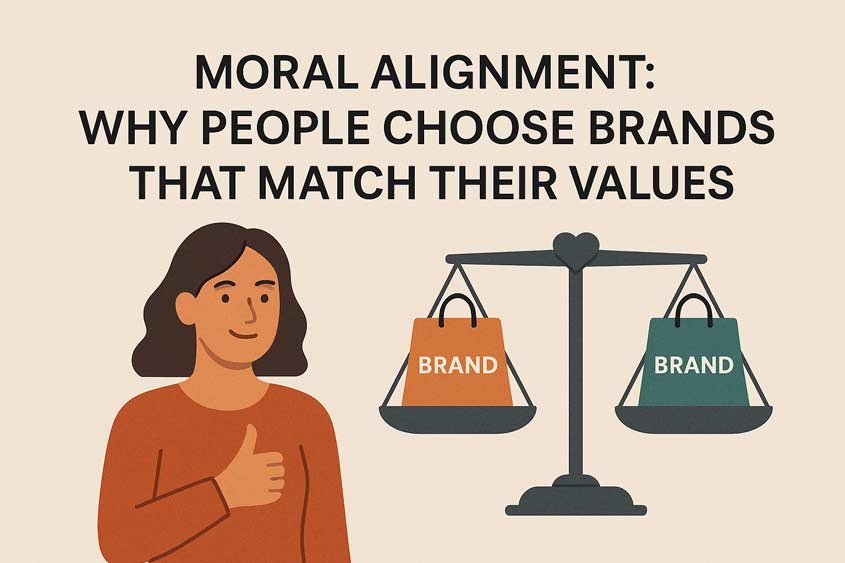
When was the last time you bought something and thought, “I like this because it feels right for me”? Chances are, it wasn’t just the price or style that drew you in. There’s a deeper layer at play—a psychological nudge that taps into who you are and what you stand for. That’s Moral Alignment. In marketing, it’s the subtle, yet powerful, trigger that makes people connect with brands that reflect their values. And let’s be honest—it’s more persuasive than a discount or a flashy ad.
Think about your favorite brands. What do they say about you? Maybe you love a coffee chain because it sources beans ethically, or a tech company because it pledges carbon neutrality. The products themselves are just the tip of the iceberg. The real connection happens because the brand mirrors your personal ethics. That alignment between brand values and your own moral compass can make a casual shopper into a loyal customer, often without them even consciously realizing it.
Table of Contents
Moral Alignment isn’t just a nice-to-have; it’s a strategic lever marketers use to influence behavior. It’s part of a larger group of triggers that play on human psychology—like social proof, scarcity, and commitment. But what makes Moral Alignment unique is its emotional depth. Other triggers might push you to act because of fear or urgency, but Moral Alignment touches the core of your identity. It gives you a sense of doing the right thing, a feeling of consistency between your beliefs and your actions.
Brands that harness this trigger effectively often go beyond slogans. They show, consistently, through campaigns, corporate actions, and product decisions that they stand for something. Patagonia’s environmental activism, Ben & Jerry’s social justice campaigns, and TOMS’ buy-one-give-one model aren’t accidents—they’re carefully designed examples of Moral Alignment in action. When you see a brand taking a clear stand, it allows you to make a choice that says, “Yes, I believe in this too.” And that choice sticks because it’s not just a transaction; it’s an extension of who you are.
It’s also worth noting that Moral Alignment intersects with other triggers. A brand’s ethical positioning can create urgency (scarcity of ethically made products), reinforce commitment (you feel good supporting a cause repeatedly), and even generate anticipation (new campaigns that reflect evolving values). That makes it a versatile tool in marketing psychology.
For you, as a consumer, being aware of Moral Alignment means noticing why certain brands feel like a “fit.” You might not even realize you’re being nudged. As a marketer or business owner, understanding this can guide you to communicate your values authentically, rather than just selling a product. People aren’t just buying an item—they’re buying a story that resonates with their sense of right and wrong. And when that story matches theirs, your message doesn’t just reach them—it sticks.
Moral Alignment is about connection, trust, and identity. It’s why ethical marketing isn’t just trendy—it’s effective. And it’s why, when done right, a brand can turn casual browsers into lifelong supporters without relying on gimmicks, flash sales, or hype. It works because it’s personal, emotional, and meaningful.
Understanding Moral Alignment
What This Trigger Really Describes
Moral Alignment is the psychological pull you feel when a brand’s values match your own. It’s the moment you look at a company and think, “Yeah, this is my kind of brand.” You’re not reacting only to features or price. You’re responding to the feeling that buying from them says something about you.
At its core, Moral Alignment reflects the connection between personal ethics and purchasing behavior. When a brand signals that it cares about something you consider important, you’re more likely to trust it, support it, and stay loyal even when alternatives exist. That influence shows up across industries, from fashion and tech to food, finance, and hospitality.
Marketers use this trigger because people want their decisions to feel coherent. You want your actions to line up with your beliefs. When a brand helps you do that, the psychological friction of choosing disappears. Your decision becomes easier and even enjoyable because it feels like the ethical choice.
Why It Matters in Consumer Decisions
Most people like to think they buy rationally. But the truth is that emotions, values, and identity shape buying behavior far more than logic does. That’s the space where Moral Alignment works. When you believe a brand treats people fairly, supports a cause you value, or behaves responsibly, it influences:
- how much you trust the company
- how strongly you prefer it over competitors
- how willing you are to recommend it
- how forgiving you are when it makes a mistake
These effects aren’t theoretical. You can see them in how consumers respond to sustainability claims, fair labor practices, cruelty-free products, and community-focused campaigns. They’re drawn to brands that act in ways they consider “right.” When that happens, purchasing becomes more than a transaction. It becomes self-expression.
The Emotional Link
The emotional component is what makes Moral Alignment so powerful. It appeals to your identity in a way that other triggers don’t always reach. Scarcity might push you to act fast. Social proof might make you feel safer choosing what others choose. But Moral Alignment taps into a deeper layer: the desire to see your choices reflect who you are.
If you value equality, you’ll notice brands that speak about inclusivity. If you care about environmental issues, you’ll remember companies with visible sustainability efforts. If ethical sourcing matters to you, you’ll favor the businesses that prove they take it seriously.
This emotional resonance increases brand stickiness. You’re not just buying something. You’re aligning with it.
What Moral Alignment Influences
Moral Alignment shapes several parts of consumer psychology:
1. Brand trust
When a company echoes your values, you feel safer supporting it. You assume its motives are more aligned with yours, which lowers resistance to buying.
2. Perceived authenticity
You judge a brand’s actions faster than its words. If its behavior matches the identity it claims, you feel it’s authentic. And authenticity makes marketing far more persuasive.
3. Decision speed
Values-based alignment cuts down hesitation. When a product feels morally right, you don’t overthink the decision.
4. Long-term loyalty
You’re more likely to stay loyal to a brand that signals ethical consistency. Even when prices rise or competitors offer something tempting, the moral bond acts like glue.
5. Word-of-mouth
People love sharing brands that make them feel good about themselves. Moral Alignment boosts recommendation behavior because it lets you reinforce your own beliefs while helping others.
Where You See It Most
Some industries lean heavily on Moral Alignment because values create clear differentiation. You’ll notice it often in:
Sustainability-focused markets
Organic food, electric vehicles, eco-friendly packaging, renewable energy services.
Health and wellness
Natural beauty, clean supplements, toxin-conscious household products.
Social impact brands
Companies donating profits, supporting marginalized communities, or leading equality initiatives.
Lifestyle products
Clothing, accessories, and even home goods tied to activism or ethical sourcing.
But you’ll also spot it in subtler ways. A bank talking about financial literacy for underserved communities. A hotel chain improving accessibility. A tech company addressing data privacy. Even a small bakery choosing local suppliers.
The Difference Between Stating Values and Living Them
A brand saying “we care” won’t trigger Moral Alignment by itself. Consumers look for proof. They want to see consistency, transparency, and behavior that matches the message.
If a brand promises sustainability but produces waste carelessly, people notice. If it champions equality but behaves differently in hiring or advertising, people notice that too.
Moral Alignment works only when actions support the story. It influences decisions because shoppers use brand behavior as a signal of whether they can trust it.
How Moral Alignment Fits Into the Larger Psychology Toolbox
This trigger interacts with others in interesting ways. For example:
- Commitment makes people stick with a value-aligned brand longer.
- Social identity ties personal beliefs to group behavior, amplifying the effect.
- Anticipation builds when customers look forward to a company’s next ethical move.
As part of the broader “Values and Ethical Marketing” category, Moral Alignment gives marketers a path to connect with consumers through meaning, not manipulation. When used well, it strengthens relationships through honesty, clarity, and shared purpose.
How It Works
The basic sequence — from value perception to purchase
Moral Alignment starts with a simple chain: a brand sends signals about what it stands for → you evaluate whether those signals match your values → if they do, your emotional resistance drops → you’re more likely to choose that brand and stay loyal. That sequence looks straightforward because it is. But each step hides specific psychological mechanisms that amplify the effect. Understanding those micro-steps helps you design messages and experiences that actually move people, not just win applause on social media.
First, a brand must communicate a value. That can be explicit language—“we’re carbon neutral”—or shown behavior—using recyclable packaging, donating a portion of profits, hiring from a marginalized community, protecting customer data. Those signals are then interpreted through the lens of your identity. If you see a match, two things happen quickly: you feel validated, and you assume the brand is trustworthy. Validation feels good; trust lowers cognitive friction. Together they make the decision feel easy and right.
Step 1 — Signal clarity and credibility
Brands send lots of signals. But for Moral Alignment to kick in, signals must be clear and credible. Ambiguity creates suspicion. Overclaiming creates backlash. You notice when a company’s words and actions misalign—because your brain is doing quick consistency checks. If the signals are consistent and believable, the brand passes the credibility test, and your brain moves to identity matching.
Key elements at this stage:
- Public commitments (policies, certifications, commitments with measurable goals)
- Visible behaviors (product choices, partnerships, supply chain transparency)
- Consistent messaging across channels (ads, packaging, customer service)
Step 2 — Identity resonance
Once credibility is plausible, your identity filter does the work. People don’t buy just products; they buy identities. You choose brands that let you express who you are or who you want to be. When a brand’s values resonate with your moral self-concept, it becomes a tool for self-expression. That’s Moral Alignment in action: it bridges external behavior (buying) and internal identity (values).
This process is often unconscious. You might think you buy for quality, but the stronger driver is that the purchase affirms your self-image. Identity resonance amplifies emotional commitment. You don’t simply like the product—you feel seen by the brand.
Step 3 — Emotional reinforcement and cognitive shortcuts
After identity resonance, your decision-making shortcuts kick in. Two cognitive effects matter a lot here: motivated reasoning and affective tagging. Motivated reasoning makes you interpret ambiguous facts in a way that supports your values. Affective tagging means positive feelings attached to value alignment get bundled with the brand—so future mentions of the brand trigger those same feelings.
These shortcuts lower decision costs. You spend less time comparing specs or searching for reviews. Instead, you rely on a single heuristic: “Does this brand reflect me?” If yes, you progress from interest to purchase faster than you would otherwise.
Step 4 — Behavioral commitment and loyalty loops
When you buy from a value-aligned brand, you create a small consistency principle in daily life: actions reinforce beliefs. The brand becomes part of your routine identity. That leads to repeat purchases and a higher tolerance for friction (price increases, occasional mistakes). Why? Because switching feels like betraying your own values; loyalty becomes psychological inertia plus moral consistency.
Over time, brands can deepen this bond by offering rituals and recurring engagements—subscriptions, community events, member-only initiatives—that turn one-off acts into habits and then into identity markers.
Step 5 — Advocacy and social signaling
Satisfied, value-aligned customers often become advocates. Why? Because recommending the brand is also a way of signaling your values to others. Advocacy is socially rewarded: it builds your reputation within your social groups and strengthens your group identity. Moral Alignment therefore scales: one aligned purchase can trigger social contagion if your networks pick up the signal and the brand consistently matches the claim.
Why cognitive ease matters here
Moral Alignment succeeds because it creates cognitive ease. When your values and the brand’s values match, processing feels fluent. Your brain prefers that ease and is more likely to assign truth and goodwill to the brand. That’s why authentic value claims that are easy to process—simple, consistent, repeatable—outperform complex, vague positioning that leaves you wondering what the brand actually does.
The risk-reward balance — when alignment can backfire
There’s a flipside: stronger signals attract scrutiny. When a brand claims a moral stance, people pay attention to whether its behavior matches. If there’s hypocrisy or evidence of bad faith, the backlash is often harsher than if no moral claim had been made at all. Moral Alignment amplifies both positive and negative evaluations because it ties brand performance to core identities.
Interactions with other triggers
Moral Alignment rarely works in isolation. It often pairs with other psychological triggers to create momentum:
- Social proof amplifies Moral Alignment by showing others who share your values are buying.
- Commitment deepens repeat behavior when customers publicly align with the brand.
- Scarcity can make value-aligned products feel more desirable if they’re perceived as rare or limited in supply.
- Authority helps when credible third parties validate a brand’s ethical claims, increasing perceived trustworthiness.
These interactions mean Moral Alignment is most powerful when woven into a broader psychological strategy—not tacked on as a slogan.
Practical, step-by-step checklist
- Clarify the value you want to own and why it matters to your audience.
- Provide verifiable proof: policies, measurable targets, and visible behavior.
- Communicate consistently across channels—actions must match words.
- Make it easy for customers to express their alignment (badges, memberships, rituals).
- Encourage social sharing from real customers, not staged influencers.
- Monitor for misalignment and correct transparently—apologize, fix, learn.
A short example to tie it together
Imagine a cosmetics brand that says it’s cruelty-free. Step 1: it lists testing policies and publishes supplier audits (signal). Step 2: a consumer who values animal welfare reads this and feels seen (identity resonance). Step 3: the consumer experiences positive feelings toward the brand and uses these feelings as a shortcut when shopping for a new lipstick (affective tagging). Step 4: they subscribe to a refill program because it aligns with their ethics (commitment). Step 5: they recommend the brand to friends, who then consider it too (advocacy).
That pipeline—from signal to advocacy—is how Moral Alignment translates values into predictable revenue and long-term brand equity. It’s not mystical; it’s systematic. And it’s repeatable if you design for each step honestly.
Why It Matters in Marketing
The practical reason this trigger works so well
If you strip away all the marketing jargon, Moral Alignment matters because it reduces resistance. When people feel a brand reflects their values, the decision feels safer, faster, and more emotionally rewarding. You’ve probably felt this yourself: two products look the same, yet one of them just “feels right.” That feeling comes from alignment, not logic. And once a brand wins that spot in someone’s mind, it becomes incredibly hard for competitors to steal it.
Marketers love this trigger because it moves decisions out of the cold, rational zone and into the warm space of identity. People don’t argue with their own identity. They protect it. And whenever a product becomes part of that identity, everything else gets easier—pricing, loyalty, advocacy, long-term retention.
Emotional friction drops, trust increases
Trust is the real currency of marketing. You can shout features all day, but if people don’t trust you, nothing lands. Moral Alignment shortcuts the trust-building process, because value-based decisions feel almost pre-approved. If a brand stands for something you care deeply about, you assume good intent even before you’ve tried the product. That’s the power of moral congruence.
It’s similar to how commitment or social proof works, though on a deeper level. You’re not just following others or sticking to prior behavior—you’re defending the version of yourself that you want to project. And your brain rewards you with a quiet sense of consistency.
When trust rises, every other step in the buyer journey requires less persuasion. Messaging feels smoother, the brand feels familiar, and purchase friction shrinks.
How this shapes consideration in crowded markets
Picture a category packed with nearly identical products: athletic shoes, cosmetics, tech accessories, bottled drinks. When all functional differences blend together, values become the tie-breaker. That’s where Moral Alignment becomes a category differentiator instead of a nice marketing flourish.
A brand that stands for environmental responsibility or fair pricing or transparency in data handling instantly stands apart. And when buyers can’t easily compare every feature, they default to the brand that feels morally right. That edge turns into market share.
This is why you see more brands positioning around purpose or ethics. They’re not doing it only for corporate reasons—they’re doing it because buyers reward ethical coherence with loyalty, even when alternatives are cheaper or more convenient.
Loyalty becomes emotional, not transactional
Transactional loyalty is fragile. Give someone a discount and they’ll stay; give someone a bigger discount and they’ll leave. Emotional loyalty is a different game. It’s rooted in moral approval. When customers choose a brand that reflects their values, they justify the choice as “who I am,” not “what I needed.” That shift changes everything.
It’s the reason people forgive mistakes from brands they admire. It’s why some customers defend brands online like they’re defending a friend. And it’s why word of mouth becomes stronger. Advocating for a brand aligned with your values feels like advocating for yourself.
This is something that other triggers—like urgency or scarcity—can’t replicate. Those push you to act. Moral Alignment pulls you in.
It influences pricing power
This part is a marketer’s dream. Value-aligned customers tolerate higher prices because the purchase serves a purpose beyond utility. They feel like they’re contributing to something meaningful, however small. When a brand stands for sustainability, fairness, community investment, or other meaningful causes, a price premium feels justified.
People pay more for coffee they believe is responsibly sourced. They pay more for clothes from brands that support ethical labor. They pay more for tech companies that promise better privacy. The price becomes part of the identity expression.
And because the purchase satisfies both practical and moral needs, the perceived value climbs—and price resistance drops.
It reduces churn and increases long-term retention
Churn often comes from indifference. When customers feel nothing toward a brand, leaving is easy. But if they feel the brand aligns with their ethics, they stay longer, recommend more often, and forgive more easily. Retention becomes less about incentives and more about relationship maintenance.
A strong moral bond also makes customers more patient during product transitions, stock issues, or technical hiccups. They want to stay loyal because leaving would feel like breaking moral consistency.
This is why long-term brand equity often correlates with clear, consistent values.
It gives brands narrative fuel
Moral Alignment creates content opportunities that don’t rely on constant product promotion. When a brand stands for something meaningful, stories naturally emerge—stories about actions, initiatives, communities, people, and impact.
This narrative consistency helps in every channel: email marketing, brand videos, storytelling ads, social posts, internal culture, even product packaging. It keeps the brand from sounding scattered or shallow. And you don’t have to fabricate drama or urgency. The values themselves become the engine for communication.
When it becomes a competitive advantage
If two brands fight over the same audience and only one uses Moral Alignment well, the aligned brand almost always wins long-term. Even if its product isn’t the cheapest or flashiest. Because customers aren’t only buying the product—they’re buying the feeling of moral coherence. Competitors can copy features, pricing, packaging, and even ads, but they can’t easily copy credibility.
And once people associate a certain moral value with a brand, that perception becomes sticky. It’s hard for a competitor to out-ethics a brand that has spent years living a clear set of values.
The ripple effect into word of mouth and community
A brand aligned with people’s values often becomes a talking point. Not in a showy way, but in those small casual conversations friends have: “I like buying from them because…”. Those comments create a chain reaction. When enough people say them, social proof overlaps with Moral Alignment and builds a community around the brand. Community is the strongest shield against competitors.
Customers feel proud to be associated with such brands. Pride fuels repeat purchases and advocacy. Advocacy reduces acquisition costs. Acquisition builds momentum. Momentum builds brand equity. The cycle becomes self-reinforcing.
The reason marketers prioritize this trigger today
People hold brands to higher standards. Buyer decisions aren’t neutral—they reflect identity, reputation, and values. If a brand can make buyers feel morally aligned, it gains a long-term competitive advantage that can’t be bought with ad spend alone.
Moral Alignment gives marketers a lever that shapes decisions in ways that are emotional, consistent, and long-lasting. It matters because people care more about what a brand stands for than ever. And when a brand gets this right, you don’t just gain customers—you gain believers.
Moral Alignment Real World Applications
Here are three real-world examples showing how Moral Alignment works — how brands turned values into trust, loyalty, and even sales growth. Each case illustrates a different angle: environmental activism, social purpose, and ethical supply.
Patagonia – Environment & Sustainability as Identity
A bold message, backed by action
The outdoor-apparel company Patagonia has long been a poster child for value-driven branding. The brand doesn’t just sell outdoor gear — it builds a story around environmental responsibility, conservation, and sustainable consumption. That positioning is central to its identity.
One famous instance: Patagonia’s “Don’t Buy This Jacket” campaign. Rather than push for sales, the ad urged customers to reflect on consumption — repair rather than replace, buy only what you need. That honesty and alignment with environmental values resonated deeply with conscious consumers. That campaign contributed to a notable rise in brand loyalty and helped reinforce Patagonia’s reputation as an authentic, value-driven brand.
Moral Alignment → Loyalty and perceived brand quality
Because Patagonia consistently aligned its brand identity with environmental values, many consumers started perceiving its products not just as clothing or gear, but as part of a lifestyle — one that aligns with their beliefs. This alignment boosted trust, emotional connection, and loyalty beyond what a simple quality claim or feature list could do.
Ben & Jerry’s (and similar socially conscious brands) – Values and Social Justice
Activism and purpose embedded in brand DNA
Ben & Jerry’s has intertwined its core business — making ice cream — with social activism, fairness, and justice. They publicly take stances on issues such as climate change, racial justice, and fair trade. That commitment has become a pillar of their brand identity.
This isn’t marketing fluff. Their activism reflects a genuine positioning that resonates with consumers who care about social issues. For those consumers, buying Ben & Jerry’s isn’t just about ice cream — it’s a statement.
Ethical branding builds trust and loyalty
Research shows that when brands align with social values, consumers tend to form stronger emotional bonds, trust the brand more, and feel more loyal. In the case of socially conscious brands like Ben & Jerry’s, consumers who share the values feel more emotionally connected — which influences repeat purchases and word-of-mouth recommendations.
That emotional connection often outlasts price promotions or short-term discounts. Once a brand becomes part of a consumer’s moral identity, the relationship becomes more stable and meaningful.
Ethical Food Products – Willingness to Pay More for Animal Welfare
Data from actual purchasing behavior
A 2025 empirical study conducted in a European supermarket context (Swiss) analyzed how animal-welfare standards influence food choices. The study found that when products were certified as “animal welfare–friendly,” they consistently carried a price premium compared to less ethical alternatives.
Specifically, a one-point increase in an animal welfare score (on a 1–5 scale) correlated with an average 16.4% price increase across product categories. The effect was strongest for dairy and eggs (25.3% premium). That suggests consumers were not only aware but willing to pay significantly more for ethical products.
Ethical Attributes translate to perceived quality and moral satisfaction
For many consumers, buying welfare-friendly food isn’t only about taste or nutrition — it’s about living according to principles. The higher willingness to pay shows that moral alignment can shift the perceived value beyond functional attributes. People view ethical sourcing or welfare-friendly production as part of product quality.
This effect matches findings from broader “green marketing” research: when companies commit to sustainability or ethical production, brand loyalty and perceived brand quality tend to rise.
What These Examples Tell Us
- Moral Alignment works across industries — from apparel to food to consumer goods.
- It fosters more than transient sales spikes; it builds long-term loyalty, trust, and perceived quality.
- Consumers often accept higher prices in exchange for products that align with their moral beliefs.
- Authenticity and consistency are critical — if the brand fails to live up to its values, alignment backfires.
These cases prove that Moral Alignment isn’t a nice-to-have marketing fad. It’s a strategic lever that, when applied sincerely and transparently, can shape real consumer behavior, loyalty, and long-term success.
How Consumers React
This section shows how people usually respond when a message or brand aligns with their moral beliefs. The focus stays on observable patterns found in consumer behavior research and documented market outcomes. The reactions below stay on the behavioral level. They do not rely on assumptions about personal traits or motives.
Immediate Attention and Longer Engagement
Consumers often give more attention to messages that match their moral beliefs. This pattern appears across studies on value based communication and purpose driven marketing. When people see content that reflects their views, they tend to slow down, read more, and process the information with more care. You can observe this in longer session times, more detailed content exploration, and greater willingness to compare product information.
This reaction comes from a simple principle. People pay attention to information that feels relevant. Moral relevance increases perceived importance. When the content matches their beliefs, they treat it as worth more of their time.
This shows up in measurable actions. Users click through more pages. They watch videos longer. They check ingredients, mission statements, or sourcing details. They follow a brand’s public commitments. They return to the brand’s channels to check for updated information. The pattern stays stable across categories such as food, apparel, travel, and household goods.
Increased Trust and Reduced Resistance
Observable behavior shows that aligned messages produce less friction. Consumers raise fewer objections. They need fewer reminders to complete a purchase. They move through the buying path with less hesitation.
Trust takes form in visible actions. People subscribe to newsletters. They allow notifications. They accept store membership programs. They pick brands with a consistent value record even if a competitor offers a lower price.
Reduced resistance appears in comparison steps. Instead of scanning many alternatives, they narrow the set quickly. They skip some verification steps because the brand already holds a positive place in their mind. They take promotional claims more seriously when the brand has proven its alignment through past behavior.
This does not guarantee a sale, but it changes the path. A user who trusts a brand starts closer to the decision point. A user who feels moral alignment expects fewer unpleasant surprises. This reduces the cognitive load of choosing.
Stronger Loyalty and Repeat Purchases
When moral alignment remains stable across time, consumers show higher loyalty. This effect appears in observable actions such as repeat buying, choosing subscriptions, and recommending the brand to friends. Loyalty here refers to actual behavior, not stated intention.
People continue buying from brands that maintain consistent alignment during new product launches or public events. They defend the brand in public discussions. They highlight the brand’s positive actions when someone questions it. They check for the brand’s involvement in causes they care about.
The reward for brands is more predictability in demand. When buyers stay loyal, the brand faces fewer fluctuations in customer retention. This pattern appears in markets where values around environment, fairness, or transparency hold strong influence. Retail data in categories like organic food, ethical cosmetics, and fair wage apparel reflect this trend.
Price Flexibility and Lower Sensitivity
Consumers often accept higher prices when the brand aligns with their beliefs. This does not happen without limits, but the pattern appears across categories. You observe this in stable sales even when prices increase. It also appears in willingness to choose premium editions of products that emphasize ethical or responsible features.
Shoppers compare prices differently when values enter the decision. Instead of asking which product costs less, they ask which product matches their ethical expectations. They judge price against meaning rather than against utility alone.
This behavior becomes visible in shopping cart data. People keep higher priced items in the cart. They do not drop them when they see cheaper alternatives. They choose larger sizes or bundles from the aligned brand. In many cases they skip waiting for discounts.
Stronger Reaction to Inconsistency
Consumers who care about moral alignment also react more strongly when the brand breaks expectations. This is an observable pattern seen in public reviews, social media activity, and post purchase surveys.
When a brand claims alignment but acts against those values, consumers respond with higher criticism and faster disengagement. They write negative reviews. They withdraw from loyalty programs. They switch to competitors with more consistent records.
This reaction shows how sensitive this trigger can be. The alignment gives the brand more goodwill, but it also increases the cost of inconsistency. Consumers track the brand more closely because they expect the values to hold across decisions.
The pattern is direct. Trust speeds up when alignment stays strong. Trust collapses fast when alignment breaks.
Increased Information Seeking
People who feel aligned with a brand’s moral stance often search for deeper information. This behavior is observable in public analytics and consumer studies.
They check certification labels. They read detailed product pages. They study supply chain information. They compare mission statements. They search for reports or data that confirm the brand’s claims.
This pattern becomes strong in categories involving environmental impact, labor conditions, or community involvement. People want confirmation that the brand earns their support. This leads to more repeat visits on policy pages and sustainability sections of websites.
Brands that offer transparent information usually receive more positive engagement. The availability of data supports the consumer’s desire to verify alignment. This reduces doubt and supports long term loyalty.
Strength of the Response Depends on Category
Not all categories show the same intensity of behavior. Products tied to identity or ethical implications show the strongest patterns. Food, clothing, travel, and personal care demonstrate consistent results. These categories involve values related to health, environment, or fairness. Consumers respond more visibly when a brand positions itself on these issues.
Low involvement categories show smaller but still measurable effects. Cleaning supplies, household products, or simple accessories also benefit from alignment when consumers notice clear and credible value claims. In these cases, the response appears mainly in repeat purchases rather than in long initial engagement.
The strength of reaction depends on how meaningful the values are to the consumer and how credible the brand appears. When both score high, the response becomes strong.
Accumulation Across Touchpoints
Consumers do not react to a single message. They react to a pattern. Moral alignment becomes visible through repeated interactions. People check if the brand behaves consistently in emails, social media posts, packaging, customer service, and store presence.
When the pattern stays stable, the response grows. People worry less about hidden drawbacks. They expect clarity. They engage with less suspicion. This changes the emotional tone of the entire customer journey.
Brands that deliver consistent alignment across touchpoints build trust that carries into new product releases. Consumers accept new items faster when the brand has earned their confidence. This effect is visible in pre orders, early adoption, and rapid word of mouth.
Collective Effects in Communities
You can observe alignment based behavior in groups as well. Communities on forums, review platforms, and social networks often amplify the response. People share brands that match their values. They collect recommendations. They curate lists of approved companies.
In these environments, moral alignment becomes a filter. Users highlight companies with strong ethical track records. They warn others when they see contradictions. This creates a public record that either strengthens or weakens the brand’s position.
The collective effect influences new buyers. When a community praises a brand’s alignment, new consumers approach it with higher trust. When a community criticizes inconsistency, new consumers approach it with hesitation.
This dynamic changes the brand’s long term standing. Community reactions become part of the buyer’s research process.
Reinforcement Over Time
When people repeatedly buy from an aligned brand, the behavior strengthens. Each purchase validates the earlier choice. This creates a stable preference that is difficult for competitors to break.
This reinforcement shows up in simple actions. People bookmark the brand’s website. They follow the brand across channels. They join loyalty programs even when they use very few. They use saved payment methods to complete purchases faster. They check new arrivals without external prompts.
This loop continues as long as the brand maintains alignment. The longer the brand stays consistent, the stronger the consumer’s attachment becomes. The response grows gradually and shows in repeat sales.
How Businesses Apply This Trigger
This section gives you clear, practical, and ethical ways brands use moral alignment to improve marketing outcomes. Every action you see here focuses on transparent communication, verifiable behavior, and respect for the consumer. The goal is to show how companies put this trigger into practice without manipulating people or exaggerating claims.
Build Real Alignment Before Communicating It
A brand cannot apply moral alignment through messaging alone. The foundation must come from the company’s actual behavior. Consumers verify information. They compare claims with public data. They track long term patterns. The brand must build internal alignment first.
Companies start by identifying which values guide their operations. These values link to decisions such as material sourcing, labor conditions, environmental standards, and data privacy practices. Once these actions take form in policies, the company can communicate them accurately.
You see this in public reports that show audited results. Ethical use requires clean data, transparent documentation, and consistency across categories. When companies follow this approach, consumers treat the information as credible.
Communicate the Values Clearly and Consistently
Moral alignment works only when consumers can see it. Brands that apply this trigger well communicate their values through multiple channels. The communication stays factual and avoids emotional exaggeration. It relies on measurable actions rather than broad claims.
You often see the following steps:
- The brand explains the value it supports
- It shows the action it takes to support that value
- It provides access to the evidence behind the action
- It keeps the explanation stable across time
- It avoids overclaiming or implying actions it cannot verify
Brands can place this information on product pages, packaging, FAQs, or sustainability sections. When the message stays consistent across channels, consumers recognize the alignment faster.
Link Values to Practical Product Information
Consumers respond well when moral alignment connects to the product in a visible way. Ethical communication works best when it explains how the value affects the product itself.
Examples include:
- A company selling apparel explains how it audits suppliers
- A food brand shows ingredient origin and quality certifications
- A tech brand explains data encryption and privacy standards
- A travel company outlines how it measures environmental impact
This approach remains grounded. It avoids abstract statements. It tells consumers what the value means for them. It turns the alignment into something concrete.
When brands present the link between value and product, consumers can verify it. This strengthens trust and reduces uncertainty during purchase decisions.
Use Storytelling Based on Verified Actions
Storytelling becomes more effective when it relies on facts. Many brands use narrative to show how their values shape daily operations. Ethical practice requires that every part of the story matches verifiable reality.
Stories describe how teams make decisions, how suppliers operate, and how improvements take form. They highlight challenges the company faces and how it addresses them. They show the effort behind the policy.
This approach helps consumers understand the brand’s work. It makes the alignment easier to observe. It does not rely on emotional pressure. It gives information that respects the consumer’s ability to decide.
Offer Transparency Tools
Consumers who care about values often want to verify claims. Brands apply this trigger ethically when they provide tools that help consumers check the information.
Examples of transparency tools include:
• Supply chain maps
• Ingredient sourcing timelines
• Audit summaries
• Third party certifications
• Public scorecards updated each year
• Independent research links
• Data about environmental or social impact
These tools reduce doubt. They let the consumer investigate at their own pace. They also signal that the brand stands behind its claims. This supports long term trust.
Show Long Term Consistency
Moral alignment gains strength with time. Companies apply this trigger by maintaining stable behavior year after year. Each consistent action adds credibility. Each update reinforces the alignment.
Ethical application means that the brand does not change values to match trends. It sticks to verified commitments. It expands them only when it can maintain accuracy.
Consumers track this consistency. They compare past reports with current reports. They expect continuity. When the brand demonstrates this pattern, the alignment becomes part of its identity.
Use Values to Guide Product Innovation
Brands apply moral alignment when they let values shape new product decisions. This turns alignment into a strategic tool rather than a communication layer.
Companies that follow this method:
- Set design criteria based on values
- Choose materials that match ethical standards
- Reject suppliers that fail audits
- Develop packaging that reduces waste
- Improve durability or repairability
- Strengthen privacy and security features
When values guide the design rather than the marketing, consumers notice. The alignment appears through the product itself. This reduces the need for strong claims and increases authenticity.
Align Marketing Decisions With Verified Behavior
Effective use of moral alignment requires that advertising and messaging follow the facts. This means the marketing team checks each claim against internal data before publishing it. It avoids broad statements that consumers cannot verify.
Ethical application means:
- Avoiding emotional pressure
- Avoiding vague value claims
- Presenting measurable actions
- Keeping wording precise
- Distinguishing between future goals and current achievements
Marketing that follows this process strengthens the impact of moral alignment. Consumers rarely react negatively to honest limitations. They respond better to accuracy than to perfect claims.
Encourage Feedback From Consumers
Brands that apply moral alignment well invite feedback from their customers. This gives consumers a place to share concerns about consistency, clarity, and evidence. It also gives brands direct insight into what people want to verify.
Companies often use surveys, public comments, or community forums. They reply with factual clarification. They adjust reports or explanations when needed.
Feedback loops help brands stay aligned with consumer expectations. They show the brand listens, responds, and adapts. This adds strength to the alignment.
Evaluate Partnerships Through the Same Values
Moral alignment becomes stronger when brands apply the same values to their partnerships. They choose influencers, collaborators, or suppliers with documented ethical standards. They avoid partnerships that contradict the brand’s commitments.
Consumers notice when partnerships match values. They also notice when they do not. Companies that follow this principle avoid confusion. They prevent mixed signals that weaken trust.
A clear evaluation process helps. The brand checks whether the partner meets its standards. If the partner cannot meet them, the brand adjusts the collaboration or chooses a different one.
Maintain Accuracy During Crises
Values matter most when challenges appear. Brands apply moral alignment ethically when they stay consistent even under pressure. When a crisis occurs, the company communicates verified facts and avoids speculation.
Consumers expect clarity about mistakes, supply disruptions, or unexpected issues. Ethical practice requires that the brand explains what happened, what it can verify, and what steps it plans to take.
This builds more trust than silence. It shows that the brand values accuracy. It prevents misinformation. It gives consumers reliable context.
Apply Values Without Discrimination or Exclusion
Moral alignment becomes problematic if it divides audiences unfairly. Ethical use requires that values guide the brand without creating exclusion. Companies focus on the actions they take rather than judging individuals or groups.
This approach keeps communication respectful. It avoids claims that assign moral value to the consumer. Instead, it focuses on the brand’s responsibility and standards.
Consumers respond better to messages that explain what the brand does rather than what the consumer should believe. Ethical application keeps the message centered on the company’s behavior.
Combine Values With Practical Benefits
Moral alignment works best when the value aligns with real product advantages. Brands integrate ethical features with quality, durability, safety, or usability. This strengthens the consumer response because the alignment supports function rather than replacing it.
Examples include:
- Durable products that reduce waste
- Ingredients that improve health and safety
- Transparent data practices that improve privacy
- Repair programs that extend product life
The combination of values and utility gives consumers more confidence. They see that the alignment improves their experience.
Pitfalls to Watch
Using moral alignment can help a brand earn trust, but it can fall apart fast when used carelessly. Consumers check claims. They compare statements with public information. They notice inconsistencies, even small ones. When brands mismanage this trigger, the pushback can be stronger than with other psychological drivers like urgency or authority. This section gives you a clear look at the mistakes that weaken impact or create suspicion.
Making Claims Without Proof
One of the biggest mistakes is announcing a value without showing the action behind it. Many brands fall into this trap because talking about values feels easy. You see broad declarations about sustainability, fairness, or community support while consumers search for evidence and find none.
This issue creates two problems. First, it weakens the brand’s voice because the message becomes vague. Second, it encourages consumers to assume the brand is trying to benefit from the moral appeal without doing the work behind it. Since people already know about greenwashing and similar tactics, they react quickly when evidence doesn’t match the claim.
The fix is simple. Only communicate what you can verify. Show numbers. Show policies. Show the actual process. Even if the action is small, truth builds more trust than ambition.
Inflating or Exaggerating the Moral Angle
Some brands exaggerate their alignment to sound more committed than they are. They inflate goals, use dramatic wording, or stretch the meaning of their actions to appear more ethical. This strategy can work for a short moment, but it creates long term doubt.
Consumers often cross check information through reports, public data, or expert reviews. Once they notice the exaggeration, they question everything else the brand says. You see the same pattern in other triggers too. If a brand exaggerates scarcity or inflates the authority of an expert, trust drops. Moral alignment carries even higher scrutiny because values feel personal.
Brands avoid this mistake when they stay specific and factual. They state the action clearly. They define the limits. They mention what they can’t yet do. Transparency gives the message more power.
Focusing on Emotional Appeal Without Showing Real Action
Many brands build campaigns around emotional storytelling. This works well with triggers like anticipation or social proof, but it becomes risky when used for moral alignment. A strong emotional narrative about helping communities or protecting the planet creates expectations. If the audience sees no real action behind the story, the trust break is immediate.
People want proof before emotion. They want data before slogans. When brands reverse the order, consumers feel manipulated. Emotional storytelling only works when you anchor it to something verifiable.
Choosing Values That Don’t Match the Product or Category
Another common pitfall is picking a value that doesn’t fit the product. For example, a brand that sells a low-cost, disposable item focusing on long term environmental durability. Or a high privacy claim from a product category that depends on data sharing. The mismatch creates confusion.
Consumers expect alignment between the product and the value. When the connection feels weak, the brand message becomes suspicious. This often happens because companies choose popular values instead of relevant ones.
A better approach is selecting a value that shapes the product itself. If the product reflects the moral position, consumers find the alignment credible.
Switching Values Based on Trends
Some brands shift their value messaging from season to season. They do this to follow cultural trends or public discussions. When consumers notice this pattern, they assume the brand uses moral alignment as a tactic rather than a principle.
Values lose meaning when they change too fast. You can adjust how you communicate them, but the core must remain stable. If a brand updates its value stance, it should explain the reason behind the change and show the actions that support it.
Copying Competitors Instead of Building Authentic Alignment
It’s tempting to follow what works for other brands. You see a competitor succeed with a particular value, so you choose the same one. The issue is that moral alignment cannot depend on imitation. Consumers look for originality and internal motivation.
When brands copy the values of others, they risk choosing something they cannot support internally. They also risk blending in. Moral alignment works when you express something true about your own company, not a competitor’s.
Overloading the Message With Too Many Values
Some brands try to communicate every value at once. They talk about sustainability, fairness, community impact, inclusivity, safety, quality, and a long list of other commitments. Consumers struggle when the message becomes too broad. They don’t know which value matters most or which one the brand actually prioritizes.
A scattered message weakens credibility. Pick a clear focus. Explain it well. Show the action behind it. If the company supports multiple values, communicate them in separate contexts, not as one large list.
Ignoring Consumer Expectations and Feedback
Brands often underestimate how much feedback shapes perception. Consumers ask direct questions about claims, and they expect clear answers. When companies avoid questions or repeat generic statements, consumers assume the brand hides something.
A lack of engagement creates more suspicion than a lack of perfection. Many brands avoid transparency because they worry about criticism. But consumers trust companies that engage honestly, even when the answer is incomplete.
Relying on One Time Actions Instead of Long Term Patterns
A single initiative does not create alignment. Consumers look for patterns. If a brand launches one ethical program and never mentions it again, the alignment fades. People expect ongoing action. They look for progress, yearly reports, or new improvements.
This mistake causes brands to lose momentum. Short term action feels like a promotion. Long term action feels like a value.
Using Moral Alignment to Cover Weak Product Quality
Some companies try to compensate for weak features by highlighting their ethical values more than the product itself. Consumers notice this imbalance. They evaluate quality first, values second. A good ethical stance does not replace the need for a strong product.
The best brands combine both. They show how values improve durability, safety, or performance. When the product fails to satisfy, no moral statement can fix the disappointment.
Conflicting Actions Across Departments
Moral alignment breaks when one part of the company supports the value while another part contradicts it. For example, a brand talking about ethical labor sourcing while facing public disputes about worker conditions. Or a company promoting environmental care while releasing wasteful packaging on certain product lines.
Consumers treat the brand as one entity. Internal inconsistency becomes external distrust. Ethical use of moral alignment requires internal coordination, not isolated efforts.
Placing the Trigger Before the Product
This last mistake deserves special attention. Some brands build entire campaigns around values before explaining the product. Moral alignment should support the product, not overshadow it. When a brand places values first, consumers may question the purpose.
People buy products for function, usefulness, and relevance. Values strengthen trust and shape the emotional direction of the decision, but they cannot replace the core benefit. Moral alignment becomes most effective when it aligns with product truth, product performance, and documented company behavior.
How to Apply It
Build a Clear Intent Before Using the Trigger
You want the trigger to move people toward a specific action. Define that action first. A clear target prevents scattered messaging. It also helps you pick the right format, channel, and timing.
Ask yourself what the person needs to understand before taking the step you want. Map that out. Then place the trigger where it supports the decision rather than forcing it.
Break the process into simple steps.
Start with awareness, then value, then the exact micro action you want.
When your structure is tight, the trigger strengthens the message instead of creating noise.
Work through real objections. You avoid confusion when you address concerns the person already feels. People trust you when your guidance feels relevant, specific, and honest. This increases the effectiveness of the psychological mechanism because the reader sees internal logic, not manipulation.
Match the Trigger With Real User Motivation
Your message works only when it aligns with what the person wants. The trigger amplifies motivation, but it does not replace it.
Identify the core reason someone would act. Keep it grounded in actual behavior patterns, not assumptions.
Use verified insights from user interviews, on-site behavior patterns, and customer feedback. Avoid vague claims.
Look for consistent patterns: recurring questions, repeated objections, frequent drop-offs, and common obstacles.
Base the trigger on those findings.
Strong alignment produces smoother decisions because the trigger echoes the person’s own reasoning.
When motivation is weak or unclear, the trigger loses strength.
This step keeps your strategy practical and predictable.
Make the Context Straightforward
People respond well when the environment supports the decision. Provide structure that eliminates friction.
Simplify the layout. Reduce the number of choices. Remove unnecessary steps.
The trigger becomes more effective when the path is short and predictable.
Present information in a linear order.
Lead with clarity. Explain what they gain. Show how the next step works.
Then apply the psychological trigger to reinforce action.
If your page or message feels crowded, emotional impact drops.
Keep visuals clean. Avoid long blocks of text.
Use spacing to guide the eye. Use short sentences to maintain energy.
This makes the psychological mechanism feel natural.
Use Timing That Matches User Readiness
Place the trigger at a moment when the person already weighs a decision.
If presented too early, it feels disconnected.
If presented too late, the momentum fades.
Check analytics for behavior insights.
Identify points where users pause, scroll more slowly, or return to sections.
These signals show where their attention peaks.
A well-timed trigger helps people move when they are mentally open to the choice.
Use A/B testing to confirm timing. The change in behavior gives you measurable evidence.
Track completion rate, click depth, and time on page.
Use actual numbers to validate placement instead of guessing.
Keep the Message Neutral and Honest
Transparency builds credibility.
State facts clearly.
Avoid exaggeration, pressure, or inflated claims.
The psychological trigger works best when supported by trust.
Explain how the offer works.
Clarify what they receive.
Explain any conditions.
Avoid confusing wording.
Clarity lowers the cognitive load and lets people make confident decisions.
When your message is honest and clean, the trigger feels respectful.
This increases compliance and reduces resistance.
Layer the Trigger With Proof
People act when they feel secure. Use proof to back your claims.
Provide real data, verified results, or documented sources.
Use specifics instead of broad statements.
If you cannot verify a claim, remove it.
Combine the trigger with evidence that lowers risk.
Clear guarantees, return details, or case study outcomes help people understand the actual benefit.
Facts give the psychological mechanism something stable to work with.
Identify what type of proof fits the context: numerical results, before and after comparisons, user feedback, or usage data.
Keep the proof easy to verify.
You increase trust when your reader can check the source independently.
Maintain Consistency Across the Experience
A strong psychological trigger loses effect when the rest of the journey feels inconsistent.
Your tone, design, and offer should follow the same logic from start to finish.
Consistency reduces uncertainty.
Uncertainty raises cognitive load and lowers action likelihood.
Check every step: landing page, checkout, emails, confirmation messages.
Each touchpoint should support the same promise and value.
Consistency gives the trigger a stable environment where it can influence decisions predictably.
Test, Validate, and Adjust
Effective application comes from structured testing.
Start with one variable. Change placement, phrasing, or timing.
Measure the impact through clear metrics such as click rate, form completion, or time to action.
Run each experiment long enough to get stable data.
Focus on statistical validity.
Remove outliers when necessary.
Record results so you can reproduce them later.
Use a cycle of test, measure, interpret, and refine.
The goal is reliability, not impulse.
This creates a predictable, transparent method for applying psychological triggers without crossing ethical lines.
Focus on Sustainable Influence
Short term spikes can backfire if they reduce trust later.
Aim for strategies that build long term loyalty.
Your use of the trigger should help people make better choices, not pressure them.
Provide value at every stage.
Give explanations that improve understanding.
Add clarity where the reader hesitates.
When people feel respected, they stay open to your message.
A sustainable approach gives you stronger customer relationships and more predictable results.
Spot The Trigger
Exercise 1
A sportswear brand launches a new campaign with the slogan “Run for the Planet.” For every pair of shoes sold, they promise to plant two trees. The ad shows runners of all backgrounds, smiling, connecting, and jogging through green parks. You feel good just watching it, and you start considering buying from them because the message fits values you already support.
Question: Is the brand using the Moral Alignment trigger? (True or False) | Check Answer
Exercise 2
A snack brand releases an ad that highlights a new limited flavor. The message focuses on taste, ingredients, and texture. The content stays neutral, with no reference to ethics, social responsibility, shared values, or moral positioning. It only compares the product to older flavors.
Question: Is the brand using the Moral Alignment trigger? (True or False) | Check Answer
Exercise 3
A tech company promotes a laptop upgrade program where customers can return old devices for responsible recycling. The message emphasizes reduced electronic waste and a commitment to circular production. The ad shows real recycling partners and states measurable goals for yearly waste reduction.
Question: Is the brand using the Moral Alignment trigger? (True or False) | Check Answer
What You Should Remember
Moral alignment influences how people judge brands, offers, and messages. You rely on it when you decide if a company seems trustworthy, socially aware, or responsible. It shapes your impression before you look at product details. This trigger works because people want choices that reflect their personal standards. When a message matches those standards, it feels easier to support.
You saw that moral alignment appears in everyday communication. Brands use it when they highlight positive actions, social commitments, or ethical goals. They do it to lower hesitation and create confidence. When the message fits your beliefs, you feel that your purchase supports the right outcome. When the message conflicts with those beliefs, you feel tension and usually step back.
This trigger affects decisions because it changes how you interpret risk and reward. A product from a brand that matches your values feels safer. The same product from a brand that lacks alignment feels uncertain. People respond to this difference even when the product features stay identical. Studies in consumer psychology confirm that perceived moral behavior influences ratings of credibility, satisfaction, and loyalty. You form impressions faster when moral cues appear early, and these impressions are hard to reverse.
In marketing, moral alignment becomes effective when the message stays truthful and specific. Clear commitments work better than broad claims. People detect empty statements and punish them by ignoring the message or switching brands. You saw that successful campaigns use measurable promises, transparent actions, and verifiable outcomes. These elements help you trust the communication and feel comfortable supporting it.
The examples showed how moral alignment appears in practice. Environmental claims, social responsibility programs, and ethical production standards are common triggers. You react to them because they help you connect your personal choices with a positive impact. When companies show real actions instead of vague intentions, the response grows stronger. When they exaggerate or overstate their role, they create distrust and reduce the effect.
Your behavior follows predictable patterns. You pay more attention to messages that match your values. You skip or reject messages that do not. You reward brands that behave consistently with what they claim. You penalize those that show gaps between promises and actions. These patterns appear across different markets, age groups, and regions. They reflect basic psychological tendencies, not trends or preferences that change quickly.
For brands, the benefit is clear. Moral alignment increases engagement, reduces resistance, and creates stronger commitment. It influences long term loyalty and shapes reputation. For consumers, it provides a guide for faster evaluation. You use it to filter choices and avoid options that feel misaligned with your standards.
What matters most is accuracy. The message must reflect real behavior. You respond well when you see evidence. You pull back when the message feels unverified. This rule stays valid across all marketing contexts. When moral alignment is used with integrity, it strengthens decisions. When it is used carelessly, it loses power.
The core idea is simple. People choose brands that reflect their values. They reject those that do not. Moral alignment explains why this happens and how messages guide these choices.

Gabriel Comanoiu is a digital marketing expert who has run his own agency since 2016. He learned marketing by testing, analyzing, and refining campaigns across multiple channels. In his book series Impulse Buying Psychology, he shares the psychological triggers behind every purchase, showing how to create marketing that connects, persuades, and converts.