
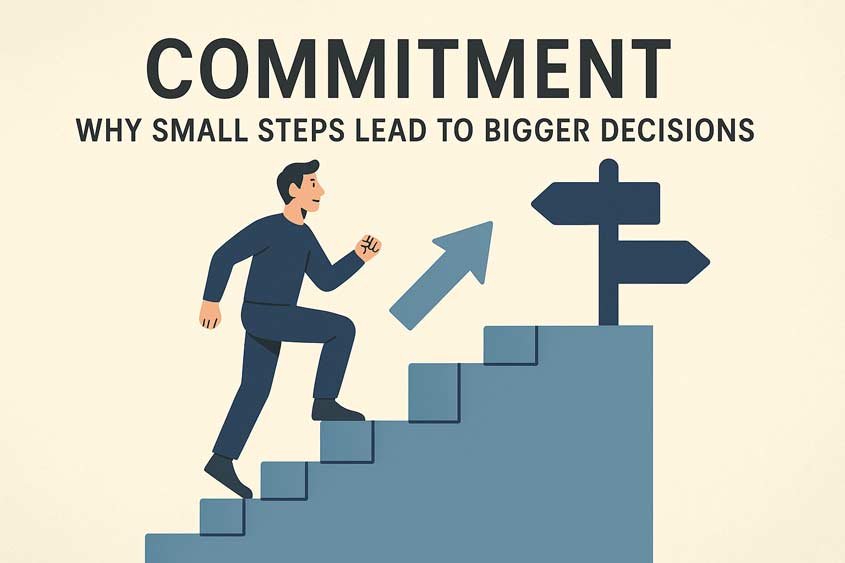
When it comes to getting people to act, marketers often rely on a subtle but powerful psychological nudge: commitment. Think about it—once you say yes to something small, you’re more likely to say yes to something bigger later. It’s like dipping a toe into a pool; once it’s wet, stepping in fully feels natural. Commitment isn’t just about being stubborn or loyal—it’s a mental shortcut your brain uses to stay consistent, to align actions with identity and past behavior.
This isn’t abstract theory. You’ve seen it everywhere: free trials that convert to paid subscriptions, small product add-ons turning into full purchases, even simple “subscribe to our newsletter” prompts that later lead to buying courses or services. The key is that the first step is small, easy, and psychologically low-risk. It primes your mind to continue along the same path, nudging decisions in a predictable direction.
Table of Contents
Why does this work so reliably? Humans are wired for consistency. Psychologists call this the “consistency principle.” When you make a choice—even a tiny one—you start seeing yourself as a certain kind of person: someone who supports this cause, uses this product, or aligns with this brand. To avoid cognitive dissonance—feeling like your actions and beliefs don’t match—you follow through with behaviors that fit that initial commitment.
Marketers love this because it’s scalable. They don’t need to convince someone to make a massive leap right away. Instead, they design a path of micro-commitments, each one small enough to be easily accepted but collectively powerful. For instance, a fitness app may first ask you to complete a one-minute exercise, then a five-minute session, and eventually sell you a full 30-day program. Each step feels natural, almost like you’re choosing it yourself, but in reality, you’re being guided toward a larger decision.
This trigger isn’t limited to commerce. Think about social behaviors or memberships. When you RSVP to an event or sign a petition, your brain notes that you’ve aligned with a cause. Later, when a bigger request comes—donating money, volunteering, or purchasing related products—you’re more likely to comply. Commitment is a quiet persuader, one that works beneath the surface of conscious thought.
What’s fascinating is how commitment interacts with other psychological triggers. Urgency can amplify it: if that small step has a time limit, you’re more likely to act immediately, increasing the chance you’ll continue later. Similarly, social proof strengthens commitment: if everyone around you is taking those steps, staying consistent with the group becomes more appealing. Even scarcity can play a role—if the next step feels like a limited opportunity, you’re nudged to follow through.
Understanding commitment isn’t just about observing consumer behavior—it’s about designing it. When used ethically, it helps guide decisions in ways that feel natural to the audience, respecting their autonomy while offering meaningful paths forward. And as you’ll see throughout this article, the principles behind commitment apply across industries, from fashion to tech to nonprofit fundraising. It’s a universal lever that shapes human behavior, and knowing how to spot it—or trigger it—gives marketers a significant advantage.
Understanding Commitment
Commitment is more than just a word in marketing psychology; it’s a powerful mental shortcut that drives behavior. At its core, commitment is the human tendency to stay consistent with past decisions, statements, or actions. When someone makes a choice—even a small one—they’re mentally inclined to continue along that path, aligning future behavior with the identity established by that initial decision. In marketing, commitment acts as a trigger that subtly nudges people toward bigger decisions, often without them realizing it.
The Consistency Principle
Psychologists identify consistency as a fundamental human motive. Once someone commits to something, even lightly, their brain prefers to act in ways that don’t contradict that commitment. It’s uncomfortable to appear inconsistent or to contradict one’s own choices. Marketers leverage this by creating small, low-risk commitments—like signing up for a newsletter, downloading a free guide, or engaging in a mini survey—that set the stage for more substantial actions later.
For example, a coffee brand may first ask you to join their loyalty program. That small yes is enough to make you feel aligned with the brand. Later, when a special offer on premium beans appears, you’re more likely to purchase because you’ve already mentally committed. This isn’t manipulation; it’s an acknowledgment of how your brain seeks internal consistency.
Micro-Commitments: The First Step
Commitment rarely starts with a giant leap. It usually begins with micro-commitments—tiny actions that are easy to accept but psychologically meaningful. These first steps function as signals, both to the individual and the brand, that a relationship is forming.
Some examples include:
- Clicking “I agree” on a short poll
- Adding a small, inexpensive item to a shopping cart
- Following a social media account
- Completing a one-minute tutorial or exercise
Each action may seem insignificant on its own, but together they create a chain of behavior that primes the person for bigger decisions. The key is that these steps feel voluntary, which increases buy-in.
How Commitment Influences Decisions
Commitment influences decisions in two primary ways: behavioral alignment and identity reinforcement.
- Behavioral Alignment: Once you commit to a course of action, subsequent decisions are likely to align with that path. This explains why free trial subscriptions often convert to paid memberships. The initial commitment—signing up for the trial—creates a mental and behavioral inertia that encourages continuation.
- Identity Reinforcement: Commitment also shapes self-perception. When you engage with a brand or product, you begin to see yourself as someone who values what that brand offers. For instance, downloading a sustainability report may signal to yourself that you care about eco-conscious choices. Later, when asked to purchase a green product, you’re more likely to follow through because it aligns with your perceived identity.
Commitment vs. Other Triggers
Commitment rarely acts in isolation. It interacts with other psychological triggers to strengthen influence.
- Social Proof: Seeing peers engage in an action reinforces your initial commitment. If everyone else is participating, continuing feels natural.
- Scarcity: Limited availability encourages follow-through. Once you’ve committed to exploring an opportunity, knowing it may vanish creates urgency.
- Reciprocity: Offering a small gift or free resource before asking for a commitment makes people more inclined to reciprocate with further engagement.
By combining commitment with these triggers, marketers can design campaigns that guide consumers through predictable paths of engagement and purchase.
Why Commitment Matters for Marketing
The power of commitment lies in its subtlety. Unlike overt persuasion, which can feel pushy or manipulative, commitment gently nudges behavior while maintaining a sense of agency. It allows marketers to design experiences that feel natural, gradually increasing the stakes without overwhelming the consumer.
Consider an online education platform. They might begin by asking users to complete a single lesson for free. That first small step is the commitment. After completing it, users are more likely to purchase a full course, join a membership program, or share their progress with friends. The process respects the user’s autonomy while leveraging the brain’s natural tendency to remain consistent.
Recognizing Commitment in Real Campaigns
Understanding commitment also helps marketers identify where it’s already at work. Email sign-ups, initial downloads, first-time purchases, loyalty programs, and early engagement forms are all micro-commitments. By analyzing these behaviors, brands can tailor follow-up offers, reminders, and content to increase the likelihood of larger commitments.
Understanding commitment is the first step to using it strategically in marketing. By designing campaigns that respect the consumer’s sense of choice while encouraging small initial steps, marketers can guide behavior subtly but powerfully.
The Psychology Behind It
Commitment works because it taps directly into how humans process decisions. Your brain craves consistency—it’s uncomfortable to act in ways that contradict previous choices. Once you commit, even a small one, your mind looks for ways to justify it and stay aligned. That’s the psychological engine driving this trigger.
Step 1: Initial Engagement
The process starts with a low-effort, low-risk action. This could be something as simple as:
- Clicking a “yes” button on a survey
- Following a social media account
- Accepting a free trial or sample
- Signing up for a newsletter
These small actions don’t demand much from you, yet they signal to your brain: “I’m invested.” That initial investment—no matter how minor—creates a baseline commitment that your mind will protect.
Step 2: Cognitive Consistency
Once you take that first step, your brain wants to remain consistent. Psychologists call this the consistency principle. Acting inconsistently feels like internal conflict. To avoid it, you’re likely to make subsequent decisions that reinforce the first.
For example, someone who subscribes to a free online course may feel compelled to purchase the full program later. The initial choice sets a behavioral pattern, nudging your brain toward alignment rather than contradiction.
Step 3: Identity Formation
Commitment also reshapes your self-perception. Every small choice subtly signals who you are—or who you want to be. If you start following a brand or engaging with a cause, you begin to see yourself as “the kind of person who does this.” That identity makes future decisions easier: purchasing a related product or upgrading to a premium service feels like a natural continuation of your self-image.
Step 4: Escalation Through Micro-Steps
Once the initial commitment is made, marketers often guide consumers through a series of incremental steps. These micro-commitments increase involvement without overwhelming the individual.
Consider an e-commerce scenario:
- You add a small, low-cost item to your cart.
- You receive an email recommending a complementary product.
- You’re invited to join a loyalty program.
- You finally make a larger purchase, perhaps a subscription or high-value bundle.
Each step feels voluntary, yet the path is designed to build momentum. This escalation leverages the principle that behavior once initiated tends to continue in the same direction.
Step 5: Reinforcement
Marketers reinforce commitment with positive feedback. Rewards, recognition, or even a simple “thank you” message strengthens the connection. It signals that the choice was correct and reinforces the emerging identity.
For example, a fitness app might celebrate your first completed workout with a badge or encouraging message. That small recognition increases the likelihood that you’ll stick with the program, upgrade to premium features, or share your achievement on social media.
Step 6: Integration With Other Triggers
Commitment rarely operates alone. Combining it with other psychological triggers increases its effectiveness:
- Social Proof: Observing peers who have committed makes it easier to continue.
- Scarcity: Limited-time offers heighten the perceived value of sticking with the decision path.
- Reciprocity: Offering a small gift or free content before requesting a larger action encourages follow-through.
- Familiarity: Repeated exposure strengthens your comfort with the brand, increasing loyalty and subsequent commitments.
Why It Feels Natural
What’s remarkable is how effortless this feels. Consumers rarely perceive the chain of influence; it’s designed to feel like a series of natural choices. Your brain interprets these steps as self-directed, maintaining autonomy while gently nudging behavior toward predictable outcomes.
The psychology behind commitment relies on a combination of initial engagement, consistency, identity alignment, gradual escalation, and reinforcement—all integrated with other behavioral triggers. This is why marketers who understand this mechanism can guide decisions without heavy-handed persuasion.
The Role of Commitment in Marketing
Commitment isn’t just a psychological curiosity—it’s a cornerstone of effective marketing. Understanding how it shapes decisions gives brands a predictable, ethical way to guide consumers from small, low-risk actions to bigger, more valuable engagements. In practice, commitment creates a sense of progression and alignment. Once someone begins a journey, they’re more likely to continue, which is exactly what marketers aim for.
Micro-Commitments Drive Engagement
Marketing campaigns that harness commitment often begin with micro-commitments. These are small, easy actions that don’t feel like an ask but establish a mental investment.
For instance:
- Signing up for a newsletter
- Completing a one-question survey
- Following a brand on social media
- Downloading a free guide or checklist
Each of these actions seems minor, but collectively they create a chain of involvement. As a marketer, understanding which micro-commitments to offer, in which order, can dramatically increase conversion rates. You’re essentially mapping a pathway where the consumer gradually escalates engagement without feeling pressured.
Shaping Buying Behavior
Commitment impacts decisions by influencing both behavior and perception. Once someone takes that initial step, their brain subconsciously seeks to maintain consistency. This behavioral alignment means small commitments can lead to:
- First-time purchases
- Subscription sign-ups
- Premium upgrades
- Referrals and social sharing
The beauty is that these outcomes don’t feel forced. Because the consumer sees their actions as self-directed, each subsequent decision reinforces their identity and aligns with past behavior.
Reinforcing Brand Loyalty
Beyond immediate sales, commitment strengthens loyalty. A consumer who takes small steps toward engagement begins to associate the brand with their personal identity. They see themselves as “a person who values this product, cause, or service,” which creates a lasting connection.
Take a subscription box service: after signing up for a free trial or receiving a first small order, the consumer is psychologically invested. That investment makes it more likely they will renew, buy add-ons, or recommend the brand to others. The initial micro-commitment laid the foundation for long-term loyalty.
Combining Commitment With Other Triggers
The real marketing power comes when commitment is paired with complementary triggers:
- Social Proof: Showcasing other customers’ actions encourages the consumer to continue along the same path.
- Scarcity: Limited-time offers on subsequent steps increase the urgency to act.
- Reciprocity: Free resources or small gifts create a desire to reciprocate with further engagement.
- Familiarity: Repeated exposure strengthens trust, making it easier to follow through on commitments.
Practical Applications Across Industries
Commitment works in virtually every sector. A few examples illustrate its versatility:
- E-commerce: Free samples or low-cost add-ons encourage further purchases.
- Tech: Trial versions of software gradually convert users to premium plans.
- Fitness and Wellness: Apps start with one small activity, then expand engagement through challenges and subscriptions.
- Nonprofit Fundraising: Signing a petition or sharing a cause leads to donation or volunteer participation.
Ethical Considerations
Using commitment ethically is critical. The goal isn’t to manipulate but to guide. By offering small, meaningful steps that add real value, brands respect consumer autonomy while leveraging the natural tendency toward consistency. Overloading users or creating deceptive pathways can backfire, damaging trust and brand reputation.
Commitment in marketing is not just a tactic—it’s a framework for designing predictable, human-centric consumer journeys. When applied thoughtfully, it guides behavior while enhancing the consumer’s sense of choice, self-expression, and engagement.
Commitment Real Case Studies
Understanding commitment in theory is one thing, but seeing it in real-world applications shows its true marketing power. Below are three evidence-based examples that illustrate how brands and organizations leverage small commitments to drive larger decisions.
Case Study 1: Subscription-Based Fitness Apps
Many fitness apps rely heavily on commitment as a driver of user behavior. A popular model starts with a free trial, requiring users to complete a single workout or tutorial. This initial micro-commitment seems minimal, but it activates the consistency principle.
- Mechanism: Users invest a small amount of time and effort, often just 5–10 minutes, completing their first activity.
- Result: Behavioral inertia and identity alignment kick in. Users start seeing themselves as “active” or “committed” to health.
- Outcome: A significant percentage convert to paid subscriptions, continue tracking progress, and often share results on social media, further reinforcing engagement.
This approach illustrates how micro-commitments create a sense of ownership over behavior, increasing the likelihood of continued action. It’s the same principle used in loyalty programs, but applied in a digital, scalable environment.
Case Study 2: Retail Loyalty Programs
Retailers have long understood that small commitments encourage larger purchases. Consider a well-known coffee chain that incentivizes joining a loyalty program with one free drink.
- Mechanism: Signing up for the program requires minimal effort, but it initiates a psychological investment.
- Result: Customers feel aligned with the brand, prompting repeated visits to “justify” their initial commitment.
- Outcome: Average purchase frequency increases, and customers often upgrade to larger beverage sizes or add bakery items. Over time, the program creates long-term loyalty, with consistent revenue growth linked to small initial commitments.
This demonstrates how commitment interacts with identity and reward mechanisms. The initial “yes” is small, but it triggers a chain reaction of behavior that benefits both the consumer (through rewards) and the brand (through retention and upsell).
Case Study 3: Nonprofit Fundraising
Nonprofit organizations often leverage commitment for donations. A typical approach involves asking supporters to take a small action before requesting a monetary contribution. For example, signing a petition, sharing content, or completing a volunteer task.
- Mechanism: The initial action is low-cost and psychologically non-threatening.
- Result: The supporter develops a sense of alignment with the cause, reinforcing self-perception as someone who cares.
- Outcome: When asked for a donation, engagement and compliance rates are significantly higher than with cold solicitations. Studies confirm that initial micro-commitments dramatically increase conversion rates in fundraising campaigns.
This example shows how commitment doesn’t just apply to commerce—it’s a universal psychological trigger that can guide behavior ethically across industries.
Lessons From Real-World Applications
- Start Small: Each case relies on a low-effort first step. This reduces resistance and primes the user for follow-up actions.
- Align With Identity: Commitment works best when the initial action resonates with how the individual sees themselves or wants to be perceived.
- Leverage Reinforcement: Recognition, rewards, or feedback after the first step strengthens commitment and encourages continuation.
- Integrate Other Triggers: Social proof, reciprocity, and scarcity can amplify the effect of commitment.
These examples demonstrate the practical, measurable power of commitment. When marketers design campaigns that respect autonomy, create low-risk first steps, and reinforce engagement, they harness one of the most reliable psychological drivers of consumer behavior.
How Consumers React
Commitment triggers predictable responses in consumer behavior. Once a person takes even a small action, their brain seeks to remain consistent, influencing subsequent decisions. Observing these reactions can help marketers design campaigns that feel natural and respectful while increasing engagement and conversions.
Initial Engagement Response
When consumers encounter a small, low-risk request, their response is often enthusiastic if the action feels achievable and relevant. Typical behaviors include:
- Signing up for newsletters or free resources
- Clicking through an interactive ad
- Completing short surveys or quizzes
- Trying a sample or trial product
These initial behaviors may appear insignificant, but they are psychologically powerful. By taking that first step, consumers establish a baseline commitment that increases the likelihood of follow-up actions.
Escalation of Involvement
Once the first commitment is made, consumers often escalate their engagement naturally. This is driven by the desire to remain consistent and maintain self-image. Observable behaviors include:
- Upgrading from free trials to paid subscriptions
- Purchasing complementary or higher-value products
- Participating in loyalty programs
- Sharing experiences on social media
Escalation is rarely abrupt. It tends to be gradual, guided by micro-commitments that feel voluntary and manageable. Consumers often perceive each step as their own choice, even when guided by marketing design.
Identity Alignment
Consumers also react by aligning their behavior with perceived identity. For example:
- Someone who downloads an eco-friendly guide may seek related products or services
- A participant in a small charity action may donate later or recruit others
- A first-time buyer of a tech gadget may upgrade to premium versions or accessories
These actions are not random—they reflect an internal drive to be consistent with prior commitments and reinforce self-perception.
Emotional Reinforcement
Commitment often generates positive emotions that reinforce the behavior:
- Pride in taking action
- Satisfaction from completing a step
- Excitement from participating in a larger movement or trend
These emotional responses further motivate continuation and engagement. Recognizing these reactions allows marketers to design feedback loops that reward participation and strengthen commitment.
Summary of Typical Consumer Reactions
- Take low-risk first steps (newsletter signup, trial, small purchase)
- Gradually escalate engagement in line with prior commitments
- Align actions with self-perception and identity
- React positively to reinforcement (recognition, rewards, feedback)
- Engage more deeply when micro-commitments are paired with other triggers like social proof, scarcity, or reciprocity
Observing Consumer Behavior Patterns
Understanding these patterns is crucial for marketers:
- Micro-commitments signal readiness for larger actions
- Escalation tends to be sequential and voluntary
- Positive feedback and emotional reinforcement increase long-term engagement
- Consumers prefer to maintain consistency, which can be leveraged ethically to guide decisions
By recognizing the observable responses, marketers can predict which actions are likely to succeed, structure campaigns effectively, and enhance the consumer experience. Commitment shapes behavior subtly but reliably, providing a framework for predictable decision-making without heavy-handed persuasion.
How Brands Use It Effectively
Commitment is a versatile trigger in marketing, and brands that understand its nuances can guide consumers ethically while increasing engagement and conversions. The key is designing experiences that encourage small, meaningful steps, reinforcing behavior without feeling manipulative.
Stepwise Engagement
Effective use of commitment starts with designing a pathway of micro-commitments. Brands break down larger actions into small, achievable steps that feel voluntary to the consumer.
Examples include:
- Signing up for a free newsletter or guide
- Completing a brief quiz or poll
- Trying a free or low-cost product sample
- Participating in a small social campaign or challenge
By structuring the experience in this way, consumers naturally escalate involvement over time, building trust and aligning their behavior with the brand’s offerings.
Reward and Recognition
Brands often reinforce commitment through recognition and rewards. Positive feedback validates the consumer’s actions and encourages continued engagement.
- Loyalty points for first-time purchases
- Badges or achievements for completing tutorials or challenges
- Personalized “thank you” messages or discounts after small actions
This reinforcement strengthens the psychological association between the initial commitment and subsequent actions, making it easier for consumers to continue along the desired path.
Integration With Other Triggers
Commitment is more effective when paired with complementary psychological triggers:
- Social Proof: Showing that others have taken similar actions encourages alignment.
- Scarcity: Limited-time offers increase urgency, nudging consumers to act quickly.
- Reciprocity: Offering free content or small perks before requesting further engagement makes people more willing to respond.
By thoughtfully combining triggers, brands can amplify commitment ethically, creating a cohesive experience that guides decisions naturally.
Real-World Examples
- E-Commerce Platforms: Encourage users to create accounts with minimal friction, then gradually offer personalized product recommendations or discounts.
- Fitness and Wellness Apps: Start with a one-minute exercise or challenge, rewarding completion with badges, and later suggest subscription plans or premium features.
- Nonprofit Campaigns: Ask supporters to sign a petition or share a social cause before requesting donations, increasing compliance and engagement.
Ethical Considerations
Using commitment responsibly is essential. The goal isn’t to coerce behavior but to guide decisions in a way that feels natural and beneficial to the consumer. Each step should offer real value, respect autonomy, and avoid excessive pressure. Misuse of commitment—overloading users, creating false scarcity, or exploiting social influence—can damage trust and lead to backlash.
When applied thoughtfully, commitment becomes a tool that benefits both the brand and the consumer. It encourages engagement, builds loyalty, and supports long-term relationships while maintaining ethical standards.
Mistakes to Avoid
Even a powerful trigger like commitment can backfire if used incorrectly. Missteps often reduce effectiveness or provoke consumer resistance. Understanding common errors helps marketers leverage commitment ethically while maintaining trust and engagement.
Overloading With Requests
One of the most frequent mistakes is asking for too much too soon. Consumers who face multiple or high-stakes commitments right away often experience friction or skepticism.
- Example: A subscription service demanding full account setup, payment details, and sharing personal data simultaneously may overwhelm the user.
- Consequence: Drop-offs increase, and initial trust is eroded.
The solution is gradual engagement. Start with low-risk micro-commitments that feel natural and achievable, then escalate incrementally.
Ignoring Relevance
Commitment works best when the initial action resonates with the consumer’s interests or values. If the first step feels irrelevant or disconnected, the psychological drive to remain consistent is weakened.
- Example: Offering a fitness challenge to someone who’s just browsing tech products may generate little to no follow-through.
- Consequence: The campaign may fail, wasting time and resources.
The key is aligning micro-commitments with consumer identity and perceived value. Each action should feel meaningful and connected to the next step.
Neglecting Reinforcement
Failing to acknowledge or reward small commitments reduces their impact. Without reinforcement, consumers may not internalize the initial step or see the value in continuing.
- Example: A brand that asks users to complete a quick survey but provides no feedback or recognition misses an opportunity to strengthen engagement.
- Consequence: Users may abandon the path and not respond to subsequent requests.
Positive reinforcement, even minimal, validates the consumer’s actions and encourages continuation.
Misusing Complementary Triggers
Commitment is often amplified with social proof, scarcity, and reciprocity. Misapplying these can backfire:
- Overstating scarcity may seem manipulative.
- Excessive social proof can feel inauthentic.
- Forced reciprocity may irritate consumers.
Marketers must integrate these triggers ethically and naturally to enhance commitment rather than undermine trust.
Observing and Adjusting
The best marketers monitor consumer reactions to each step. Metrics such as engagement rates, drop-offs, and follow-through help identify where the commitment chain might fail. Small adjustments—simplifying actions, increasing relevance, or adding reinforcement—can significantly improve outcomes.
Avoiding these mistakes ensures that commitment remains a positive, guiding force rather than a source of frustration. When applied thoughtfully, it continues to shape behavior predictably, ethically, and effectively.
Practical Tips
Using commitment effectively isn’t about pressure or manipulation—it’s about designing experiences that guide behavior naturally. By focusing on small, meaningful steps, marketers can help consumers move along a path of engagement while maintaining trust and autonomy.
Start With Micro-Commitments
Begin by offering low-risk, simple actions. These are easier for consumers to accept and establish the initial sense of investment.
Examples of micro-commitments:
- Signing up for a free newsletter or guide
- Completing a short quiz or survey
- Following a brand on social media
- Downloading a sample or free trial
Each small step signals involvement to the brain, priming it for future actions. The goal is to create momentum without overwhelming the user.
Align Actions With Identity
Consumers are more likely to follow through when commitments resonate with their self-perception. Consider how each step reflects the user’s values or desired identity.
- Example: Eco-conscious shoppers respond to small, sustainable product choices before upgrading to full packages.
- Example: Fitness app users are more likely to subscribe after completing initial challenges that match their goals.
Consistency between action and identity makes the commitment feel natural and personally meaningful.
Reinforce Every Step
Acknowledgment and reward increase the likelihood of continued engagement. Reinforcement doesn’t need to be complex—small gestures often work best.
- Personalized messages, badges, or achievement notifications
- Discounts, free upgrades, or loyalty points for completing steps
- Public recognition (like sharing accomplishments on social media)
Reinforcement strengthens the psychological link between commitment and ongoing behavior, encouraging escalation along the desired path.
Integrate Complementary Triggers
To enhance the impact of commitment, combine it thoughtfully with other behavioral triggers:
- Social Proof: Highlight others who have completed similar steps to encourage follow-through.
- Scarcity: Use limited-time offers to create urgency for the next action.
- Reciprocity: Provide small gifts or helpful content before requesting larger engagement.
The combination should feel natural, not forced, preserving trust and autonomy.
Observing and Adapting
Even well-designed strategies need adjustment. Track which micro-commitments lead to follow-through and where users drop off. Test variations of reinforcement and trigger combinations to find the most effective sequence. Observing behavior and iterating ensures the commitment pathway remains relevant, effective, and ethical.
By applying these tips thoughtfully, marketers can leverage the power of commitment to guide consumers toward bigger decisions while enhancing trust, engagement, and long-term loyalty.
Spot The Trigger
Learning to identify commitment in real advertising helps you see how marketers guide behavior without obvious persuasion. Here are three hypothetical exercises to test your skills.
Exercise 1
A streaming platform offers a free 7-day trial for its new series. Before starting, you’re asked to create an account and select your favorite genres. Once you watch the first episode, the platform recommends a curated playlist for the week ahead. You feel curious and keep watching, even considering the full subscription.
Question: Is the platform using the Commitment trigger? (True or False) | Check Answer
Exercise 2
A meal delivery service sends an email encouraging you to try a free recipe kit. The offer only requires a quick signup and address confirmation. After completing the first delivery, the service highlights weekly meal plans and discounts for recurring orders. You find yourself considering adding multiple kits to your next order.
Question: Is the service using the Commitment trigger? (True or False) | Check Answer
Exercise 3
A tech company launches an ad highlighting a new gadget’s features. The ad focuses solely on the product specs, emphasizing price and availability, with no follow-up steps or low-risk actions suggested for the viewer. You read it but don’t feel any additional pull to interact.
Question: Is the company using the Commitment trigger? (True or False) | Check Answer
Final Thoughts
Commitment is a subtle but powerful driver of human behavior. Small, voluntary actions have an outsized impact on future decisions because your brain naturally seeks consistency. Once someone takes that first step—whether it’s signing up for a trial, following a brand, or completing a minor task—they’re primed to continue in the same direction.
This trigger works across industries. From fitness apps and e-commerce platforms to nonprofits and subscription services, the principle remains the same: initial engagement builds psychological investment. That investment aligns behavior with identity, encourages follow-through, and strengthens long-term loyalty. Consumers don’t feel coerced—they perceive their actions as self-directed, which makes commitment highly effective and ethically viable.
The power of commitment is amplified when paired with other triggers like social proof, scarcity, reciprocity, or familiarity. A simple chain of actions, starting small and escalating gradually, creates a momentum that guides behavior predictably. Positive reinforcement—badges, recognition, or rewards—further solidifies the connection, making the next step feel natural and even desirable.
For marketers, understanding commitment isn’t just about conversions; it’s about designing experiences that respect autonomy while facilitating decision-making. Ethical application ensures trust, encourages repeated engagement, and builds meaningful relationships between brands and consumers. Misuse, on the other hand—such as overwhelming users with demands or using irrelevant commitments—can backfire, reducing effectiveness and eroding credibility.
At its core, commitment demonstrates how small choices can lead to significant outcomes. By recognizing and leveraging this psychological principle, you can create campaigns that feel effortless for consumers while guiding them along a thoughtful, consistent journey. Observing behavior, reinforcing small actions, and aligning with identity ensures that each step adds value, building a foundation for larger decisions and deeper engagement.
Commitment isn’t about pushing people—it’s about providing opportunities to take small, meaningful actions that naturally lead to bigger ones. When applied thoughtfully, it shapes behavior, supports decision-making, and strengthens connections between consumers and brands, making it one of the most reliable triggers in marketing psychology.

Gabriel Comanoiu is a digital marketing expert who has run his own agency since 2016. He learned marketing by testing, analyzing, and refining campaigns across multiple channels. In his book series Impulse Buying Psychology, he shares the psychological triggers behind every purchase, showing how to create marketing that connects, persuades, and converts.