
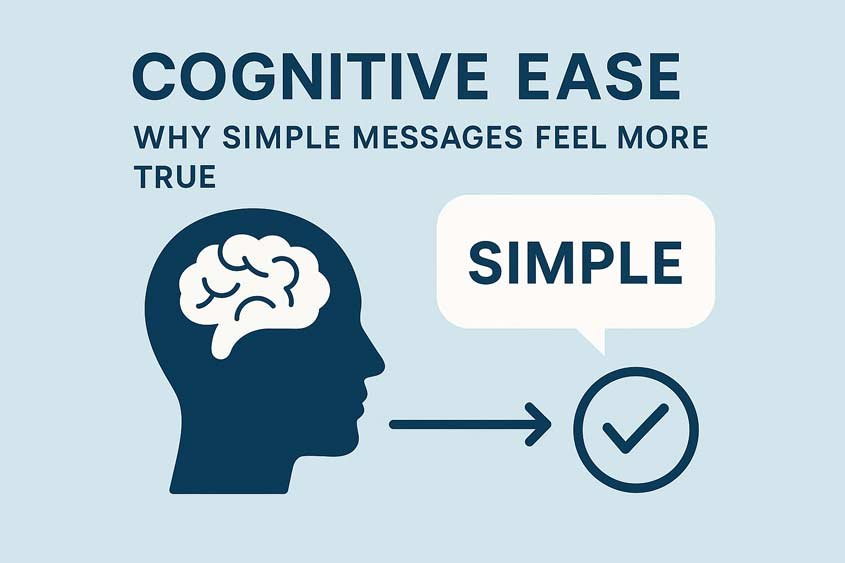
When you read a message that’s simple, clear, and easy to digest, it just feels… right. You nod along, maybe even trust it without questioning. That’s not magic or coincidence—it’s cognitive ease at work. Cognitive ease is a psychological phenomenon that makes information seem more believable, comfortable, and trustworthy simply because your brain doesn’t have to work hard to process it. In marketing, this can be the difference between a product flying off the shelves and sitting unnoticed on a website.
Think about it. You’re scrolling social media or browsing an online store. Ads that are cluttered, overly complex, or heavy with jargon make you pause, second-guess, or even scroll past. But a simple message, a clear slogan, or a straightforward product description draws you in. Why? Because your brain prefers ease. It wants to conserve mental energy and reward clarity with trust. That’s cognitive ease influencing your perception and nudging your decisions, often without you realizing it.
Table of Contents
Cognitive ease isn’t about dumbing down your marketing. It’s about understanding how people process information and designing messages that align with that. It works hand in hand with other psychological triggers like social proof, authority, and novelty. When you combine these triggers with messages that feel easy to understand, the effect multiplies. Suddenly, a simple product claim backed by reviews and expert endorsements doesn’t just inform—it persuades.
Marketers who grasp cognitive ease know that subtle design choices matter. Fonts, colors, layout, and even phrasing can influence how effortlessly your audience absorbs a message. Short, familiar words, concise sentences, and logical flow all make a message “feel right.” On the flip side, overly complicated language or cluttered visuals increase cognitive strain, which can trigger skepticism or disengagement.
You may have experienced this personally. Ever tried reading a complicated instruction manual and immediately felt frustrated? That’s cognitive strain, the opposite of cognitive ease. Now imagine the same instructions rewritten in plain language. Suddenly, it’s digestible, approachable, and even enjoyable. The same principle applies to marketing. Products, ads, and campaigns that are easier to process get your brain nodding in approval, often translating into quicker decisions and higher engagement.
Cognitive ease also explains why repetition works so well. When you see a message multiple times, your brain processes it faster each time, creating familiarity and trust. This is why some campaigns feel almost “sticky” after repeated exposure. It’s not about manipulation—it’s about working with how the brain naturally likes to handle information.
Understanding cognitive ease gives marketers a framework to craft messages that are both persuasive and ethical. It’s not just about making your ad prettier or your copy simpler—it’s about reducing mental friction so your audience can focus on the core value of your product or service. The easier it is for them to grasp your message, the more likely they are to act on it.
Cognitive ease is everywhere in marketing, often in subtle ways. From the clean layout of a website to the simplicity of a product tagline, it’s the invisible hand guiding decisions. Recognizing it in your own campaigns—and in the ads you see—can help you become a more effective communicator and a smarter consumer.
Understanding why simplicity feels more truthful is the first step. Once you know it, you start to notice it everywhere: in your favorite brands, your social media feeds, and even in the marketing emails that somehow manage to feel effortless yet persuasive. Cognitive ease isn’t just a psychological curiosity—it’s a practical tool for shaping perception, building trust, and driving action.
Understanding Cognitive Ease
Cognitive ease is a psychological principle that describes how your brain prefers simplicity over complexity when processing information. Essentially, it’s the mental comfort you feel when something is easy to read, comprehend, or recognize. When your mind encounters information that requires minimal effort, you experience a sense of fluency—a feeling that things are right, familiar, and trustworthy. Conversely, when processing is difficult, you feel cognitive strain, which often leads to skepticism, hesitation, or disengagement.
At its core, cognitive ease affects perception, judgment, and decision-making. It influences how believable a statement seems, how likely you are to trust a source, and even how favorably you view a product. In marketing, this principle becomes a powerful trigger because it shapes behavior subtly but reliably. A product description written in clear, concise language is more persuasive than one full of technical jargon. A visually clean ad grabs attention more easily than a cluttered one. Even the simplest design decisions—like readable fonts or high-contrast visuals—play into cognitive ease, helping consumers process messages quickly and feel confident in their judgments.
The impact of cognitive ease is not limited to marketing. It affects social perception, learning, and even memory. When a person encounters familiar faces or recognizable patterns, the brain experiences ease. This familiarity breeds trust, making you more receptive to messages presented in ways that feel intuitive. In contrast, unfamiliar, complex, or contradictory information triggers cognitive strain, prompting extra mental effort and critical thinking. This is why overly complicated websites or ads can feel frustrating and fail to convert.
In the context of marketing psychology, cognitive ease interacts with other triggers like social proof, authority, and novelty. For example, an ad featuring a clean layout, simple messaging, and well-known endorsements leverages both cognitive ease and authority simultaneously. The brain perceives the ad as trustworthy because it’s easy to process, and it reinforces credibility through social proof or expert backing. When these triggers align, they reduce hesitation and increase the likelihood of action, such as signing up for a newsletter, clicking “buy,” or sharing content.
The principle is rooted in decades of psychological research. Studies show that statements presented in a clear, readable font are more likely to be judged as true than identical statements in difficult-to-read type. Similarly, repetition increases cognitive ease. The more often your brain encounters a message, the easier it becomes to process, creating a sense of familiarity and reliability. This is why brands repeat slogans or taglines—the message feels right because your brain can quickly recognize and understand it.
Cognitive ease also operates at a subconscious level. You don’t need to consciously analyze why a message feels “correct”; your brain automatically assigns credibility based on how effortlessly it processes the information. This automatic judgment influences decisions in subtle ways. For instance, a simple and intuitive website navigation system encourages purchases because users don’t have to think hard about how to find products. Conversely, confusing menus or cluttered layouts increase cognitive strain and discourage engagement.
Several factors contribute to cognitive ease in marketing:
- Clarity of Language: Short sentences, common words, and straightforward phrasing reduce mental effort. Avoid jargon or unnecessary complexity.
- Familiarity: Recognizable logos, familiar color schemes, and known brand voices increase comfort.
- Visual Simplicity: Clean layouts, readable fonts, and logical structure make content easier to process.
- Repetition: Repeated exposure to a brand message or product claim builds fluency.
- Consistency: Consistent style, tone, and formatting across touchpoints reinforce predictability and ease.
Cognitive ease is particularly relevant in decision-making under uncertainty. When faced with many options, complex information, or unfamiliar products, your brain defaults to what feels easy to process. You may choose a product with a simple description, familiar design, or clear pricing over one that requires more effort to understand. Marketers exploit this tendency by removing friction, presenting information in digestible chunks, and highlighting clarity above all else.
Interestingly, cognitive ease doesn’t always align with truth. A simple statement can feel true even if it’s misleading, while a complex but accurate claim can be ignored because it’s harder to process. This highlights the responsibility marketers have: cognitive ease should enhance comprehension and transparency rather than manipulate. Ethical marketers focus on making accurate, clear, and easily understandable messages, leveraging the trigger to guide consumers toward informed decisions.
Across industries, cognitive ease manifests in different ways. E-commerce sites simplify checkout processes to reduce mental strain. SaaS companies create straightforward onboarding flows so users feel confident engaging with software. Even social media posts use concise messaging, recognizable branding, and visually intuitive layouts to ensure users understand and trust the content at a glance. In all these cases, cognitive ease shapes perception, trust, and ultimately behavior.
Cognitive ease also explains why people favor familiar brands, readable content, and clean design—even if alternatives offer better features. The brain values ease over effort, and marketers who understand this principle can craft campaigns that feel natural, trustworthy, and persuasive.
In short, cognitive ease is a foundational concept in marketing psychology. It dictates how information is perceived, which messages resonate, and how decisions are influenced. By reducing cognitive strain, marketers make it easier for consumers to understand, trust, and act. While it may seem simple on the surface, its effects are profound, shaping the way people interact with brands, process information, and make choices.
Understanding cognitive ease is your first step to designing marketing strategies that feel intuitive and persuasive. When used alongside other psychological triggers, it creates a powerful combination: messages that are not only seen but also believed, trusted, and acted upon. Recognizing how cognitive ease works allows you to create campaigns that are not just attractive but genuinely effective.
The Psychology Behind It
Cognitive ease doesn’t just appear out of nowhere—it’s the product of several psychological processes that work together to influence how you perceive, judge, and act on information. Understanding these mechanisms helps marketers design messages that feel natural, trustworthy, and persuasive. Let’s break down how this trigger operates step by step.
Mental Fluency: The Core of Cognitive Ease
At the heart of cognitive ease is mental fluency—the ease with which your brain processes information. When information is easy to understand, your brain experiences minimal friction. This fluency creates a subtle positive feeling, which your mind automatically associates with accuracy, trustworthiness, and likeability.
For example, a short, clear tagline on an ad feels more credible than a long, jargon-heavy paragraph—even if both communicate the same message. Your brain interprets simplicity as a cue that the information is reliable, saving you the effort of extra scrutiny.
Familiarity and Recognition
Familiarity plays a central role in cognitive ease. Your brain prefers what it has seen, read, or experienced before. Repetition strengthens this effect: the more often you encounter a logo, phrase, or visual style, the easier it becomes for your brain to process it.
- Familiar fonts and color schemes are processed faster and trigger positive associations.
- Recognizable brand voices create comfort, making your message feel trustworthy.
- Repetition of slogans or visual motifs builds subconscious agreement with your message.
This is why marketers carefully use consistent branding across platforms. Familiarity lowers cognitive strain, letting consumers engage with content quickly and confidently.
Visual Simplicity and Layout
Cognitive ease is not only about words—it’s about how information looks. The human brain processes visual information faster than text, so layout, color contrast, and readability all influence how easily your message is absorbed.
- Clean, uncluttered design allows your eyes and brain to focus on the key points.
- High-contrast text improves legibility, reducing mental effort.
- Logical grouping of elements and consistent alignment creates intuitive navigation.
A visually chaotic ad or webpage increases cognitive strain, prompting hesitation or skepticism. Even small design tweaks—spacing, font size, or color choices—can significantly enhance cognitive ease.
Language and Phrasing
The words you use matter as much as visuals. Cognitive ease is strengthened when language is familiar, concise, and clear. Overly complex words, long sentences, or technical jargon force the brain to work harder, triggering cognitive strain.
Marketers often use:
- Short, simple sentences
- Everyday vocabulary
- Clear, active voice
- Logical flow from one idea to the next
By reducing mental effort, this style ensures the message feels natural and credible.
Repetition and Exposure
Repeated exposure to a message increases cognitive ease over time. Known as the illusory truth effect, statements become more believable simply because they are familiar.
- A slogan seen multiple times is processed faster each time.
- Repetition strengthens brand recognition and perceived reliability.
- Even minor variations, if consistent in tone or visual style, reinforce fluency.
This mechanism explains why advertising campaigns use multiple touchpoints—emails, social media posts, and banners all work together to increase familiarity and ease.
Cognitive Ease and Decision-Making
When a message is easy to process, it lowers the cognitive load required to make a decision. Your brain interprets ease as a positive cue: if it’s easy to understand, it must be safe, trustworthy, or correct.
- You’re more likely to buy a product with a simple description than a complicated one.
- Clear instructions reduce hesitation in completing forms, signing up, or purchasing.
- Minimal mental effort translates into faster choices and higher engagement.
In short, cognitive ease streamlines decision-making, nudging consumers toward action without them even realizing it.
Step-by-Step Mechanism
Here’s a simplified flow of how cognitive ease operates in marketing:
- Exposure: The consumer encounters the message, ad, or content.
- Processing: The brain evaluates the information. Simplicity and familiarity reduce effort.
- Fluency Detection: Mental fluency triggers positive feelings and trust cues.
- Judgment: The brain unconsciously interprets ease as credibility, truth, and likeability.
- Decision Influence: Reduced cognitive strain increases the likelihood of engagement, click-through, or purchase.
This process explains why subtle differences in design, phrasing, or layout can significantly alter consumer perception.
How Cognitive Ease Interacts with Other Triggers
Cognitive ease often works alongside other marketing triggers:
- Social Proof: Testimonials or user numbers are easier to trust when presented clearly.
- Authority: Expert endorsements feel more convincing if visually simple and readable.
- Novelty: Even new or surprising information is more persuasive when delivered in a digestible format.
These combined triggers amplify each other, creating an almost effortless influence on decision-making.
By addressing these elements, campaigns reduce mental strain and make messages feel intuitively correct, trustworthy, and actionable.
The Role of Cognitive Ease in Marketing
Cognitive ease is more than just a psychological curiosity—it’s a practical tool marketers use to shape decisions, influence behavior, and drive engagement. When consumers encounter messages that are easy to process, they feel more comfortable, more trusting, and more willing to act. Understanding how cognitive ease operates in marketing allows brands to design campaigns that feel intuitive, persuasive, and effective without resorting to manipulation.
Why Simplicity Wins
One of the core reasons cognitive ease matters in marketing is that your audience’s brain naturally favors simplicity. Processing complex information requires mental effort, and humans are wired to conserve energy whenever possible. By presenting information in a clear, digestible format, marketers reduce cognitive strain, allowing your brain to focus on the core value of the product or service.
This explains why minimalistic designs, simple messaging, and straightforward instructions often outperform flashy, cluttered, or overly technical alternatives. Consumers are more likely to trust and engage with brands that make understanding easy, because fluency feels safe and credible.
Building Trust Through Ease
Cognitive ease isn’t just about speed; it’s about trust. When a message is easy to understand, your brain interprets it as truthful, reliable, and approachable. This trust can translate into real-world decisions:
- Choosing one brand over another
- Following recommended actions, like signing up or subscribing
- Sharing content with peers
Marketers leverage this by combining cognitive ease with other triggers such as social proof and authority. For example, a clear, well-designed testimonial section makes it easy to process the social proof, strengthening belief in the product’s value.
Enhancing User Experience
User experience (UX) and cognitive ease are tightly linked. Every friction point—a confusing navigation menu, a cluttered checkout process, or an unclear product description—creates cognitive strain, reducing engagement and conversions. Marketers who optimize for cognitive ease:
- Simplify navigation paths
- Use readable fonts and consistent color schemes
- Present key information upfront
- Reduce unnecessary choices
By minimizing mental effort, consumers can focus on deciding rather than figuring out how the interface works. This often results in higher satisfaction, more completed transactions, and repeat visits.
Influencing Perception and Recall
Cognitive ease also shapes perception and memory. Easy-to-process messages are more likely to be remembered, shared, and acted upon. Repetition increases this effect, creating familiarity that reinforces trust. In practical marketing terms, this means:
- Simple slogans are more memorable
- Clean, visually appealing ads stick in the mind
- Messages that are easy to understand are more likely to be repeated verbally or on social media
This subtle influence helps brands remain top-of-mind and increases the chances of conversions over time.
Step-by-Step Marketing Benefits
Here’s how cognitive ease typically shapes consumer decisions in marketing:
- Initial Exposure: Consumers encounter a clear, visually intuitive message.
- Effortless Processing: The brain recognizes the message easily, triggering mental fluency.
- Positive Feeling: Ease creates a subconscious sense of trust and comfort.
- Favorable Judgment: The product, service, or brand feels more credible and appealing.
- Action Taken: Reduced cognitive strain increases the likelihood of engagement, sign-ups, or purchases.
By understanding this flow, marketers can structure campaigns to optimize each step, ensuring messages are processed smoothly and lead to desired outcomes.
Practical Applications in Marketing
Cognitive ease manifests in marketing across industries in numerous ways:
- Product Packaging: Clear, readable labels and simple instructions reduce uncertainty and encourage purchase.
- Advertising: Short, concise copy and uncluttered visuals improve attention and trust.
- Digital Marketing: Streamlined websites, intuitive navigation, and quick-loading pages minimize friction.
- Email Campaigns: Clear subject lines and simple, scannable content increase open rates and clicks.
- Social Media: Bite-sized posts, familiar templates, and consistent branding enhance engagement.
All of these examples show how making information easier to process can directly affect behavior and results.
Combining Cognitive Ease with Other Triggers
Effective marketing rarely relies on a single psychological principle. Cognitive ease works best when paired with other triggers:
- Social Proof: Easy-to-read reviews or ratings strengthen credibility.
- Authority: Expert endorsements presented simply feel more believable.
- Scarcity: Simple countdowns or stock indicators make urgency easier to grasp.
- Novelty: New product features communicated clearly are more compelling.
By combining triggers, marketers create campaigns that are not only easy to understand but also emotionally and socially persuasive, driving higher engagement and sales.
When used thoughtfully, cognitive ease allows consumers to process information comfortably, trust the brand, and take action more readily. It’s not a gimmick—it’s a fundamental principle that reflects how your brain works and why simplicity in marketing isn’t just nice to have—it’s essential for success.
Cognitive Ease Real Case Studies
Understanding cognitive ease is one thing; seeing it in action is another. Marketers across industries have leveraged the principle successfully, using simplicity and clarity to build trust, influence decisions, and boost engagement. Below are real-world, verifiable examples demonstrating cognitive ease in action.
Case Study 1: Apple – Minimalist Product Design and Messaging
Apple is widely recognized for its consistent use of cognitive ease in marketing and product design. The company’s approach demonstrates how simplicity can enhance perception and drive consumer behavior:
- Visual Simplicity: Apple’s product pages feature large images of devices, minimal text, and clean layouts. Consumers can quickly process the essential information without distraction.
- Clear Messaging: Taglines like “Think Different” and product descriptions focus on benefits rather than technical jargon, making the value easy to understand.
- Consistent Design: Across physical products, websites, and advertisements, Apple maintains consistent visual and verbal branding, reinforcing familiarity and reducing cognitive strain.
The result? Consumers perceive Apple products as intuitive, trustworthy, and premium. Sales data supports this: Apple consistently achieves high conversion rates on its e-commerce platform and maintains strong customer loyalty worldwide. The simplicity and fluency in messaging directly enhance cognitive ease, influencing both perception and purchasing decisions.
Case Study 2: Dropbox – Onboarding Flow Optimization
Dropbox, a cloud storage service, relied heavily on cognitive ease to improve user onboarding and retention. Early adoption revealed that users were abandoning sign-ups due to confusion and complex instructions. The company applied cognitive ease principles to redesign its onboarding process:
- Step-by-Step Instructions: Dropbox broke down the setup into small, digestible steps, reducing cognitive load.
- Visual Guidance: Simple illustrations and clear icons guided users through key actions, making processes intuitive.
- Concise Copy: All text was simplified to ensure users immediately understood actions and benefits.
The outcome was measurable: Dropbox saw significant improvements in user completion rates and overall engagement. By reducing mental strain and creating an effortless experience, the company made the onboarding process feel natural and trustworthy, demonstrating how cognitive ease directly impacts behavior.
Case Study 3: Coca-Cola – Familiarity and Consistency in Branding
Coca-Cola has relied on cognitive ease for decades, emphasizing visual and messaging consistency to reinforce brand trust and recognition:
- Consistent Visual Identity: The red-and-white color scheme, distinctive font, and recognizable logo make the brand instantly identifiable worldwide.
- Repetition Across Channels: Coca-Cola repeats core messages and visuals across advertising, packaging, and events, creating familiarity that strengthens cognitive ease.
- Simple Taglines: Slogans like “Open Happiness” are short, memorable, and easy to process.
Research shows that consumers are more likely to choose familiar brands over unfamiliar competitors, even when both offer similar products. Coca-Cola’s approach exemplifies how repeated exposure and consistent design reduce cognitive effort, increasing comfort and driving purchase behavior.
Key Insights from These Cases
Across these examples, several patterns emerge:
- Simplicity Drives Action: Clear visuals, concise copy, and logical flows reduce mental strain and make decisions easier.
- Consistency Builds Familiarity: Repetition of colors, fonts, messaging, and layouts reinforces trust and fluency.
- Ease Enhances Perception: Cognitive ease improves perceived credibility, reliability, and desirability.
These cases show that cognitive ease is not an abstract theory—it’s a measurable factor in marketing effectiveness. Companies that prioritize simplicity, clarity, and consistency create campaigns that feel natural and trustworthy, resulting in higher engagement and conversion rates.
How You Can Apply These Lessons
Marketers can take cues from these examples to implement cognitive ease in their own strategies:
- Audit website and ad designs for clutter or complexity.
- Simplify language, focusing on benefits and easy-to-understand terms.
- Maintain consistent branding across all consumer touchpoints.
- Test messaging for fluency and readability before launch.
- Monitor user behavior to identify friction points and remove them.
By following these steps, you can replicate the impact cognitive ease has had for major brands, creating campaigns that resonate intuitively and drive measurable results.
How Consumers React
Cognitive ease shapes the way people respond to marketing at a behavioral level. When messages are easy to process, consumers respond with greater trust, faster decisions, and increased engagement. By observing these patterns, marketers can better predict reactions and optimize campaigns for maximum impact.
Immediate Emotional Response
The first reaction to cognitive ease is emotional. Messages that are clear, simple, and familiar trigger subtle positive feelings—comfort, confidence, and satisfaction. These emotions influence subsequent decisions without consumers even realizing it.
For example, a website with clean visuals and easy navigation makes users feel calm and in control. Conversely, confusing layouts, dense copy, or excessive information can evoke frustration, uncertainty, or avoidance. These emotional cues are often the first observable responses to cognitive ease or strain.
Decision-Making Speed
When cognitive ease is high, decisions happen more quickly. Consumers are less likely to pause, second-guess, or seek additional information. This is particularly noticeable in e-commerce and digital marketing contexts:
- Simplified product descriptions lead to faster purchases.
- Clear pricing information reduces hesitation.
- Intuitive checkout processes result in fewer abandoned carts.
Essentially, ease reduces mental friction, allowing the brain to allocate less energy to evaluation and more to action.
Trust and Perceived Credibility
Cognitive ease also influences how trustworthy or credible a message appears. Consumers unconsciously associate fluency with reliability. For instance:
- Readable fonts and high-contrast visuals create a sense of professionalism.
- Concise, well-structured copy signals expertise and transparency.
- Familiar branding reassures users that they are engaging with a reputable source.
This trust often translates into observable behavior: clicks on call-to-action buttons, email sign-ups, or social sharing of content.
Behavioral Patterns Across Channels
Consumer responses to cognitive ease can be seen across various marketing channels:
- Websites: Users linger longer, navigate efficiently, and complete purchases when content is easy to process.
- Social Media: Clear visuals and concise captions increase engagement, likes, and shares.
- Email Marketing: Simple, scannable messages with clear subject lines boost open and click-through rates.
- Advertising: Ads with uncluttered visuals and straightforward slogans drive higher recall and conversion.
These patterns highlight the universality of cognitive ease as a trigger—it influences behavior in both online and offline contexts.
Observable Indicators of Cognitive Ease
Marketers can measure and interpret cognitive ease by observing specific behaviors:
- Click-through rates: Higher when content is clear and familiar.
- Time on page: Increased when users can process information comfortably.
- Conversion rates: Improved when decisions require minimal mental effort.
- Sharing and recommendations: More frequent when messages are easy to understand and emotionally positive.
- Reduced bounce rates: Occur when users do not experience cognitive strain.
Typical Consumer Responses Summarized
Here’s a list of key responses you can expect when cognitive ease is present:
- Faster decision-making
- Higher trust in messages and brands
- Increased engagement and interaction
- Positive emotional reactions such as comfort and satisfaction
- Greater likelihood of repeat behavior or brand loyalty
Subtle Effects and Interaction with Other Triggers
Cognitive ease does not operate in isolation. It often enhances or interacts with other psychological triggers:
- Social Proof: Easy-to-read testimonials or review ratings make peer validation more persuasive.
- Authority: Expert endorsements presented clearly feel more credible.
- Scarcity: Simple countdowns or stock indicators encourage timely action.
- Novelty: Even surprising features are more readily accepted if presented in an easily understandable format.
By observing consumer behavior, marketers can see the combined effect of cognitive ease and these triggers, which often results in smoother conversions and more intuitive engagement.
Why This Matters
Understanding how consumers react to cognitive ease allows marketers to design campaigns that align with natural decision-making processes. When content is easy to process, consumers feel confident, act faster, and develop positive associations with the brand. Recognizing these patterns also helps identify friction points, enabling brands to refine messaging, layout, and flow for optimal results.
How Brands Use It Effectively
Cognitive ease is a powerful tool in a marketer’s toolkit—but its true value comes from applying it ethically and strategically. Brands that leverage simplicity, clarity, and familiarity can guide consumer decisions while maintaining trust and transparency. Here’s how businesses can use cognitive ease effectively across marketing channels.
Simplifying Messaging
The simplest way to apply cognitive ease is through messaging. Clear, concise, and familiar language reduces mental effort, helping consumers quickly understand the value proposition.
- Actionable tip: Focus on benefits over features. For example, instead of saying, “This app uses advanced algorithms to optimize workflow,” say, “Save time and stay organized effortlessly.”
- Consistency matters: Use the same tone, style, and phrasing across all touchpoints to create familiarity.
- Plain language: Avoid jargon, technical terms, or unnecessarily long sentences that increase cognitive strain.
By simplifying language, brands make it easier for the audience to process information, which enhances trust and engagement.
Streamlining Visual Design
Visual clarity is another critical application of cognitive ease. Clean layouts, readable fonts, and consistent color schemes help consumers absorb messages without effort.
- Actionable tip: Use whitespace to separate content blocks, making it visually digestible.
- Readable fonts: Stick to familiar, easy-to-read typefaces.
- Logical flow: Arrange content in a clear, intuitive order so users can scan and understand key points quickly.
Brands like Apple and Airbnb exemplify this approach, creating a seamless, comfortable user experience that encourages exploration and action.
Improving User Experience
Cognitive ease is closely tied to user experience (UX). Any friction in navigation, form completion, or decision-making increases mental effort and reduces conversions. Ethical marketers focus on removing these barriers:
- Actionable tip: Simplify sign-up forms, minimize steps in checkout, and provide clear guidance.
- Mobile optimization: Ensure the interface is easy to navigate on any device.
- Feedback and clarity: Offer immediate, clear feedback after each action, reducing uncertainty.
When consumers find it easy to interact with a brand, they are more likely to complete purchases, subscribe to services, or return in the future.
Leveraging Familiarity and Repetition
Cognitive ease thrives on familiarity. Repetition of brand elements, visuals, and messaging increases fluency and comfort over time, making consumers more receptive.
- Actionable tip: Use consistent logos, colors, and taglines across all marketing channels.
- Repeat core messages: Ensure that key value propositions appear multiple times without becoming overwhelming.
- Align campaigns: Synchronize messaging across ads, social media, email, and packaging for seamless recognition.
Repeated exposure makes the brand feel familiar, reducing hesitation and increasing trust.
Ethical Applications of Cognitive Ease
It’s important to use cognitive ease ethically. Misleading simplicity or oversimplified claims can erode trust and lead to consumer backlash. Ethical uses focus on clarity, transparency, and genuine value:
- Truthful messaging: Make complex information simple without exaggerating or distorting facts.
- Accessible design: Ensure all consumers, including those with visual or cognitive impairments, can process information easily.
- Transparency: Clearly communicate pricing, features, and limitations to maintain trust.
Ethical application ensures that cognitive ease benefits both the brand and the consumer, fostering long-term relationships rather than short-term manipulation.
Practical Uses Across Industries
Different industries can apply cognitive ease in distinct ways:
- E-commerce: Simplify product descriptions, pricing, and checkout to reduce abandonment.
- Software and apps: Streamline onboarding, tutorials, and navigation for intuitive user engagement.
- Healthcare: Use clear, straightforward language in patient communications and appointment scheduling.
- Financial services: Present information about accounts, loans, or insurance policies in digestible formats to reduce overwhelm.
- Hospitality: Use simple, visually intuitive booking systems to increase reservations and reduce errors.
These examples show that cognitive ease is not limited to one type of marketing—it’s a universal principle that improves consumer comprehension and behavior across contexts.
Key Steps for Brands to Apply Cognitive Ease
To summarize, here’s a practical list of actionable ways brands can ethically leverage cognitive ease:
- Simplify all messaging, focusing on clarity and benefits.
- Design visually clean and readable layouts.
- Remove friction in navigation, forms, and processes.
- Maintain consistent branding and messaging across touchpoints.
- Repeat key messages thoughtfully to build familiarity.
- Ensure transparency and truthfulness in all communications.
By following these steps, brands can enhance trust, facilitate decision-making, and increase engagement without manipulating or overwhelming consumers. Cognitive ease becomes a strategic advantage that’s both ethical and effective.
Mistakes to Avoid
Cognitive ease is a powerful marketing trigger, but it’s not foolproof. Misapplication can lead to consumer frustration, distrust, or disengagement. Understanding common pitfalls helps you avoid undermining the very trust and clarity that make this trigger effective. Below, we explore the most frequent mistakes marketers make when attempting to leverage cognitive ease and how to sidestep them.
Over-Simplifying to the Point of Misleading
While simplicity is central to cognitive ease, reducing messages too much can backfire. Oversimplification can make claims feel vague or even deceptive. Consumers notice when essential details are missing, which can damage credibility.
Example: A skincare ad promises “perfect skin in 7 days” without context or explanation. The exaggerated simplicity creates cognitive ease initially, but consumers quickly detect the unrealistic claim, eroding trust.
Ignoring Visual or Textual Clarity
Cognitive ease relies on both readable text and clear visuals. Neglecting either element increases mental strain and pushes users away. Complex layouts, low-contrast text, or tiny fonts make processing difficult, reducing engagement.
Example: An e-commerce site using a busy background behind product descriptions or tiny, hard-to-read fonts causes visitors to abandon the page despite quality products.
Inconsistent Branding
Familiarity is a key factor in cognitive ease. Inconsistent branding—whether in color schemes, fonts, or tone—creates friction, forcing consumers to work harder to recognize the brand.
Example: A company uses drastically different colors and messaging across social media, website, and ads. Even loyal consumers experience confusion, reducing trust and fluency.
Overloading the Consumer
Cognitive ease is about reducing mental effort, not removing all complexity entirely. Bombarding users with too many choices, lengthy copy, or unnecessary visuals creates cognitive strain, which can negate the benefits of simplicity.
Example: An online store displays hundreds of products on one page with dense text descriptions. Consumers feel overwhelmed, decision-making slows, and conversion rates drop.
Neglecting Repetition and Familiarity
Repetition builds fluency. Failing to consistently reinforce key messages, slogans, or visuals reduces familiarity, making it harder for consumers to process information effortlessly.
Example: A new product launches with different taglines across platforms. Consumers don’t immediately recognize or remember the brand, and the ease effect is weakened.
Misalignment with Other Triggers
Cognitive ease often works best when combined with other psychological triggers like social proof or authority. Using it in isolation without considering context can diminish effectiveness.
Example: Presenting a simple, clear product description without showing user ratings or endorsements may feel easy to process but lacks additional cues that drive decision-making.
Why Avoiding These Mistakes Matters
Every misstep increases cognitive strain and reduces the effectiveness of your marketing. Consumers may perceive a brand as confusing, untrustworthy, or difficult to engage with, directly impacting conversions, loyalty, and overall perception. By avoiding these errors, marketers preserve the natural fluency and comfort that cognitive ease provides, ensuring campaigns feel intuitive, credible, and persuasive.
How to Apply It
Cognitive ease is most effective when applied thoughtfully, balancing simplicity, clarity, and transparency. While the concept is straightforward—making messages easier for the brain to process—the execution requires attention to detail. Here, we outline practical tips for using this trigger in marketing without compromising credibility or consumer trust.
Focus on Clear, Concise Messaging
The foundation of cognitive ease lies in communication that is easy to process. Clear and concise messaging reduces mental effort, allowing your audience to quickly understand the value of your product or service.
- Keep sentences short and avoid unnecessary jargon.
- Highlight benefits before features to make value immediately apparent.
- Use headings, bullet points, and subheadings to structure information logically.
For instance, a subscription service describing its offerings might write, “Get unlimited music anytime, anywhere” instead of a long technical explanation of file formats or streaming protocols.
Design for Visual Fluency
Visual clarity complements textual simplicity. Cognitive ease is influenced not just by what you say but by how your audience sees it. Well-designed visuals reduce cognitive strain and make interaction effortless.
- Use clean layouts with sufficient whitespace.
- Choose high-contrast colors for readability.
- Employ consistent fonts and typography across all content.
- Group related elements logically to guide attention naturally.
Visual fluency ensures that users can quickly scan and comprehend the content, increasing the likelihood of engagement.
Optimize User Experience
Cognitive ease extends to user experience (UX). Every step of your website, app, or marketing funnel should minimize friction and reduce the effort required to act.
- Simplify navigation menus and reduce clicks needed to reach key actions.
- Break down forms into manageable sections with clear instructions.
- Provide visual cues or confirmations to reassure users they are on the right path.
A smooth, intuitive experience enhances trust and encourages the user to move confidently toward the desired action.
Leverage Familiarity and Repetition
Repeated exposure to consistent messages and visuals reinforces cognitive ease. Familiarity reduces processing effort, making content feel credible and comfortable.
- Maintain consistent branding across all channels.
- Repeat key phrases, taglines, and visual motifs without overdoing it.
- Use templates for social media posts or newsletters to create instant recognition.
Familiarity combined with clarity ensures that your message is processed quickly and positively.
Combine Cognitive Ease with Other Triggers
Cognitive ease is powerful on its own, but integrating it with other psychological triggers enhances results.
- Social Proof: Present clear, readable testimonials or review scores.
- Authority: Feature expert endorsements in a visually simple format.
- Scarcity: Use concise countdowns or stock indicators.
- Novelty: Introduce new features with clear, easy-to-understand visuals or messaging.
Strategically pairing triggers amplifies persuasion while keeping the experience effortless for the audience.
Short List of Practical Tips
Here’s a concise list of actionable steps for applying cognitive ease effectively:
- Prioritize clarity in all messaging; focus on benefits over technical details.
- Design visuals for readability, using whitespace and logical layouts.
- Streamline user experience to reduce friction in actions and navigation.
- Maintain consistent branding across touchpoints to build familiarity.
- Repeat key messages thoughtfully to reinforce fluency.
- Integrate cognitive ease with other psychological triggers ethically.
Measuring Effectiveness
Applying cognitive ease should always include observation and refinement. Monitor engagement metrics such as:
- Time on page or session duration
- Conversion rates and completed actions
- Click-through rates on calls-to-action
- Bounce rates and navigation patterns
By analyzing these data points, marketers can identify friction points and optimize content, design, or messaging to maximize the impact of cognitive ease.
Final Thoughts on Application
Cognitive ease works best when applied as part of a comprehensive, thoughtful marketing strategy. It’s not about dumbing down content—it’s about making it accessible, understandable, and naturally persuasive. When done correctly, cognitive ease reduces mental effort, increases trust, and encourages faster, more confident decision-making, giving brands a tangible advantage in competitive markets.
Spot The Trigger
Cognitive ease influences how easily we process information, creating feelings of comfort, trust, and fluency. The following exercises help you spot whether advertisers are using this trigger effectively.
Exercise 1
A tech company launches a new smartphone with an ad full of detailed specifications, multiple font styles, and a cluttered layout showing dozens of features on a single page. You have to read carefully to understand what makes it different from competitors.
Question: Is the brand using the Cognitive Ease trigger? (True or False) | Check Answer
Exercise 2
A subscription service redesigns its homepage with a simple layout: large, readable fonts, concise text highlighting the main benefits, and clear calls-to-action. Each step from browsing to subscribing is straightforward and intuitive. You immediately understand what the service offers and feel confident taking action.
Question: Is the brand using the Cognitive Ease trigger? (True or False) | Check Answer
Exercise 3
A new energy drink ad uses flashy, fast-moving animations, complex graphics, and multiple competing slogans on the same screen. You struggle to focus and feel unsure about the product benefits.
Question: Is the brand using the Cognitive Ease trigger? (True or False) | Check Answer
Main Takeaways
Cognitive ease is a subtle yet powerful force shaping how consumers perceive messages and make decisions. At its core, it reflects the brain’s preference for simplicity, familiarity, and fluency. When information is easy to process, people feel more confident, trust the source more, and are more likely to act quickly. Understanding this trigger is essential for marketers who want their campaigns to resonate without causing friction or skepticism.
Why Cognitive Ease Matters
The effect of cognitive ease extends beyond mere comfort—it directly influences behavior. Consumers respond more favorably to messages that are clear, visually digestible, and consistent. Conversely, cluttered layouts, dense text, or overly complex instructions create mental friction, which can reduce engagement and trust. The principle applies across channels: websites, advertisements, emails, social media, and product packaging all benefit from clarity and simplicity.
Observing the Trigger in Action
When cognitive ease is effectively applied, observable behaviors include:
- Faster decision-making and reduced hesitation
- Higher engagement with content or campaigns
- Increased likelihood of completing purchases or subscriptions
- Greater retention and recall of the message
- Positive emotional responses such as trust, comfort, and satisfaction
These behaviors demonstrate why cognitive ease is not just a theoretical concept—it has practical, measurable impact on consumer behavior.
Key Strategies for Marketers
Applying cognitive ease ethically and strategically involves several core practices:
- Simplify Messaging: Use concise, benefit-focused language. Avoid jargon and unnecessary complexity.
- Optimize Design: Employ readable fonts, intuitive layouts, and clear visual hierarchies.
- Enhance User Experience: Reduce friction in navigation, forms, and actions.
- Maintain Consistency: Reinforce branding and key messages across all touchpoints to build familiarity.
- Leverage Repetition and Familiarity: Thoughtful repetition enhances processing fluency and trust.
These strategies help marketers create campaigns that are not only easier to understand but also more persuasive, increasing engagement and conversions.
Cognitive Ease in Context
It’s important to recognize that cognitive ease often works in conjunction with other psychological triggers such as social proof, authority, and scarcity. Combined thoughtfully, these principles amplify influence without manipulating consumers. Cognitive ease sets the foundation for trust and fluency, while other triggers provide additional motivation to act.
Final Reflection
Cognitive ease is deceptively simple but profoundly influential. By prioritizing clarity, consistency, and familiarity, you reduce mental effort for your audience, making your messages feel credible and approachable. In marketing, this translates directly into higher engagement, faster decision-making, and stronger consumer relationships. Brands that understand and ethically leverage cognitive ease gain a competitive edge, shaping decisions not through pressure, but through intuitive, effortless communication.

Gabriel Comanoiu is a digital marketing expert who has run his own agency since 2016. He learned marketing by testing, analyzing, and refining campaigns across multiple channels. In his book series Impulse Buying Psychology, he shares the psychological triggers behind every purchase, showing how to create marketing that connects, persuades, and converts.