
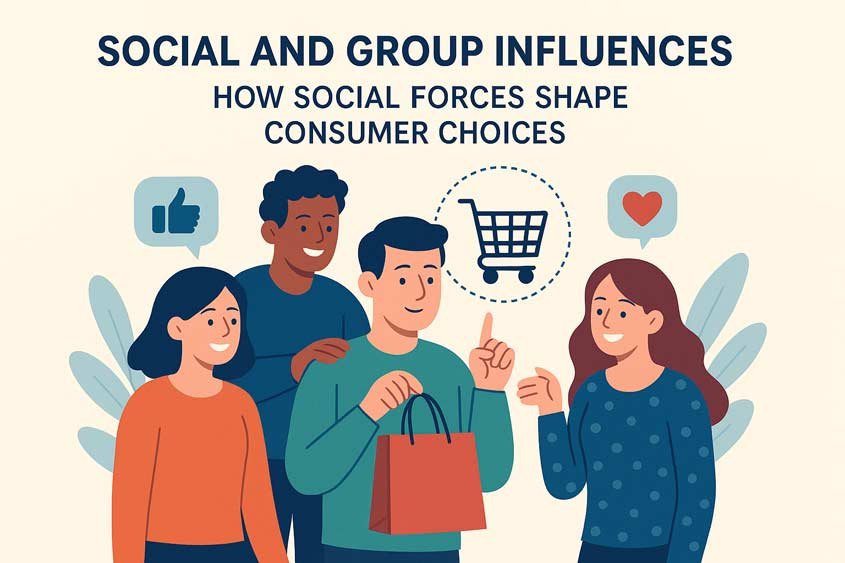
You know that strange moment when you’re about to buy something, and your brain pulls in other people’s opinions even if they’re not in the room? That’s the space we’re stepping into here: the world of Social and Group Influences Triggers. It’s a mouthful, but it describes one of the most quietly powerful forces behind what people choose to buy, ignore, crave, or even brag about later.
Marketers love to obsess over individual psychology, but consumers don’t live in isolation. You make choices while scanning the reactions, norms, expectations, and behaviors of the people around you. Sometimes consciously. Sometimes almost automatically. Sometimes because you don’t want to feel left out. Other times because you want to feel aligned with a tribe. Then there are moments when you’re simply swept up in an emotional ripple effect created by others.
Table of Contents
Before we get ahead of ourselves, this whole category of triggers includes a set you already know at least from a distance: Social Proof, Liking, Belonging and Identity, FOMO, Authority, and Emotional Contagion. Each one has its own flavor, but they all operate through a similar door: your connection to people. People you admire, people you trust, people you want to emulate, people you want approval from, and even people you don’t know but somehow still influence you.
Think about the last time you walked into a restaurant and felt relieved to see more than one table occupied. Or when you hesitated to buy a product until you checked the reviews. Or when you found yourself picking a brand simply because the creator felt likable and you caught yourself thinking, “Yeah, I want to support this person.” That’s the social layer at work. It’s subtle, but it’s everywhere.
That’s why marketers study these patterns so closely. The social world creates shortcuts in decision making. These shortcuts help people reduce uncertainty. They avoid risk. They copy what works for others. They follow the crowd when they don’t want to overthink. They imitate respected figures. They join communities that reinforce their identity. They get pulled in by urgency that emerges when a group is moving toward something. They catch feelings from others, even strangers. And honestly, you do this even when you think you’re being fully rational.
This doesn’t make you weak. It makes you human.
In marketing psychology, Social and Group Influences Triggers sit next to things like Scarcity, Commitment, or Novelty, but they’re often more potent because they tap into something ancient: the need for social survival. Long before modern advertising existed, humans looked to the group to know what was safe, smart, acceptable, or rewarding. We relied on the wisdom of others, and in many ways, we still do. Just now it happens with more pixels involved.
A brand doesn’t need to shout the loudest when it can show that “people like you are already choosing this.” A business doesn’t need to justify its quality when respected voices are endorsing it. And a product doesn’t need to be revolutionary when it simply fits into a group identity people want to adopt. Even emotional states are contagious, which is why a campaign that shows joy makes you feel good, or why a wave of excitement around a product launch can pull you in whether you initially cared or not.
The thing is, these influences aren’t always dramatic. Sometimes they’re so quiet you almost miss them. A little FOMO when a limited offer is popular. A subtle sense of belonging when a community rallies around a product. A feeling of trust because the brand spokesperson seems warm and relatable. A spark of curiosity because others seem excited. Even that small push you feel when you see “Best Seller” isn’t about logic. It’s social proof nudging your brain into thinking, “If so many people chose this, it’s probably safe.”
You see this across industries. Beauty brands create viral challenges to let the group energy spread. Tech companies spotlight early adopters to encourage mainstream buyers. Fitness influencers build tight communities that make people feel part of something meaningful. Even in B2B, companies highlight big-name clients to reduce the risk perception for new ones. Social influence doesn’t discriminate. If humans are involved, it works.
What makes these triggers even more interesting is that people usually believe they’re immune to them. Most consumers say they make their decisions independently. Yet the data from real-world behavior shows the opposite. You react to crowds. You react to authority figures. You react to stories that match your identity. You respond to positive emotional vibes. You respond to popularity indicators. And you definitely respond when you fear missing out.
Marketers who understand this don’t use these triggers to manipulate people. They use them to reduce hesitation, build trust, create connection, and help customers make decisions that already feel right to them. When used ethically, these triggers help people feel sure, included, and confident.
As we go deeper into this article, you’ll see how each trigger works, why it works, the psychology behind it, and how businesses put it into action. You’ll also see how consumers respond, often in ways they don’t even notice. And by the end, you’ll be able to spot these triggers in the wild, whether they’re being used by a tiny startup or a global giant.
Main Social and Group Influences Triggers
| Trigger | Core Psychological Effect | Examples in Marketing |
| Social Proof | People look to others to decide what’s right or safe. Seeing others use or praise something makes it feel trustworthy. | Customer reviews on product pages • “Best-seller” or “Most popular” tags • User photos on social media. |
| Liking | We say yes more easily to brands or people we like and feel connected to. | Friendly spokespersons • Humorous or relatable social posts • Behind-the-scenes brand stories. |
| Belonging and Identity | People buy things that express who they are or help them feel part of a group. | Brand communities like Harley-Davidson or Apple • Sports team merchandise • “Join our movement” slogans. |
| FOMO (Fear of Missing Out) | Seeing others enjoy something we haven’t makes us want to join in. | Event photos tagged “Wish you were here” • “Trending now” sections • Social feeds showing others using the product. |
| Authority | People trust experts, credible brands, and professionals more than unknown sources. | Dentist endorsing toothpaste • “As seen in Forbes” badges • Certifications or awards displayed on websites. |
| Emotional Contagion | Emotions spread; people mirror the mood they perceive. | Smiling models in ads • Upbeat background music • Warm brand tone in copy. |
Understanding Social and Group Influences Triggers
If you’ve ever wondered why people follow trends, trust strangers’ reviews, or buy something just because a crowd seems obsessed with it, you’re right in the center of Social and Group Influences Triggers. This set of triggers acts like a social current that pulls you in without making a big scene about it. You still make your own decisions, but those decisions often get shaped by what others around you are doing, feeling, or approving.
These triggers influence trust, perceived value, risk tolerance, and even the emotional tone someone brings into a buying moment. When you understand the mechanics behind them, you see why a product with fifty reviews sells more than a product with none, or why people instantly prefer a friendly brand over a cold one.
Let’s break them down so you can see their structure instead of just their effects.
Social Proof
Social proof is the tendency to look at what others are doing to decide what you should do next. It kicks in when you want to avoid a bad decision or reduce mental effort. When you see a product labeled as a bestseller or notice that a page has thousands of positive reviews, the brain reads that as a shortcut: “Others already tested this. It’s probably good.”
This trigger influences certainty, perceived safety, and the speed of decision making. It helps people take action when they don’t want to risk choosing wrong. You see it everywhere: crowded restaurants, trending products, subscription counts, testimonials, industry case studies, and communities that praise a solution.
In marketing, social proof isn’t about bragging. It’s about showing that people like you already trust what’s being offered.
Liking
Liking influences decisions in a simple but powerful way: people say yes more easily to brands or individuals they like. It’s not always rational, and honestly, it doesn’t need to be. Humans just tend to trust and support those who seem warm, relatable, or familiar.
When you see a friendly founder talking honestly about their product, or you notice a brand that uses a tone of voice that feels human instead of robotic, you naturally feel more open to buying. It influences trust, loyalty, and the emotional comfort someone feels when interacting with a business.
Creators, small businesses, and even big brands lean into liking by showing personality. A touch of humor, a face behind the brand, a relatable story, or even an honest confession can make people feel like they’re dealing with someone they actually respect.
Belonging and Identity
Belonging and identity hit at a deeper level than the other triggers. This one influences who people want to be and what groups they want to associate with. When someone buys a product because “it fits the kind of person I am,” you’re seeing this trigger in action.
It shows up in communities, niche brands, lifestyle products, membership programs, and even simple design choices that signal a certain type of tribe. When a brand communicates a culture, a vibe, or a shared belief, people who resonate with that identity feel pulled in.
This trigger shapes loyalty, self-expression, and the sense of being part of a group. It’s why certain people stick with one sportswear brand for years, why fandoms form around creators, and why some products feel less like purchases and more like joining a club.
FOMO
FOMO influences urgency and action readiness. It’s what happens when people see others getting something, experiencing something, or participating in something and suddenly feel the risk of missing out. It’s not always about scarcity. Sometimes it’s emotional: you see everyone excited about a launch and you feel like you must be part of that energy.
Marketing uses FOMO when highlighting limited spots, community experiences, live events, or offers with visible social momentum. Even small indicators like “people are buying this right now” spark the trigger. FOMO pushes people to act sooner, not later, and gives a strong nudge to overcome hesitation.
Authority
Authority influences trust and perceived credibility. When a respected figure, expert, or recognizable entity approves something, people feel safer choosing it. This trigger doesn’t require a celebrity; it can be a specialist, a well-known professional, or a brand with a history of expertise.
Authority reduces doubt, speeds up decisions, and increases confidence. A buyer might not understand all the technical details of a product, but if someone with expertise recommends it, they feel more sure. You see this in certifications, expert endorsements, rankings, awards, or even founders with strong reputations.
It works because people want guidance from those who know more.
Emotional Contagion
Emotional contagion influences mood, excitement, and the vibe behind a decision. You catch emotions from others, even through a screen. When you see joyful customers in an ad or witness a wave of excitement around a product launch, you start feeling that energy too.
This trigger shapes impulse decisions, emotional engagement, and the feeling you attach to a brand. It’s the reason upbeat ads feel uplifting, why group celebrations boost interest, and why a positive community can turn a simple product into something that feels inspiring.
It’s not manipulation. It’s a natural human response to shared emotional cues.
The Combined Influence
These triggers rarely work alone. Social proof might pull you in while liking keeps you engaged. Belonging solidifies the relationship, while FOMO gives you the push to act now. Authority might remove your final doubts, and emotional contagion makes the whole experience feel good.
Together, they influence your confidence, your expectations, your sense of safety, and your desire to be aligned with the people around you. These triggers don’t overpower your thinking; they guide it. And because you live in a social world, they operate constantly, often without you noticing.
Businesses use them because they reduce friction and help customers make decisions that feel familiar and socially validated. Consumers respond because these cues make choices easier, faster, and more aligned with who they want to be.
The Psychology Behind Them
Understanding Social and Group Influences Triggers means peeling back the curtain on how your brain shortcuts social info into decisions. These are not magical—they’re predictable neural and cognitive processes that evolved to help people survive and belong. Below I’ll break down the psychological mechanism for each major trigger and show the process step-by-step so you can spot how they operate in real campaigns and products. Expect a few comparisons to other triggers like scarcity and commitment where they intersect.
How to read these step lists
Each list below is a simple chain: cue → mental process → behavioral outcome. Read it like a recipe marketers use (ethically or not) to create predictable reactions. I’ll give quick industry examples after each one so you can picture it in the wild.
Social Proof
Social proof turns observed popularity into permission to act.
- You notice a visible cue of popularity (reviews, “bestseller” badge, queue, crowd).
- Your brain interprets the cue as evidence other people have evaluated the option.
- Cognitive load decreases because you outsource evaluation to the crowd.
- Perceived risk drops: if many people chose it, it’s probably safe.
- Motivational friction reduces: less reason to delay or research more.
- You take the action (buy, subscribe, join).
- Post-decision, you look for confirmations (photos, testimonials) to justify the choice.
Example: An online tool in SaaS shows “10,000 companies trust us.” That number becomes a mental shortcut—prospects skip deep comparison and demo the product.
Liking
Liking converts warmth and familiarity into preference.
- You encounter a person or brand that projects warmth, similarity, or humor.
- Mirror neurons and implicit affinity respond; you feel rapport.
- Affection increases perceived trustworthiness and reduces skepticism.
- You evaluate benefits more positively (halo effect).
- Small requests become easier to accept (micro-conversions).
- Loyalty seeds form: you’re more likely to forgive small failures.
- You recommend or repeat purchase because you enjoy the relationship.
Example: A beauty creator shares raw, imperfect routines. Viewers feel like they “know” them—conversion happens because people buy from people they like.
Belonging and Identity
Belonging turns product choices into identity statements.
- You encounter messaging that signals a tribe or identity (language, imagery, rituals).
- You test mental fit: “Does this reflect who I am or who I want to be?”
- If congruent, reward circuits (dopamine) fire for potential social reinforcement.
- The product becomes symbolic rather than purely functional.
- Social validation from peers strengthens commitment to the identity.
- Purchase is framed as self-expression; repeat behavior becomes identity-maintaining.
- Brand becomes an anchor for future decisions (path dependency).
Example: Outdoor gear brands sell not just jackets but a lifestyle—people buy into being “adventurers,” which justifies higher prices and repeat purchases.
FOMO
FOMO converts potential social loss into immediate action.
- You perceive an opportunity others are taking (limited seats, trending event).
- Your brain shifts focus from benefits to potential social loss (loss aversion).
- Anxiety about exclusion heightens urgency and narrows attention.
- Deliberation time shortens because the perceived cost of waiting grows.
- You act quickly to avoid missing the social moment.
- After-action, social sharing validates the choice and reduces regret.
- Marketers reinforce momentum to keep the loop active.
Example: A concert presale window or limited-run sneaker drop triggers rapid purchases from buyers who don’t want to be left out.
Authority
Authority transforms expert signals into decision shortcuts.
- You see endorsement or credentials from a recognized authority (expert, certification).
- Epistemic trust increases: you expect the authority to know more than you.
- Cognitive workload reduces because you defer judgment to the expert.
- Perceived product credibility rises even without deep evaluation.
- Willingness to pay or accept recommendations increases.
- The authority’s backing can override competing social cues.
- Long-term brand trust builds if the authority proves reliable.
Example: A B2B software case study featuring a respected CIO removes buyer hesitation faster than price or feature lists alone.
Emotional Contagion
Emotional contagion spreads moods that shape decisions.
- You observe emotional cues from others (smiles, excitement, testimonials).
- Mirror neuron systems and affective empathy translate observed emotion into felt emotion.
- Your current mood aligns with the observed one; attention and motivation shift.
- Positive mood increases risk tolerance and impulsivity for enjoyable purchases.
- Negative mood can motivate avoidance or protective purchases (comfort buys).
- Shared emotional states amplify community behavior (viral momentum).
- Repeated exposure to positive community emotion creates durable brand associations.
Example: A streamed product launch where the chat goes wild creates a collective buzz that entices even neutral viewers to convert.
How these triggers interact
They rarely act alone. Here’s the short mechanism when they combine:
- Cue stacking: multiple cues (social proof + authority + FOMO) compound perceived validity and urgency.
- Cognitive synergy: one trigger reduces friction while another increases desire, accelerating action.
- Emotional scaffolding: liking + emotional contagion builds warmth, then social proof and authority cement the buy decision.
- Identity cementing: belonging converts one-time buys into rituals, supported by repeated social proof.
Example across industries: A tech startup launches with an expert testimonial (authority), early adopter testimonials (social proof), founder interviews that feel authentic (liking), and a limited “founder rate” (FOMO). The mix accelerates trial and converts trials into a small but loyal community (belonging).
Where other triggers show up
Quick notes on cross-overs: scarcity and commitment are common collaborators. Scarcity intensifies FOMO; commitment locks in belonging by asking for small initial actions (free trial, small purchase). Reciprocity shows up when brands give value first and then ask for a purchase—this often increases liking and social reciprocity. Mentioning these ties helps you map a richer strategy without losing ethical ground.
Read the signals
When you evaluate a campaign or product, scan for the cues: who’s endorsing it (authority), what the crowd signals (social proof), whether the brand feels like someone you’d hang out with (liking), whether you’d fit into the group (belonging), whether there’s urgency (FOMO/scarcity), and the emotional tone (contagion). That quick scan tells you not only what the marketer is doing, but how likely you are to respond.
If you can name the chain of steps, you can design interventions or defenses. That’s the point: understanding Social and Group Influences Triggers turns guesswork into leverage—both for creating ethical campaigns and for making smarter personal choices when you’re on the buying side.
How Businesses Apply These Triggers
When you understand how Social and Group Influences Triggers work at a psychological level, you start seeing how businesses weave them into real campaigns without crossing ethical lines. The goal isn’t to trick people. It’s to give them information, reassurance, and emotional clarity so they can make decisions with less friction. When these triggers are used well, the customer feels in control, not cornered.
Below, I’ll walk you through practical applications for each trigger, plus examples across different industries so the ideas feel usable, not theoretical.
Social Proof in Practice
Ethical use of social proof means showing genuine signals of trust. No fake reviews. No inflated numbers. You’re simply helping people see that the product works for others like them.
Real ways businesses apply it:
- Highlight verified reviews and customer photos. Keep them authentic, even slightly imperfect. Flawless feedback looks suspicious.
- Use case studies that explain the customer journey. Instead of bragging, show the challenge, the approach, and the result.
- Display real-time social activity. For example, a booking platform can show when rooms are viewed or reserved in the last few minutes.
- Use peer comparisons that reflect reality. “Most customers choose the mid-tier plan” works because it feels like a safe recommendation.
- Add community-driven proof. Five thousand people in a brand’s private group means something, especially in niches like fitness or productivity.
In ecommerce, a simple “2,100 people bought this this month” can increase conversions without feeling pushy. In software, user milestones like “Now trusted by 400 agencies” calm buyer stress. In local businesses, showcasing familiar faces or known community clients is often stronger than national endorsements.
Liking in Practice
Liking grows when brands show personality, openness, or a human face behind the offer. You’re not trying to charm people; you’re making the interaction feel human.
Ways businesses lean on liking ethically:
- Put a real person in the front seat. A founder or team member who appears in videos or emails creates natural affinity.
- Use conversational language in copy instead of technical jargon.
- Share the brand’s values through small stories instead of abstract slogans.
- Be consistent in tone. If you act friendly on Instagram but switch to robotic messaging in emails, the effect collapses.
- Show micro moments of honesty. Even a “Yes, this part takes a bit longer to ship” builds trust because it feels real.
A small skincare brand can post behind-the-scenes videos of mixing formulas, and people immediately feel more connected. A B2B consultant who casually shares personal insights gets more leads than one hiding behind corporate language. Liking builds long-term loyalty, which makes every sale easier.
Belonging and Identity in Practice
Belonging is powerful because it gives customers more than a product—it gives them a tribe. When used ethically, it creates community, connection, and shared values instead of exclusion or pressure.
Ways businesses apply it:
- Create rituals people can join. A weekly challenge. A shared hashtag. A monthly member call.
- Use identity-based positioning. “Made for creators.” “Built for bold thinkers.” “Designed for people who can’t sit still.”
- Build community spaces. Private groups, forums, or event meetups help customers see each other instead of only seeing the brand.
- Celebrate customer stories. Highlight real people, not generic stock photos.
- Use visuals that reflect the identity. Minimalist design attracts one type of tribe; vibrant and chaotic design attracts another.
In fitness brands, belonging is everything. You’re not buying leggings—you’re joining a lifestyle. In tech, identity could mean being part of an early adopter crowd. In food, it could be aligning with sustainable eating. When belonging clicks, customers stay for years because the product feels like part of who they are.
FOMO in Practice
FOMO is so often used unethically that it gets a bad reputation. But used properly, it’s just a way to signal urgency and help people prioritize. The key is honesty. If something isn’t limited, don’t say it is.
Ethical ways businesses use FOMO:
- Limited launches that are genuinely limited. Batch production, seasonal stock, or creator-made drops work because they’re real.
- Early-bird pricing with a clear and predictable expiration.
- Spots that naturally fill up because the offer involves live support or a cap on resources.
- Showcasing social participation during an event or sale.
- Using countdown timers only when they’re authentic. No endless “resetting timers.”
Courses, events, and subscriptions often rely on FOMO because availability is tied to the creator’s time. Retail stores use seasonal scarcity. Apps use limited-time promos tied to user volume. People don’t mind FOMO when they trust the brand isn’t playing games.
Authority in Practice
Authority works when a brand demonstrates expertise without pretending to know everything. Modern buyers can smell fake authority instantly, so the only long-term strategy is genuine credibility.
Ways businesses use authority ethically:
- Display real certifications, awards, or verifiable credentials.
- Publish educational content that proves knowledge rather than claiming it.
- Use endorsements from professionals who truly use the product.
- Offer transparent product comparisons—even when the competitor wins in some areas.
- Let experts within the team speak publicly about their process.
A medical device brand uses authority through clinician interviews. A startup uses authority by publishing detailed product roadmaps. A marketing agency uses authority by showing campaign breakdowns step-by-step. Authority works best when it invites trust, not awe.
Emotional Contagion in Practice
Emotional contagion makes marketing come alive when done right. You’re sharing a mood, not forcing an emotion. Authenticity is what makes the emotion pass from one person to another.
Common ways businesses apply it:
- Use customer reactions that show genuine emotion.
- Share stories of transformation instead of polished bragging.
- Use team energy in videos. Viewers feel the enthusiasm.
- Use music, pacing, and visual cues that mirror the mood you want to transmit.
- Build events or launches where collective excitement becomes contagious.
Fitness brands do this extremely well during challenge launches. Entertainment brands rely on emotional waves more than anything else. Even simple products like planners or kitchen tools use emotional contagion through upbeat demos and community feedback.
Combining Triggers Ethically
The strongest marketing moments stack multiple triggers without feeling manipulative.
Some practical stacks:
- Social proof + liking
A small brand where customers rave and the founder feels relatable. - Authority + social proof
A product validated both by experts and real users. - Identity + emotional contagion
A brand that makes people feel part of something energetic and inspiring. - FOMO + authority
A limited workshop taught by someone respected in the field.
These combinations speed up decisions because each trigger removes a different layer of resistance. They’re effective because they work with natural human psychology, not against it.
Industry Specific Examples
Retail
Use real customer photos, seasonal launches, and small communities around style or lifestyle preferences.
SaaS
Use expert endorsements, transparent roadmaps, user success stories, and invitation-only beta programs.
Hospitality
Show real guest experiences, highlight local credibility, and offer genuine limited availability during peak times.
Education
Use instructor authority, student communities, and event-based enrollment windows to build trust and momentum.
Food and beverage
Lean into identity (vegan, organic, indulgent, comfort), community recipes, and emotional storytelling.
The Ethical Line
Brands cross the line when they:
- Fake popularity
- Pretend something is scarce
- Use aggressive pressure tactics
- Make identity exclusive to shame people
- Use authority in deceptive ways
- Manufacture emotional scenes that feel staged
You keep things ethical by staying honest. Let the triggers show reality, not distort it. The goal isn’t control. It’s clarity—giving customers the confidence to decide.
When applied well, these triggers make decisions easier, create better customer experiences, and build long-term loyalty that doesn’t rely on gimmicks.
How Consumers Respond
Understanding how people react to group-based triggers helps you predict real behavior. The triggers covered here create visible patterns. People act, delay action, change preferences, or shift attention in ways that you can observe. Let’s explain these responses with clear behavior-focused descriptions.
Response to conformity pressure
Conformity pressure pushes people to act in ways they believe match the behavior of others in the same group. The response follows a consistent pattern across cultures and settings.
Visible consumer responses
- People pick products that appear to be the group norm.
- People avoid choices that look unusual inside that group.
- People copy the tone, language, and preferences they see in group members.
- People accept suggestions faster when they believe the suggestion reflects shared group views.
- People slow down or avoid decisions that could create social friction.
Why this response shows up
Consumers aim to keep membership safety. The group offers stability. People fear social rejection. This creates strong pressure to match group behavior. Consumers often say they make independent choices, but observation shows clear alignment with group actions when uncertainty rises.
Real world behavior examples
- A person buys a product only after seeing that friends own it.
- A visitor joins a community trend because the group treats the trend as expected behavior.
- A customer avoids a brand after learning that their peers dislike it.
Response to the bandwagon effect
The bandwagon effect appears when demand grows because people believe many others already want the same thing.
Visible consumer responses
- People see rising popularity as proof of value.
- People increase interest when they observe strong demand signals.
- People speed up decisions to avoid the fear of missing out.
- People give less weight to their own evaluation and give more weight to perceived public opinion.
- People share the product with others because the rising trend feels socially rewarding.
Why this response shows up
People use the choices of others as a shortcut. They assume a large group is unlikely to be wrong. This shortens thinking time and reduces effort. The result is a fast shift toward whatever trend appears strongest.
Real world behavior examples
- A customer chooses the best seller in an online store because it looks safer than alternatives.
- A person joins a fast growing trend without reviewing the details.
A viewer watches a video because the view count suggests relevance.
Response to reference group influence
Reference groups shape what people believe they should buy and how they understand quality. These groups include friends, coworkers, and social circles.
Visible consumer responses
- People update their preferences to match what the reference group views as acceptable.
- People upgrade or downgrade choices to fit the group’s status level.
- People shift opinions after a reference group member reviews a product.
- People adopt language, product categories, or buying habits from influential group members.
- People use the group as a comparison standard before making a decision.
Why this response shows up
Consumers use reference groups to reduce uncertainty. Group members act as trusted evaluators. Since people seek approval and belonging, they place strong weight on opinions from these groups.
Real world behavior examples
- A person buys a specific phone model because coworkers use the same one.
- A consumer stops using a product after friends frame it as outdated.
- A shopper selects a clothing style that aligns with a peer circle.
Response to social proof
Social proof appears when people follow actions or opinions that seem widely supported.
Visible consumer responses
- People choose the option with the strongest visible support.
- People trust reviews that appear authentic and frequent.
- People treat large numbers of testimonials as evidence of safety.
- People rely on public actions when they face uncertainty.
- People avoid options with weak or absent social support.
Why this response shows up
Consumers assume widespread behavior reflects accurate judgment. This reduces cognitive effort. When time is limited, people rely on this shortcut to reach quick decisions.
Real world behavior examples
- A buyer selects a product with many positive reviews in an online marketplace.
- A restaurant gains more visitors after crowds form near the entrance.
- A customer trusts a service because many verified users recommend it.
Response to authority cues
Authority cues arise when people follow guidance from individuals or sources that appear credible or expert.
Visible consumer responses
- People accept claims more easily when the speaker appears skilled.
- People increase trust when an expert endorses a product.
- People skip deeper analysis because the authority source reduces perceived risk.
- People adopt recommended actions even when they would hesitate under different conditions.
- People rely on formal credentials as a fast filter for decision making.
Why this response shows up
Consumers use experts to manage complexity. When a decision feels difficult, an authority source offers clarity. Trust in expertise reduces effort and speeds up action.
Real world behavior examples
- A person buys a product endorsed by a respected professional.
- A viewer accepts a claim because it comes from a recognized expert in the field.
- A consumer picks a method after seeing a credible instructor explain it.
Response to peer comparison
Peer comparison appears when people measure their choices against others in their group.
Visible consumer responses
- People adjust purchases to avoid feeling behind their peers.
- People switch brands to match the perceived status of the group.
- People engage in visible consumption to stay equal with others.
- People reject products that signal lower status.
- People seek products that express alignment with the group’s identity.
Why this response shows up
Comparison gives people a reference for self evaluation. People want to maintain or improve their standing inside the group. This produces predictable shifts in behavior, especially for visible purchases.
Real world behavior examples
- A consumer upgrades a device to match the devices owned by friends.
- A person picks a service tier because peers treat that tier as the standard.
- A shopper avoids a brand that peers consider low status.
Response to group identity cues
Group identity cues push people to act in ways that reinforce their membership and values.
Visible consumer responses
- People select products that signal alignment with the group identity.
- People avoid products linked to rival groups.
- People support businesses that reflect the group’s beliefs.
- People buy items that express loyalty.
- People amplify group consistent behavior during public situations.
Why this response shows up
Group identity gives people a sense of self. Buying decisions become a tool to maintain this identity. The stronger the identity, the more consistent the behavior.
Real world behavior examples
- A person buys merchandise that displays group symbols.
- A customer avoids a product that conflicts with group beliefs.
- A buyer supports a brand that speaks to shared values.
Response to scarcity generated by group demand
Group demand can create fast changes in availability. People respond in clear ways.
Visible consumer responses
- People rush to secure items that seem limited.
- People assume limited items are valuable.
- People increase willingness to pay during high demand.
- People prioritize speed over analysis.
- People worry about losing the chance to buy.
Why this response shows up
People interpret limited supply during high demand as a signal of value. Group activity amplifies the effect. The pressure increases when people see others moving quickly.
Real world behavior examples
- A customer buys a product because stocks appear low.
- A viewer joins a trend before it ends.
- A customer acts fast during a time based promotion with high observed demand.
Response to norm based cues
Norm based cues show what behavior the group treats as correct.
Visible consumer responses
- People follow displayed norms without questioning them.
- People avoid behavior that seems outside the norm.
- People copy visible etiquette and buying patterns.
- People adjust consumption to stay within acceptable boundaries.
- People increase attention to cues that signal correct behavior.
Why this response shows up
Norms help people avoid mistakes. They provide structure. Consumers value predictable behavior inside groups, so they follow norms closely.
Real world behavior examples
- A person follows a buying rule used by the group.
- A shopper chooses a category that the group views as standard.
- A consumer avoids an option that the group treats as improper.
Spot The Trigger
We give you five short scenarios. Each one asks whether the advertiser uses Social and Group Influences triggers. Your task is to decide if the trigger appears and, if so, which one. The questions follow a true or false format. Each scenario focuses on visible behavior and clear signals that you can identify.
Exercise 1
A sportswear brand launches a new campaign with the slogan “Run for the Planet.” For every pair of shoes sold, they promise to plant two trees. The ad shows runners of all backgrounds, smiling, connecting, and jogging through green parks. You feel good just watching it and you start wondering if your next pair should come from them.
Questions: Is the brand using any Social and Group Influences triggers? (True or False) Which triggers are being used? | Check Answer
Exercise 2
A tech company releases an ad showing a large crowd waiting outside a store for a new smartphone. The video shows people cheering when the doors open. Viewers see long lines, excited buyers, and public reactions that suggest strong demand. The narration states that millions have already reserved the model.
Questions: Is the brand using any Social and Group Influences triggers? (True or False) Which triggers are being used? | Check Answer
Exercise 3
A fitness studio promotes a membership offer with content created by known athletes. The ad features instructors with certified credentials. The message highlights expert guidance and trusted coaching. The studio claims that their certified trainers shape the community and set the tone for all workouts.
Questions: Is the brand using any Social and Group Influences triggers? (True or False) Which triggers are being used? | Check Answer
Exercise 4
A restaurant chain shows a continuous stream of online reviews from verified customers. The ad displays thousands of positive ratings. The message focuses on real experiences from everyday visitors. The visuals show busy tables, friendly staff, and people enjoying meals together.
Questions: Is the brand using any Social and Group Influences triggers? (True or False) Which triggers are being used? | Check Answer
Exercise 5
A furniture store runs a simple price cut ad. The message lists the reduced prices and shows images of the products in a clean catalog style. The ad gives product dimensions, materials, and color options. It does not show buyers, crowds, authority figures, or reviews.
Questions: Is the brand using any Social and Group Influences triggers? (True or False) Which triggers are being used? | Check Answer
Final Thoughts
Social and group influences triggers are quietly powerful. They shape decisions in ways most people barely notice, nudging consumers toward choices that feel personal but are actually guided by subtle social cues. When you understand triggers like Social Proof, Liking, Belonging and Identity, FOMO, Authority, and Emotional Contagion, you start to see patterns everywhere—ads, reviews, campaigns, even everyday interactions in stores or online.
These triggers work because humans are inherently social creatures. We crave connection, validation, and recognition. Seeing others choose a product, hearing an expert endorse it, or sensing that a community values it activates psychological shortcuts in our minds. We trust, emulate, and aspire to belong—often without conscious thought. Marketers who tap into these triggers ethically can create experiences that resonate deeply and feel genuinely valuable.
For you as a consumer, awareness is empowering. Spotting these triggers lets you pause, reflect, and make more intentional decisions. Did that limited-time offer truly meet a need, or was FOMO nudging you? Was the glowing review an example of Social Proof, or just one person’s opinion amplified? Recognizing the patterns helps you separate authentic desire from influenced behavior.
For marketers, leveraging these triggers is about connection, not manipulation. Show real customer stories, foster community engagement, create authority through expertise, and tap into shared values. When done right, these strategies enhance your brand’s credibility and trustworthiness rather than erode it. You’re not forcing decisions—you’re guiding choices in a way that aligns with human psychology and social tendencies.
Social and group influences also interact with other triggers, like scarcity, curiosity, and reciprocity. A community-driven campaign paired with a limited-time offer can intensify engagement. Authority cues combined with Social Proof increase trust and conversion. Seeing how triggers overlap gives marketers tools to craft experiences that feel seamless and natural.
In the end, these triggers are everywhere because they work. They’re embedded in reviews, social media, influencer campaigns, even casual word-of-mouth. Understanding them helps you design smarter marketing strategies and, as a consumer, make more conscious choices. You’re not immune—but awareness is your advantage. Use it to engage authentically, respond thoughtfully, and make decisions that serve your goals rather than simply following the crowd.
Social and group influences shape decisions silently, but once you notice them, you can navigate both marketing and consumer behavior with clarity. Recognize the triggers, understand the mechanisms, and apply the lessons responsibly—whether you’re influencing others or reflecting on your own choices. They aren’t just tactics; they’re insights into human nature. And once you get that, everything from campaigns to product design starts to make a lot more sense.

Gabriel Comanoiu is a digital marketing expert who has run his own agency since 2016. He learned marketing by testing, analyzing, and refining campaigns across multiple channels. In his book series Impulse Buying Psychology, he shares the psychological triggers behind every purchase, showing how to create marketing that connects, persuades, and converts.