
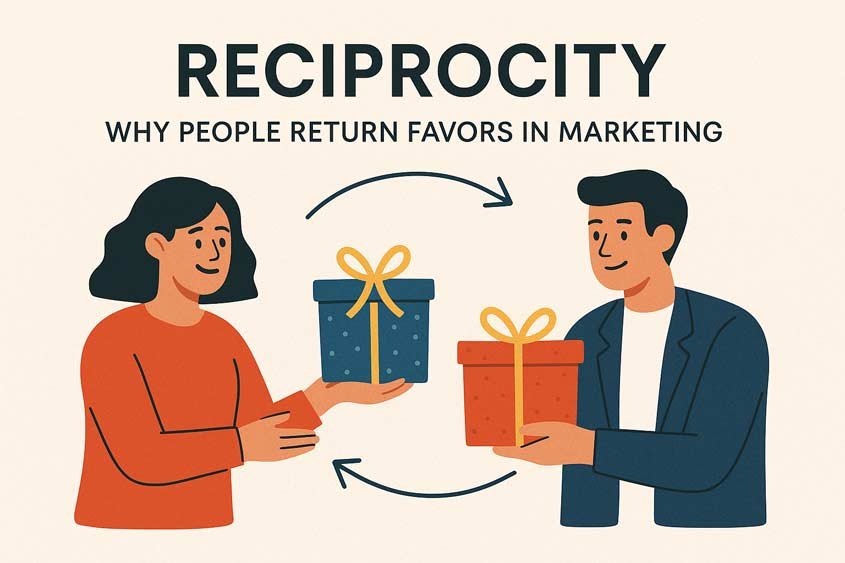
Marketing isn’t just about clever slogans or flashy graphics. At its core, it’s about human behavior, and few psychological triggers are as potent as reciprocity. Think about it—you ever feel compelled to return a favor or respond when someone does something nice for you? That’s reciprocity in action, and marketers have been tapping into it for decades.
When a brand gives you something—maybe a free sample, a helpful guide, or even just a personalized email—it sparks a subtle pressure to return the gesture. You may not consciously notice it, but suddenly buying that product or engaging with that service feels natural, almost expected. This isn’t manipulation in the shady sense; it’s tapping into a fundamental human instinct that keeps social interactions balanced.
Table of Contents
Take free samples in grocery stores, for example. You walk past the display, try a tiny bite of that new snack, and often, without even thinking about it, you reach for a full-size package. The act of receiving something small first triggers the urge to give back. Or consider digital marketing: a brand might offer a free webinar or an exclusive PDF. You feel like they’ve done something for you, and the next time you see an offer, you’re more likely to respond positively.
Reciprocity works across industries. B2B marketers use it by giving free audits or strategy sessions to potential clients. Fitness brands might hand out free trial classes. Nonprofits rely on it when they send small gifts in fundraising campaigns. The principle is universal: people naturally want to return kindness, and marketers can ethically leverage this by offering real, tangible value first.
It’s not just about giving; timing and context matter too. A discount thrown at you during checkout doesn’t always hit the mark unless it feels like a gift rather than a sales tactic. That’s where understanding human behavior becomes essential. You need to align your offer with a genuine sense of giving, or the trigger loses its power and might even backfire, making people skeptical.
This is why reciprocity isn’t a standalone trick. It often works best alongside other behavioral triggers. Scarcity can amplify it (“We’re giving this bonus to only the first 100 buyers”), authority can reinforce it (“Experts recommend this free guide”), and social proof can validate it (“Thousands have already benefited from this free offer”). Combined, these triggers create a psychological nudge that moves people from passive observers to active participants.
In this article, you’ll explore not just what reciprocity is, but why it works, how consumers respond, and how brands apply it effectively. You’ll see real-world examples from multiple industries, learn the common mistakes marketers make, and pick up practical tips to apply this trigger without being pushy. By the end, you’ll understand why a small act of giving can lead to big results—and why your next campaign should probably include a little reciprocity.
Reciprocity isn’t about tricking your audience; it’s about engaging with them in a way that feels natural and valuable. When done right, it builds trust, strengthens relationships, and influences buying decisions subtly yet powerfully. You might start noticing it everywhere—from the coffee shop offering a free cookie to an online brand handing you a guide—and suddenly you’ll realize, this isn’t just marketing. It’s human psychology at work, nudging choices, shaping preferences, and steering actions.
Understanding Reciprocity
Reciprocity, in the context of marketing, is the psychological trigger that makes people feel compelled to give back when they receive something. It’s deeply rooted in human social behavior. From childhood, we’re conditioned to respond to generosity with generosity, kindness with kindness. This instinct doesn’t vanish in the marketplace—it shows up in how people respond to brands, offers, and even small gestures of goodwill.
The Basic Principle
At its core, reciprocity is simple: when someone does something for you, you feel the need to respond in kind. In marketing, this means that even small gifts or favors can spark an unconscious drive in consumers to return the gesture. It’s not just a polite social custom—it’s a mechanism that influences buying decisions, brand loyalty, and engagement.
For example, a coffee shop offering a free cookie with your latte doesn’t just make you happy for a moment; it increases the likelihood that you’ll return the favor by buying more or visiting again. Similarly, a software company offering a free trial or downloadable template leverages the same effect: by giving first, they create a subtle expectation that users will respond positively in the future.
How It Influences Decisions
Reciprocity affects decision-making in ways most marketers find invaluable:
- Immediate action: Consumers are more likely to act quickly after receiving something free or valuable.
- Increased loyalty: Giving first builds trust and emotional attachment to the brand.
- Higher conversion rates: People often feel an unspoken obligation to reciprocate, which can increase sales and engagement.
It works best when the initial act is perceived as sincere, useful, or valuable. Empty gestures or overly salesy tactics can trigger skepticism instead of the desired behavioral response.
Reciprocity vs. Other Triggers
Reciprocity doesn’t operate in isolation. It often intersects with other psychological triggers:
- Scarcity: “Get this bonus only for the first 50 buyers” makes the gesture feel urgent.
- Authority: Recommendations from trusted experts can enhance the impact of a free resource.
- Social proof: Seeing others benefit from a free gift validates your choice to respond.
This combination creates a powerful nudge effect, gently guiding consumers toward engagement without overt pressure.
Examples Across Industries
Reciprocity appears everywhere in marketing:
- E-commerce: Free shipping, bonus gifts, or downloadable guides.
- B2B: Free consultations, audits, or sample services.
- Nonprofits: Small gifts in direct mail campaigns, like address labels or pens, often increase donations.
- Retail: Sampling products or offering trials to create goodwill and repeat purchases.
Across sectors, the principle remains the same: give first, trigger a subtle sense of obligation, and watch behavior shift.
Why It Works
Neurologically and socially, humans are wired for reciprocity. It signals fairness and strengthens bonds. In marketing, it leverages this instinct to create engagement that feels natural. When done right, the consumer doesn’t feel manipulated—they feel understood, valued, and motivated to return the favor.
In practice, this means marketers must focus on authentic, meaningful gestures that connect with the audience. The more personalized or genuinely helpful the gift, the stronger the effect. Even minor touches—a thank-you note, a free resource, or a sample—can trigger a chain reaction that leads to deeper loyalty, higher conversions, and more engaged customers.
Reciprocity is more than a marketing tactic. It’s a human behavior you can ethically leverage to create stronger relationships with your audience while enhancing the effectiveness of your campaigns.
The Psychology Behind It
Reciprocity doesn’t just happen—it follows a psychological process that taps into our instincts, social conditioning, and emotional wiring. Understanding how it operates helps marketers design campaigns that genuinely connect with audiences while nudging behavior naturally.
Step 1: The Initial Gesture
Everything begins with giving. A small act of generosity—whether it’s a free sample, a helpful guide, or a simple compliment—sets the stage. Humans are wired to notice when someone does something for them. This isn’t a calculated business move at the outset; it’s about creating a sense of value. When a consumer perceives that they’ve received something of worth, their brain registers an internal “credit.” They now have a psychological obligation to reciprocate.
For instance, a skincare brand sending a free travel-size product in a welcome package doesn’t just delight the recipient—it subtly primes them to consider buying the full-size version. The initial act isn’t large or pushy, but it sparks an internal response: “They did something nice for me; maybe I should respond.”
Step 2: Emotional Engagement
Once the gift or gesture is received, emotions kick in. People feel gratitude, a sense of fairness, and even social pressure to maintain balance. This stage is subtle but powerful. Gratitude increases dopamine levels, which makes the person feel good about the interaction and more likely to engage positively. Social norms amplify this effect. You don’t want to seem rude or ungrateful, so your brain nudges you toward some form of repayment.
Digital marketers exploit this by offering genuinely useful content—like a free eBook or a step-by-step tutorial. Even though no money changes hands, the emotional connection is formed. That connection becomes a mental bookmark that influences future decisions.
Step 3: Conscious and Unconscious Decision Influence
By this stage, the consumer is primed. The reciprocity trigger operates both consciously and unconsciously. Consciously, people might think, “I should buy something from this brand—they’ve been generous.” Unconsciously, their brain starts linking positive feelings with the brand, lowering resistance to offers.
It’s why limited-time bonuses, trial memberships, or exclusive access work so well: the gift or opportunity feels like a personal favor. The person doesn’t just want the product; they want to maintain that psychological balance created by the initial gesture.
Step 4: Action (Reciprocation)
Finally comes the reciprocation phase. The consumer acts—whether by making a purchase, signing up for a newsletter, or sharing the offer with friends. At this point, the trigger has done its work. The action isn’t forced; it feels natural, like returning a kindness.
In marketing, this stage is often enhanced by other triggers:
- Scarcity: Encouraging quicker action (“Offer ends in 24 hours”)
- Social proof: Showing that others have responded positively
- Authority: Reinforcing trust through expert endorsements
Combining these makes the reciprocity effect stronger without being overtly manipulative.
Key Psychological Mechanisms at Play
- Obligation: Humans dislike feeling indebted but are compelled to balance the scales.
- Fairness: Acts of giving tap into our innate sense of justice.
- Gratitude: Positive emotions increase willingness to engage.
- Social norms: Pressure to behave in socially acceptable ways nudges action.
How Marketers Can Apply This Step-by-Step
- Identify the value: What can you genuinely give that feels meaningful?
- Deliver the gift or gesture: Free trials, helpful content, or small bonuses.
- Engage emotions: Personalize, humanize, and make the act memorable.
- Prime for reciprocation: Create opportunities where responding feels natural.
- Support with triggers: Add scarcity, authority, or social proof to amplify results.
When each step is thoughtfully applied, the reciprocity trigger moves from a simple act of giving to a strategic driver of engagement, loyalty, and conversions. Understanding this chain—from the initial gesture through emotional engagement to conscious and unconscious influence—helps marketers design campaigns that feel natural and generate tangible results.
Reciprocity is effective because it’s not coercive. It works with human nature, not against it, making consumers feel good while subtly guiding their decisions. When done correctly, it creates a win-win: your audience feels valued, and your marketing achieves its objectives without overbearing pressure.
Why It Matters in Marketing
Reciprocity isn’t just a theory—it’s a practical tool that directly shapes consumer behavior and influences marketing outcomes. Understanding its role allows you to design campaigns that feel natural, engage your audience, and drive measurable results.
Creating a Sense of Value
At the heart of reciprocity is value. When you give something meaningful, your audience perceives you as generous, competent, and trustworthy. This isn’t about throwing freebies around blindly; it’s about creating genuine value that resonates with your customers’ needs.
For example, a software company offering a free audit or a toolkit doesn’t just give away something—they demonstrate expertise while setting up a subtle expectation: if we helped you for free, maybe you’ll consider our paid services next. The value here is both tangible and emotional, creating a foundation for future interactions.
Influencing Consumer Decisions
Reciprocity shapes choices in multiple ways. People are more likely to:
- Engage with offers they’ve received for free.
- Choose brands that have given them useful resources over competitors who haven’t.
- Return to businesses that demonstrate generosity.
These effects are powerful because they operate below the level of conscious reasoning. Consumers may not explicitly recognize why they’re responding, but the sense of obligation drives behavior.
Integrating Reciprocity With Other Triggers
Reciprocity becomes even more effective when paired with other behavioral triggers:
- Scarcity: Limited-time bonuses make the gift feel urgent.
- Authority: A free guide from an industry expert adds credibility.
- Social Proof: Highlighting others who benefited strengthens the influence.
This synergy enhances your campaigns without feeling manipulative, subtly guiding decision-making.
Practical Marketing Applications
Reciprocity can be applied across channels and industries, creating a versatile tool in your marketing strategy:
- E-commerce: Free shipping, bonus gifts, or digital downloads.
- Email marketing: Valuable content, tips, or exclusive offers.
- B2B: Free consultations, audits, or webinars.
- Retail and Services: Samples, trial classes, or small thank-you gifts.
- Nonprofits: Personalized gifts, branded merchandise, or helpful resources.
Each application triggers the underlying psychological mechanism: giving something first, creating gratitude, and motivating reciprocation.
Why It Shapes Decisions
- Builds trust quickly: People tend to trust brands that offer value upfront.
- Encourages loyalty: Reciprocation strengthens the bond between consumer and brand.
- Increases conversions: Even small gifts or gestures can lead to measurable increases in sales or engagement.
- Enhances brand perception: Giving establishes a positive, caring, and competent brand image.
Marketing is more effective when it aligns with human instincts. Reciprocity leverages the natural desire to balance social exchanges, making it a subtle yet powerful decision-shaping tool.
By understanding and applying reciprocity strategically, marketers can turn small gestures into large results. It works because it honors human psychology rather than manipulating it, creating interactions that feel rewarding for both the consumer and the brand.
Reciprocity Real World Applications
Reciprocity isn’t just a theory—it’s a proven strategy that works across industries. Let’s break down real examples that show how brands use this trigger effectively, driving engagement, loyalty, and sales.
Free Samples in Retail
One of the most classic examples comes from the retail sector. Brands like Costco and Trader Joe’s leverage free product samples to engage shoppers. When consumers taste a sample, it creates a psychological “debt”—even if subtle—that encourages them to purchase the full-size product.
Studies in consumer behavior show that people are significantly more likely to buy items they’ve sampled. The principle works because the act of giving something for free makes the customer feel valued and triggers the desire to reciprocate. In addition, the in-store experience adds an emotional element, strengthening the effect.
Online Content Marketing
In the digital space, HubSpot provides a prime example. They offer a variety of free resources—eBooks, templates, and courses—to website visitors. These aren’t just giveaways; they’re high-value tools that help users solve real problems.
By giving useful content upfront, HubSpot builds trust and positions itself as an authority. Many visitors then feel compelled to reciprocate, whether by signing up for premium services, subscribing to paid tools, or recommending the brand to others. The reciprocity trigger operates here both consciously (users recognize the value) and unconsciously (they feel a subtle obligation to return the favor).
Nonprofit Fundraising
Nonprofits have long used reciprocity to increase donations. A classic example comes from the organization “Heifer International,” which sends small gifts like calendars or stickers along with fundraising requests. Research has shown that including a tangible gift with a donation appeal significantly increases response rates.
The underlying psychology is straightforward: when people receive something—even a small, inexpensive token—they feel the need to reciprocate. The organization’s thoughtful gesture primes donors to give more generously than they might have otherwise, proving the universal power of this trigger beyond commercial marketing.
Key Lessons From These Cases
- Give meaningful value first: Free samples or resources must feel useful and relevant.
- Create an emotional connection: The gift should resonate with the recipient, not just be a token.
- Leverage timing: The act of giving should occur before the request or offer.
- Combine with other triggers: Scarcity, authority, and social proof amplify reciprocity.
These examples show that reciprocity isn’t a gimmick. It’s a measurable, actionable principle that shifts behavior across contexts—retail, digital, and nonprofit. When brands genuinely give first, consumers naturally respond in kind, strengthening relationships and driving results.
How People Respond
Reciprocity triggers predictable reactions in consumers, though the responses vary depending on context, value, and delivery. Understanding these patterns helps marketers design campaigns that feel natural and produce measurable results.
Immediate Emotional Reaction
The first observable response is emotional. When a consumer receives a gift, free resource, or thoughtful gesture, feelings of gratitude and goodwill emerge. These emotions are subtle but impactful, influencing decisions before rational thought even kicks in.
For example, when a coffee shop hands you a complimentary pastry with your morning latte, you feel appreciated. That small act triggers a warm emotional response, often translating into repeat visits or a positive review online. Even minor gestures create a psychological nudge toward reciprocation.
Behavioral Responses
After the initial emotional reaction, actions often follow. People tend to reciprocate in one or more ways:
- Purchasing behavior: Buying the product or service as a form of repayment.
- Engagement: Signing up for newsletters, attending webinars, or following social media accounts.
- Recommendations: Sharing the brand or offer with friends or colleagues.
- Loyalty: Returning to the brand for future purchases or interactions.
These behaviors demonstrate that reciprocity isn’t just a feeling—it’s observable in measurable outcomes like sales, subscriptions, or participation rates.
Conscious vs. Subconscious Reactions
Consumers respond both consciously and unconsciously. Consciously, someone might think, “They gave me this for free; I should support them.” Subconsciously, positive emotions and social norms push them toward similar actions without deliberate reasoning. Marketers often amplify this by ensuring the gesture is meaningful and well-timed.
The Role of Perceived Value
The strength of the response is heavily influenced by perceived value. A thoughtful, relevant gift or resource triggers stronger reciprocity than something generic or trivial. For instance, a personalized eBook or a free trial that meets a real need is far more likely to provoke positive action than a generic coupon or low-value sample.
Observable Consumer Patterns
- Immediate engagement: Quick actions like downloading content or making a small purchase.
- Increased trust and goodwill: Favorable brand perception that persists beyond the initial interaction.
- Repeat interactions: Returning to the brand multiple times for products or services.
- Social sharing: Recommending the brand to others as a form of reciprocation.
- Upselling or premium adoption: Moving from a free resource to a paid option out of perceived obligation or gratitude.
Summary of Consumer Responses
Reciprocity leverages natural human tendencies. When done correctly, consumers don’t feel manipulated—they feel valued and motivated to respond. The observable behaviors—purchases, engagement, loyalty, and referrals—demonstrate that a small act of giving can ripple into substantial business outcomes.
By recognizing these patterns, marketers can craft campaigns that feel authentic, generate measurable results, and strengthen long-term consumer relationships.
How Brands Use It Effectively
Reciprocity is one of the most versatile triggers in marketing. Brands that understand how to apply it ethically can create campaigns that feel natural, build trust, and drive results. Let’s explore specific ways marketers use this principle to influence consumer behavior without crossing ethical lines.
Offering Genuine Value
The first step is giving something meaningful. Brands that provide resources, samples, or assistance demonstrate generosity that encourages reciprocation.
- Free Trials and Samples: SaaS companies often provide a 14-day free trial, giving users full access to the product. This creates familiarity and trust, increasing the likelihood of converting to a paid subscription. Similarly, food and beauty brands hand out samples to showcase quality and value.
- Educational Content: Free guides, templates, or webinars teach consumers something actionable. By helping first, brands position themselves as authorities and make future engagement feel like a natural next step.
Personalized Engagement
Generic gestures often fall flat. Personalization strengthens the reciprocity effect by showing that the brand understands and values the consumer.
- Customized Emails or Offers: Sending personalized recommendations or birthday discounts can trigger a sense of being valued.
- Tailored Resources: Providing solutions aligned with the customer’s specific needs—like a free checklist for a marketer or a sample workout plan for a fitness enthusiast—enhances the perceived value.
Ethical Upselling and Conversion
Reciprocity should never feel manipulative. Ethical application means the gift or value offered is genuine and not a covert trick.
- Transparent Incentives: Clearly presenting a free offer while explaining its purpose—like a free trial leading to a subscription—maintains trust.
- Non-Coercive Follow-ups: Reminders or recommendations after a gift should focus on benefits rather than pressure.
Combining With Other Marketing Triggers
Reciprocity works even better when paired with complementary psychological triggers:
- Scarcity: Offering limited-time bonuses or exclusive access can nudge decisions without being pushy.
- Authority: Endorsements or expert guidance make the initial gift feel credible.
- Social Proof: Highlighting how others benefited from a free resource reinforces the decision to engage.
Practical Applications Across Industries
- E-commerce: Free shipping, bonus items, or loyalty perks increase purchase likelihood.
- B2B Marketing: Free consultations, audits, or industry reports build credibility and prompt reciprocation.
- Education and Online Learning: Offering free courses, trials, or eBooks encourages enrollment in premium programs.
- Hospitality and Retail: Complimentary services or gifts enhance customer experience and encourage repeat visits.
- Nonprofits and Charities: Small gifts or tokens of appreciation with donation requests increase contributions ethically.
Measuring and Optimizing Effectiveness
Brands should track how recipients respond to initial gestures:
- Engagement metrics (downloads, sign-ups, trial usage)
- Conversion rates from free offerings to paid products or services
- Repeat interactions and loyalty indicators
By analyzing results, marketers can refine which types of value resonate most, making reciprocity an ongoing, scalable strategy.
Reciprocity isn’t about manipulation—it’s about respecting human psychology. When brands give genuinely and ethically, consumers feel valued, which naturally drives engagement, loyalty, and positive behaviors. By applying this trigger thoughtfully, marketers can create win-win situations that benefit both the audience and the business.
Pitfalls to Watch
Reciprocity is powerful, but it’s not foolproof. Missteps can reduce its impact or even create negative reactions from your audience. Understanding common mistakes helps marketers use this trigger effectively while maintaining trust and credibility.
Overdoing the Gesture
Giving too much or too often can backfire. If every interaction comes with a gift or bonus, consumers may start to expect it rather than feel grateful. Overuse dilutes the effect, making gestures feel transactional instead of generous.
For example, an e-commerce site that constantly offers free add-ons with every purchase may trigger temporary excitement, but customers quickly see it as standard rather than special. The psychological obligation to reciprocate weakens when generosity feels routine.
Offering Low-Value or Irrelevant Gifts
Not all gestures carry the same weight. Free items that feel trivial, irrelevant, or unrelated to the consumer’s needs can reduce trust and engagement.
- A generic promotional item that has no practical use may be ignored.
- Digital resources that don’t solve a real problem can frustrate users instead of creating goodwill.
The key is relevance and perceived value. A meaningful, tailored gift triggers reciprocation; a careless one does not.
Misaligned Timing
Reciprocity relies on giving before asking. If the request comes first, or if the gift appears as a post-purchase upsell, the psychological effect diminishes. Timing is crucial—gifts should precede the desired action to create the sense of obligation naturally.
Feeling Manipulative
Consumers are sensitive to authenticity. If they perceive that a gift is merely a bait to drive sales, the effect can reverse, creating skepticism and distrust.
- Avoid overly pushy follow-ups after a free resource.
- Ensure communications feel sincere rather than purely transactional.
Short-Term Focus
Treating reciprocity as a one-off tactic misses its potential. The strongest impact comes from integrating it consistently into broader marketing strategies that build long-term relationships.
By avoiding these pitfalls, marketers can apply reciprocity ethically and effectively. Done right, it creates lasting goodwill, encourages engagement, and strengthens brand relationships without pressure or resentment.
Application Tips
Reciprocity is one of the most actionable triggers in marketing, but its effectiveness depends on thoughtful application. Here are practical strategies to harness this principle ethically and successfully.
Start With Meaningful Value
The first step is giving something that your audience genuinely appreciates. It doesn’t have to be expensive, but it must feel relevant and useful.
- Free resources like eBooks, checklists, or templates that solve a problem.
- Trial products or services that allow consumers to experience value firsthand.
- Personalized gestures, like a thank-you note or a tailored recommendation.
The goal is to create a small sense of indebtedness that motivates future engagement without feeling forced.
Personalize for Impact
Generic offers don’t spark the same emotional response. Personalization makes consumers feel seen and valued, strengthening the reciprocity effect.
- Segment audiences to tailor free resources to their interests or industry.
- Use names and contextual details in emails or communications.
- Adapt samples or trials based on past behavior or preferences.
Even minor adjustments can significantly increase the likelihood of reciprocation.
Integrate With Marketing Strategy
Reciprocity works best when embedded into a wider campaign. Align gifts or gestures with broader objectives for a seamless experience.
- Introduce free resources early in the customer journey to prime engagement.
- Follow up with educational or supportive content that reinforces value.
- Combine with other triggers like social proof, authority, or scarcity for more persuasive campaigns.
Ethical Guidelines
Maintaining authenticity is key. Consumers should never feel manipulated.
- Offer value without demanding immediate action.
- Avoid excessive pressure after a gift or resource is delivered.
- Make sure the gesture aligns with your brand’s mission and message.
Quick-Use Checklist for Marketers
- Identify what your audience truly values.
- Deliver a meaningful gift or resource before asking for action.
- Personalize offers to increase emotional impact.
- Integrate reciprocity into broader marketing campaigns.
- Maintain authenticity and avoid manipulative tactics.
By following these steps, marketers can leverage reciprocity effectively, creating genuine engagement, loyalty, and conversions. When applied thoughtfully, even small acts of giving can have outsized impact on consumer behavior and brand perception.
Spot The Trigger
Recognizing reciprocity in marketing is easier once you know the signs. Here are three exercises to test your ability to spot when this psychological trigger is at work.
Exercise 1
A sportswear brand launches a new campaign with the slogan “Run for the Planet.” For every pair of shoes sold, they promise to plant two trees. The ad shows runners of all backgrounds, smiling, connecting, and jogging through green parks. You feel good just watching it—and you start wondering if your next pair should come from them.
Question: Is the brand using the Reciprocity trigger? (True or False) | Check Answer
Exercise 2
A fast-food chain rolls out a new menu item and runs a series of ads highlighting how delicious and unique it is. The ads focus solely on the taste, price, and limited-time availability, with no gifts, samples, or complimentary offers to customers.
Question: Is the brand using the Reciprocity trigger? (True or False) | Check Answer
Exercise 3
An online marketing platform offers a free one-hour audit for small businesses. They provide actionable advice during the session, highlighting growth opportunities. Later, participants feel motivated to sign up for a full-service package because they benefited from the free guidance.
Question: Is the brand using the Reciprocity trigger? (True or False) | Check Answer
Final Thoughts
Reciprocity is more than a marketing tactic; it’s a window into human behavior. The simple act of giving—whether it’s a free sample, a helpful guide, or a thoughtful gesture—can shape decisions in ways that feel natural and genuine. Consumers respond not because they are being manipulated, but because returning a favor is a deeply ingrained social instinct.
The power of reciprocity lies in its subtlety. A well-timed gift or valuable resource creates a sense of goodwill that nudges people toward action without pressure. Unlike hard-selling strategies, it works by building trust, encouraging engagement, and fostering long-term relationships. Brands that master this trigger can convert curiosity into loyalty, one thoughtful interaction at a time.
Observing real-world applications across industries shows its versatility. From free trial classes in fitness to complimentary audits in B2B marketing, the principle remains consistent: provide real value first, and people naturally feel compelled to reciprocate. Ethical application ensures that these gestures are perceived as genuine, enhancing credibility and brand reputation rather than undermining it.
Reciprocity also interacts seamlessly with other psychological triggers. Scarcity, authority, and social proof can amplify its impact when used thoughtfully, creating campaigns that are persuasive yet authentic. The goal isn’t to manipulate choices, but to guide consumers toward decisions that benefit both them and your brand.
Ultimately, what you should remember is this: marketing succeeds when it aligns with human behavior. Reciprocity taps into a universal need to return kindness, and when brands honor that instinct with meaningful, relevant gestures, the results speak for themselves. It’s not just about increasing sales or engagement; it’s about creating experiences that feel rewarding, memorable, and human.
By integrating reciprocity thoughtfully, you can transform simple acts of giving into powerful, ethical marketing strategies. Small gestures—done with intention—can trigger big responses, shaping consumer behavior, driving loyalty, and reinforcing trust. Next time you plan a campaign, consider not only what you want your audience to do, but also what you can give them first. That shift in perspective is often where the magic happens.

Gabriel Comanoiu is a digital marketing expert who has run his own agency since 2016. He learned marketing by testing, analyzing, and refining campaigns across multiple channels. In his book series Impulse Buying Psychology, he shares the psychological triggers behind every purchase, showing how to create marketing that connects, persuades, and converts.