
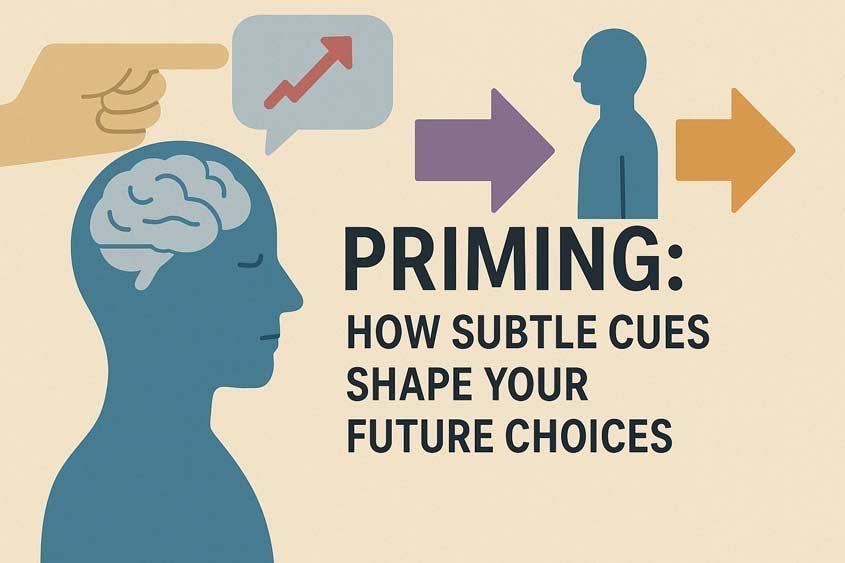
Imagine walking into a store and immediately feeling drawn to a particular display, even before you realize why. Or consider browsing an online shop and suddenly craving a product you hadn’t planned to buy. Often, these impulses aren’t random—they’re influenced by something marketers call priming. Priming is one of the most fascinating tools in marketing psychology. It’s subtle, almost invisible, yet it can guide your decisions in ways you don’t consciously notice.
Priming works by exposing you to cues that subtly influence your thoughts, feelings, and behaviors. These cues can be images, words, colors, or even scents. For example, seeing a vibrant green advertisement might unconsciously make you feel healthy or eco-conscious, nudging you toward certain products. Or hearing words associated with luxury might make you value premium offerings more highly. It’s like your mind is gently being steered without you realizing it.
Table of Contents
The power of priming lies in its invisibility. Unlike overt persuasion—think flashy sales pitches or aggressive pop-ups—priming operates below the radar of your conscious mind. That’s why it can be so effective in shaping choices. When used strategically, it doesn’t feel manipulative; it feels like your own preferences, your own decisions.
This trigger isn’t limited to one type of product or audience. You can see it across industries: retail, tech, hospitality, even entertainment. Hotels might use certain scents in the lobby to create a sense of luxury, while tech brands use specific colors or shapes in app design to increase engagement. In essence, priming taps into your existing associations and nudges you toward a desired behavior.
Psychologists have long studied priming, and research shows it affects both short-term actions and long-term decisions. For instance, if you’re exposed repeatedly to positive imagery related to a brand, you’re more likely to choose it over competitors—even without realizing why. Marketers leverage this effect to create experiences that feel natural yet subtly guide consumer behavior.
Priming also interacts with other psychological triggers. A campaign that uses social proof—showing that others are buying a product—can be strengthened if priming cues evoke feelings of trust or belonging. Similarly, priming can amplify scarcity or urgency triggers: a subtle hint that something is limited can be more persuasive if it primes your mind toward exclusivity or desire. Understanding these interactions helps marketers design campaigns that feel cohesive, seamless, and persuasive without overt pressure.
You’ve likely encountered priming dozens of times without knowing it. A coffee shop may play classical music to make customers linger longer. A website may use warm colors to evoke friendliness. Even product packaging, the placement of items on shelves, or the wording in a menu can prime you toward certain choices. Once you recognize these patterns, you start noticing how everyday experiences shape your decisions in ways that feel natural.
Priming isn’t just a tool for marketers—it’s a concept that affects your daily life. Every ad you see, every space you walk through, every product presentation carries the potential to prime your choices. And the more aware you are of it, the more you can understand your own decision-making patterns.
In this article, we’ll explore the concept of priming in depth. You’ll learn exactly what it is, how it works, and why marketers use it. We’ll break down real-world examples, show how consumers typically respond, and provide practical tips for ethical application. By the end, you’ll have a clear understanding of this subtle yet powerful trigger, and you’ll be able to spot it in action—both as a marketer and as a consumer.
Priming is subtle, but it’s everywhere. It shapes your reactions, preferences, and even your purchases, often without your awareness. Recognizing its influence is the first step in mastering how psychological triggers drive behavior in marketing—and how you can apply them ethically to create meaningful connections with your audience.
Understanding Priming
Priming is one of the most subtle yet powerful tools in marketing psychology. At its core, priming is about preparing someone’s mind to respond in a certain way. It works by exposing people to cues—words, images, sounds, or even scents—that unconsciously shape how they perceive, think, and ultimately act. Unlike direct persuasion, which is explicit and obvious, priming operates under the radar, influencing decisions without triggering resistance.
In practical terms, priming is everywhere. Imagine you walk into a bakery, and the smell of freshly baked bread hits you before you even see the display. That scent primes your mind for indulgence, comfort, and satisfaction. Suddenly, you’re more likely to pick a pastry you hadn’t planned to buy. In marketing, this is intentional: brands carefully design environments, messages, and experiences to activate associations in your mind that make certain choices more appealing.
Priming doesn’t just influence immediate behavior—it can shape longer-term decisions, too. Repeated exposure to a brand’s visual or verbal cues strengthens associations in your memory. Over time, these associations guide preferences and perceptions. For example, a tech brand that consistently uses sleek, minimalist design elements primes your mind to associate it with innovation and quality, increasing the likelihood you’ll choose its products over competitors.
Priming affects multiple dimensions of consumer behavior:
- Perceptions: How you interpret a product, service, or message can shift based on subtle cues. Colors, phrasing, or imagery can make a product feel more premium, trustworthy, or fun.
- Emotions: Certain cues evoke emotions that predispose you to respond in specific ways. Warm colors can create feelings of friendliness, while certain music can make you feel energized or relaxed.
- Decisions: By influencing thought patterns and emotional responses, priming nudges you toward particular choices, sometimes without conscious awareness.
Priming works because human brains rely on associations. Our minds connect experiences, emotions, and sensory inputs into networks. When you encounter a cue, it activates related ideas or feelings, which in turn shape your subsequent thoughts and actions. For instance, seeing the color red in a fast-food ad might subconsciously trigger hunger or urgency. A luxury brand displaying high-end textures and muted tones primes a sense of sophistication.
There are several types of priming commonly used in marketing:
- Semantic priming: This involves words or concepts. Seeing the word “refreshing” before a beverage ad may increase your desire for the drink.
- Conceptual priming: Exposure to an idea or theme activates related concepts in the mind. A campaign focused on “adventure” can make you more open to products associated with travel, outdoor activities, or exploration.
- Affective priming: Emotional cues—like happy faces, soothing sounds, or calming visuals—prime corresponding emotional responses that shape preferences.
- Sensory priming: Smells, textures, and sounds can all trigger associations. Luxury hotels use subtle scents to create a feeling of exclusivity, while stores might use upbeat music to encourage browsing.
Priming also intersects with other psychological triggers. Social proof, scarcity, and authority can all be amplified by strategic priming. For instance, an ad showing happy customers (social proof) paired with a subtle color scheme that evokes trust primes your mind to believe that product is both popular and reliable. Similarly, priming can enhance urgency or exclusivity cues, making limited offers feel more compelling.
What sets priming apart from other marketing techniques is its subtlety and invisibility. People don’t usually recognize when they’ve been primed, which makes it incredibly effective. Unlike aggressive advertising that can trigger skepticism or pushback, priming feels organic. You perceive your choices as your own, even though they were influenced by carefully designed cues. This is why marketers often combine priming with other triggers—like curiosity or novelty—to create campaigns that feel natural yet persuasive.
Priming is versatile and can be applied in almost any marketing context: retail stores, digital platforms, hospitality, product packaging, advertising, even customer service interactions. A website’s layout, color palette, or even font choice can prime visitors to feel trust, urgency, or excitement. In stores, product placement, lighting, and signage can subconsciously guide the shopping journey. Even verbal cues from sales staff can prime certain expectations or emotional responses.
Understanding priming gives you insight into why consumers act the way they do. It explains why sometimes a product feels irresistible without an obvious reason or why certain campaigns resonate more strongly than others. By recognizing the subtle cues that influence decisions, marketers can design strategies that feel authentic while guiding behavior effectively.
Priming is about creating the right mental and emotional context for your audience. It’s the invisible hand that steers attention, feelings, and decisions. Its influence is subtle but measurable, and its applications span every aspect of marketing. From the colors on a website to the scent in a store, every detail can be a priming cue—shaping the way people think, feel, and ultimately choose.
The Psychology Behind It
Priming works because your brain is wired to process information through associations. Every thought, feeling, or action is influenced by a complex network of memories and prior experiences. Marketers exploit this by placing subtle cues that activate these networks, nudging your attention, judgment, and behavior in predictable ways. Let’s break down the mechanism step by step so you can see why priming is such a potent marketing trigger.
Step 1: Exposure to a Cue
Priming begins with exposure. This could be a visual image, a sound, a word, or even a smell. Importantly, you might not even consciously notice the cue. For instance, a store might play soft jazz in the background. You’re aware of the music, but you might not immediately connect it to the way it makes you feel more relaxed and inclined to linger.
Step 2: Activation of Mental Associations
Once a cue is perceived, it activates related concepts in your mind. This is called spreading activation in psychology. For example:
- Seeing the word “luxury” in an ad can activate concepts like sophistication, quality, and exclusivity.
- Smelling freshly baked bread might trigger memories of comfort, home, or indulgence.
- Observing someone smiling in a commercial can evoke feelings of happiness and friendliness.
These mental associations are automatic. You don’t consciously decide to make them—they just happen, influencing your subsequent thoughts and decisions.
Step 3: Subconscious Influence on Perception
After activation, these associations subtly shape how you perceive your environment or a product. Primed individuals may interpret neutral stimuli differently because the cue has created a lens through which they view information. For example, if you’ve just been primed with images of health and fitness, a protein snack might feel more appealing than it would otherwise.
Step 4: Behavioral Nudges
Finally, priming can lead to action. Because your perceptions and emotions have been influenced, you’re more likely to make decisions aligned with the primed concept. This is why priming can drive purchases, brand preference, or engagement without overt persuasion.
How Marketers Apply These Steps
Marketers deliberately design experiences that follow this psychological chain. They:
- Select cues that align with desired associations (e.g., luxury, trust, excitement).
- Ensure cues are noticed, even subtly, without overwhelming the audience.
- Combine cues with other triggers like social proof or scarcity to reinforce behavior.
Key Mechanisms That Make Priming Effective
Priming relies on several well-documented psychological mechanisms:
- Automaticity: Many of our responses are automatic, not deliberative. Priming taps into these automatic processes, making it hard to resist.
- Context-dependency: Your environment influences how cues are interpreted. A cue in one setting may not have the same effect in another.
- Frequency and repetition: The more often a cue is encountered, the stronger its effect. Brands often repeat colors, phrases, and imagery to reinforce associations.
- Emotion linkage: Priming often works best when cues are linked to emotions. Happy, relaxed, or aspirational feelings make you more receptive.
- Subtlety: Overt attempts to persuade can trigger skepticism. Priming is most effective when it’s unnoticed.
Practical Examples in Marketing
To make this more tangible, here’s a breakdown of how priming cues operate in real campaigns:
- Visual cues: A car ad featuring open roads primes freedom and adventure, influencing your perception of the vehicle.
- Color cues: Fast-food chains use red and yellow because these colors are associated with energy and appetite.
- Word cues: Using words like “exclusive,” “limited,” or “premium” primes your mind for scarcity, urgency, or quality.
- Scent cues: Hotels may use signature scents that evoke luxury or relaxation, priming guests to perceive the environment as high-end.
Priming in Digital Spaces
Priming isn’t limited to physical stores. Online, marketers can leverage it through layout, imagery, copy, and interactive elements:
- A landing page that shows happy users primes trust and satisfaction.
- Subtle background imagery of nature or calm settings can make a website feel more inviting.
- Microcopy in checkout processes can prime confidence, urgency, or excitement, nudging users toward completing purchases.
Summary of the Priming Process
The steps of priming can be condensed into a simple, repeatable process for marketers:
- Cue exposure: Introduce a subtle signal through senses or content.
- Association activation: Trigger relevant mental networks or memories.
- Perception shaping: Influence how the target interprets information.
- Behavioral nudge: Encourage the desired action or preference.
Key Points: Why Priming Works
- Operates subconsciously, reducing resistance.
- Builds on existing associations and experiences.
- Amplifies other psychological triggers like social proof or scarcity.
- Works across sensory channels: sight, sound, touch, smell.
- Strengthens with repetition, consistency, and emotional cues.
Priming is a quiet but highly effective mechanism. Unlike more direct marketing tactics, it doesn’t demand attention or argument—it gently steers choices by leveraging the brain’s natural tendency to connect cues with meanings. Understanding this mechanism helps marketers design campaigns that feel organic while increasing the likelihood of engagement, preference, and purchase.
Priming Real Case Studies
Priming isn’t just theoretical—it’s proven to influence real consumer behavior across multiple industries. Examining concrete examples helps illustrate how subtle cues shape decisions, perceptions, and purchasing patterns. Below are three evidence-backed case studies showing priming in action.
Case Study 1: Supermarket Layouts and Scent Cues
A well-documented study in the retail sector involved supermarkets experimenting with ambient scents to influence shopping behavior. Researchers introduced the smell of fresh bread in one store and a neutral scent in another.
- Observation: Shoppers in the bread-scented environment were more likely to purchase bakery items and spent more time in the store overall.
- Mechanism: The scent primed associations with freshness, comfort, and indulgence, which in turn increased the likelihood of selecting products that matched these associations.
- Impact: This study demonstrates that priming via sensory cues can subtly guide purchasing behavior without overt advertising.
Retailers continue to use this strategy widely. Grocery chains, clothing stores, and even hotels carefully control scents, lighting, and background music to prime specific consumer reactions—like relaxation, indulgence, or urgency.
Case Study 2: Visual Priming in E-Commerce
Online retailers frequently use visual priming to increase engagement and conversions. A notable experiment by a major e-commerce platform tested how the presence of happy, smiling people in product images affected customer behavior.
- Observation: Product pages featuring images of cheerful users led to higher click-through rates and increased add-to-cart actions compared to pages with neutral or no human imagery.
- Mechanism: Seeing happy faces primed positive emotions, trust, and social approval, which subtly increased the likelihood of purchase.
- Impact: E-commerce companies now routinely incorporate lifestyle images showing people enjoying products as a standard marketing practice.
This case highlights how even small visual cues can unconsciously shape perception and drive consumer action in digital environments.
Case Study 3: Priming Through Language and Copy
A study conducted on airline ticket booking websites explored the effect of word choice on consumer behavior. One group of users saw copy emphasizing “limited availability” and “exclusive access,” while another saw neutral language.
- Observation: Users exposed to the primed language booked flights faster and were more likely to choose higher-priced options.
- Mechanism: Words like “exclusive” and “limited” primed urgency and value perception. Even though the pricing remained the same, the subtle cue influenced decision-making.
- Impact: Airlines and travel platforms frequently leverage language priming in promotional emails, landing pages, and checkout processes to boost conversions.
Lessons from These Cases
Across these examples, several consistent insights emerge:
- Priming works best when it aligns with existing consumer associations.
- Small, subtle cues—scent, imagery, or wording—can significantly influence behavior.
- Priming amplifies the effectiveness of other marketing strategies, such as scarcity, social proof, and product placement.
- Results are measurable, repeatable, and can be applied across industries.
These case studies illustrate that priming isn’t an abstract concept; it’s a practical, evidence-backed tool that marketers use to shape consumer behavior strategically. Whether through sensory cues, visual design, or language, priming operates beneath conscious awareness to guide perceptions, emotions, and ultimately, choices.
Consumer Behavior Patterns
Understanding how consumers respond to priming is critical for marketers. Unlike overt messages, priming influences behavior subtly, often without conscious awareness. Observing these responses allows brands to refine campaigns, create seamless experiences, and anticipate how audiences will act in various contexts.
Immediate Reactions
When consumers encounter priming cues, their initial responses are usually subconscious. These reactions are observable in behavior, even if the person is unaware of what influenced them. For example:
- A shopper in a store may instinctively move toward a product positioned near a pleasant scent or appealing display.
- A website visitor may linger longer on a page that uses imagery, colors, or words aligned with positive emotional priming.
- In a digital ad, subtle cues like smiling faces or upbeat music can increase click-through rates without the user consciously deciding to engage.
These immediate reactions often set the stage for further decision-making, making consumers more receptive to subsequent marketing messages.
Emotional Responses
Priming frequently triggers emotional responses that shape choices. Depending on the cues, consumers might feel:
- Excitement: Bright colors, energetic music, or adventurous imagery can prime enthusiasm and eagerness.
- Trust: Subtle authority cues, testimonials, or familiar logos can prime feelings of credibility.
- Comfort: Pleasant scents, calming sounds, or warm imagery can prime relaxation, making consumers more willing to browse or linger.
- Desire: Language emphasizing scarcity, luxury, or exclusivity can prime longing or aspiration, increasing motivation to act.
Emotional priming is powerful because emotions often drive decisions faster than conscious reasoning. People may rationalize choices afterward, but the initial influence occurred unconsciously.
Behavioral Patterns Over Time
Priming doesn’t just impact one-time actions; repeated exposure can alter longer-term behavior. Observational studies and marketing experiments have shown that:
- Consumers exposed repeatedly to positive brand cues are more likely to prefer that brand over competitors.
- Consistent visual or verbal priming can create stronger associations with quality, reliability, or lifestyle alignment.
- Primed behaviors become habits, such as choosing a familiar brand at checkout or engaging regularly with content on a platform.
For marketers, this highlights the importance of maintaining coherent, repeated priming across channels and touchpoints. Consistency strengthens the effect and builds long-term consumer loyalty.
Observable Reactions in Different Contexts
Priming affects consumer behavior across multiple environments:
- Retail: Customers spend more time browsing, pick higher-priced items, and are more likely to make unplanned purchases when primed with appealing scents, lighting, or displays.
- Online: Users are more likely to click, scroll, or engage when pages are designed with primed imagery, colors, or copy.
- Service Experiences: Customers respond positively to primed cues in hospitality, banking, or entertainment environments, often rating experiences more favorably.
Key Behavioral Indicators of Priming
Marketers can identify priming effects by observing patterns in consumer behavior. Common indicators include:
- Longer dwell time in stores or on websites.
- Increased add-to-cart or purchase decisions.
- More frequent interaction with content or campaigns.
- Positive verbal or social feedback reflecting emotions primed by marketing cues.
- Subtle preference shifts, such as choosing one brand over another without explicit reasoning.
Summary of Consumer Response Mechanisms
Priming works because it taps into automatic, subconscious processes. The chain of response typically follows this path:
- Cue exposure: A visual, auditory, or sensory signal is encountered.
- Association activation: Related thoughts or emotions are triggered.
- Perception shift: Consumers view products, brands, or services more favorably.
- Behavioral expression: Choices, interactions, and decisions align with the primed associations.
Key Points: Typical Consumer Reactions
- Automatic, subconscious responses guide initial behavior.
- Emotional priming influences engagement, trust, and desire.
- Repetition strengthens long-term preferences and loyalty.
- Observable behaviors include dwell time, purchase patterns, and engagement.
- Effects vary by context, but well-designed cues consistently shape actions.
By understanding these behavioral patterns, marketers can predict how audiences will respond to priming cues, optimize campaigns, and create experiences that feel natural while driving results.
How Brands Use It Effectively
Priming is most effective when it’s applied intentionally, strategically, and ethically. Brands that understand the psychology behind priming can design experiences, campaigns, and content that subtly guide consumer behavior without manipulation. Let’s explore how businesses put this trigger into practice across various contexts.
Subtle Cues in Retail Spaces
In physical retail, priming can shape perception and encourage specific behaviors through environment design:
- Visual merchandising: Arranging products with complementary colors, textures, or themes primes consumers to associate items with certain lifestyles or emotions. For example, luxury stores use minimalist displays to prime exclusivity and sophistication.
- Ambient factors: Lighting, music, and scents create a mood that primes desired behavior. Soft lighting and slow music encourage browsing, while bright, energetic environments may encourage quick, impulse purchases.
- Strategic product placement: Items placed at eye level or near complementary products are primed to capture attention and prompt additional purchases.
Digital Priming Strategies
Online brands leverage priming through visual, verbal, and interactive cues:
- Website design: Color schemes, imagery, and layouts prime trust, excitement, or urgency. Blue tones can prime reliability, while vibrant colors may prime energy or desire.
- Copywriting cues: Words like “exclusive,” “limited,” or “best-seller” prime perceptions of value and urgency.
- User interface design: Interactive elements such as pop-ups, hover animations, and progress bars can prime engagement and motivate action.
Content Marketing and Storytelling
Priming can also be embedded within content to create associations and influence perception:
- Narrative framing: Stories that highlight success, happiness, or achievement prime aspirational thinking, encouraging readers to connect those feelings with a product or brand.
- Emotional imagery: Photos or videos showing positive social interactions, achievements, or satisfied customers prime trust, desire, or relatability.
- Sequential cues: Delivering information in a specific order can prime thought patterns and expectations, subtly influencing how readers process subsequent content.
Ethical Application Guidelines
Using priming responsibly requires avoiding manipulation or deception. Ethical priming focuses on guiding behavior while respecting consumer autonomy:
- Transparency: Provide accurate information and avoid misleading cues.
- Value alignment: Ensure primed associations match actual product or service benefits.
- Respect for choice: Use cues to enhance decision-making, not force it.
- Consistency: Reinforce positive perceptions consistently across channels without overstating claims.
Key Actionable Strategies for Brands
- Align sensory cues with brand identity: Use music, colors, scents, and visuals that match your core message and evoke desired associations.
- Use repeated exposure: Reinforce associations across campaigns and touchpoints to strengthen mental links.
- Combine with complementary triggers: Pair priming with social proof, authority, or scarcity to amplify effectiveness.
- Leverage microcopy strategically: Short phrases or button text can subtly prime confidence, urgency, or excitement.
- Test and refine: Monitor consumer behavior to ensure priming cues are effective and ethically applied.
Industry Examples
- Hospitality: Hotels use signature scents, warm lighting, and curated music to prime relaxation and a sense of luxury.
- E-commerce: Online retailers show aspirational lifestyle images with product listings to prime desire and engagement.
- Consumer electronics: Brands consistently use sleek, minimalist design cues to prime innovation and premium quality perceptions.
The Strategic Advantage
Brands that master priming gain a competitive edge because they influence behavior subtly yet effectively. Customers feel their decisions are autonomous, while brands benefit from increased engagement, higher perceived value, and stronger loyalty. The key lies in ethical, purposeful implementation—ensuring that every cue aligns with both consumer expectations and brand messaging.
Pitfalls to Watch
Priming is a subtle yet powerful tool, but using it incorrectly can backfire. Poorly designed cues, overuse, or misalignment with brand messaging can reduce impact and even trigger consumer skepticism. Understanding the common mistakes helps marketers apply priming effectively while maintaining trust.
Overloading the Consumer
One of the biggest errors is bombarding consumers with too many cues. While priming relies on subtlety, overwhelming the audience with visual, auditory, or verbal signals can create confusion or fatigue.
- Too many colors, messages, or competing sensory stimuli dilute the priming effect.
- Overly complex layouts or content can prevent the desired associations from forming.
Consumers exposed to overload may disengage, skipping the cues entirely or developing negative associations with the brand.
Misaligned Cues
Priming only works when cues match the intended message or product benefit. Misalignment undermines credibility and reduces trust:
- Using luxury visuals for a budget product can create a disconnect.
- Pleasant scents or music that contradict the shopping context (e.g., calming spa scents in a fast-paced electronics store) may confuse consumers.
- Copy emphasizing exclusivity for a widely available product can feel disingenuous.
Cues must feel natural and coherent with the overall brand experience; otherwise, the priming attempt may backfire.
Excessive Repetition
While repeated exposure strengthens associations, overdoing it can feel manipulative:
- Bombarding users with the same primed messages in emails, ads, or social media may trigger irritation or distrust.
- Over-repetition reduces novelty, making cues less effective over time.
Marketers should balance consistency with subtlety, ensuring that priming remains unnoticed but influential.
Ignoring Context and Timing
Priming is highly context-dependent. Using cues in the wrong environment or at the wrong moment can be ineffective or counterproductive:
- Displaying luxury cues during discount-focused campaigns may confuse the audience.
- Music, visuals, or scents that contradict consumer mood or expectations can decrease engagement.
- Online, poorly timed pop-ups or irrelevant imagery can disrupt the experience rather than enhance it.
Context-sensitive priming ensures cues enhance, rather than hinder, decision-making.
Ethical Oversights
Ethical mistakes can damage both brand reputation and consumer trust:
- Misleading or deceptive cues, even subtly, can erode credibility.
- Priming that manipulates vulnerable audiences, such as children or those under stress, raises ethical concerns.
- Overemphasis on fear, guilt, or urgency can trigger negative emotional responses rather than positive engagement.
Ethical priming is about guiding choices responsibly, aligning cues with genuine product benefits and consumer interests.
Common Errors to Avoid
- Overloading with too many cues, diluting impact.
- Misaligned sensory or verbal cues that conflict with brand or context.
- Excessive repetition causing fatigue or distrust.
- Ignoring context, timing, or audience state.
- Using manipulative or unethical tactics that undermine trust.
Observing Consumer Feedback
Brands that monitor responses can detect when priming misfires. Negative reviews, low engagement, or unexpected behavior may signal issues with cue selection or application. Adjusting strategies based on observable behavior ensures priming remains effective and consumer-centric.
Priming is a subtle art. The key to success lies in precision, alignment, and ethical execution. Avoiding these common pitfalls ensures that cues influence behavior without causing frustration, skepticism, or pushback. When applied thoughtfully, priming enhances the consumer experience, strengthens brand perception, and drives desired actions seamlessly.
Best Practices
Priming works best when applied intentionally, strategically, and consistently. It’s not about flashy gimmicks—it’s about guiding perception, emotion, and behavior subtly. The key is creating cues that feel natural, align with your brand, and support the consumer’s decision-making process. Below, we explore actionable steps and tips that help you use priming effectively.
Step 1: Understand Your Audience
Priming only works if the cues resonate with your target audience. Knowing your customers’ preferences, habits, and emotional triggers allows you to select cues that will produce the desired effect.
- Research demographic and psychographic profiles.
- Identify emotional and cognitive associations relevant to your brand.
- Observe patterns in past behavior to determine which cues elicited positive responses.
By understanding your audience, you can avoid ineffective or mismatched cues that fail to influence behavior.
Step 2: Choose the Right Cues
The success of priming depends on selecting cues that align with your goals. Cues can be visual, auditory, verbal, or even olfactory.
- Visual cues: Colors, images, and design elements that activate relevant mental associations.
- Auditory cues: Music, sound effects, or voice tone that elicit emotional responses.
- Verbal cues: Words and phrases that prime desired associations like trust, luxury, or urgency.
- Scent cues (where applicable): Ambient smells that evoke comfort, indulgence, or energy.
Each cue should reinforce the perception or behavior you want to encourage without feeling forced.
Step 3: Integrate Cues Naturally
Priming is most effective when subtle. Overly obvious cues can trigger resistance or skepticism.
- Place cues where they complement the environment or experience.
- Combine multiple sensory cues cautiously to strengthen associations.
- Use cues in digital and physical spaces consistently to reinforce perception.
Natural integration ensures consumers respond intuitively rather than questioning the influence.
Step 4: Combine with Complementary Triggers
Priming often works better alongside other psychological triggers. Coordinating multiple triggers amplifies the overall effect.
- Pair priming with social proof to reinforce credibility.
- Use scarcity cues with priming to increase urgency without aggressive tactics.
- Leverage authority signals to enhance trust alongside emotional priming.
A well-rounded approach multiplies impact while maintaining subtlety.
Step 5: Test, Measure, and Refine
Effective priming requires ongoing evaluation. Observing behavior and performance ensures your cues work as intended.
- Conduct A/B testing with different cues and placements.
- Track metrics such as dwell time, engagement, click-through rates, and conversion.
- Adjust cues based on observed outcomes and customer feedback.
Refinement helps optimize both the subtlety and effectiveness of priming across campaigns.
Practical Tips in Action
Here’s a concise list of actionable strategies for marketers using priming:
- Align cues with brand identity and product benefits.
- Use subtle, sensory-rich signals rather than overt persuasion.
- Repeat cues consistently across touchpoints to strengthen associations.
- Combine priming with complementary psychological triggers.
- Test and measure results, adjusting cues based on real behavior.
Industry Examples
- Retail: Using soft lighting, curated music, and themed displays to prime browsing behavior and increase purchase likelihood.
- E-commerce: Highlighting positive lifestyle imagery and “exclusive” wording on landing pages to prime trust and desire.
- Hospitality: Employing scents, visual cues, and ambient sounds to prime relaxation and luxury perception.
Priming is about guiding choices without forcing them. By understanding your audience, selecting the right cues, integrating them naturally, and combining them strategically with other triggers, you can influence behavior subtly and ethically. With ongoing testing and refinement, priming becomes a reliable tool that enhances engagement, loyalty, and conversions across channels.
Spot The Trigger
Priming is all about subtle cues that influence decisions without you consciously realizing it. This section presents three exercises to help you identify whether the priming trigger is being applied in different marketing scenarios.
Exercise 1
A gourmet coffee brand redesigns its packaging to feature rich, warm colors, textured labels, and images of freshly roasted beans. Their online ads show people savoring coffee in cozy, sunlit kitchens. You feel drawn to the experience and start imagining yourself enjoying the brand.
Question: Is the brand using Priming? (True or False) | Check Answer
Exercise 2
An online fitness platform emails subscribers a series of motivational images: athletes smiling while training, bright, active environments, and words like “achieve,” “strength,” and “energy.” You notice the content lifts your mood and makes you more likely to engage with the program.
Question: Is the brand using Priming? (True or False) | Check Answer
Exercise 3
A tech company releases a limited-time discount campaign with bold text: “50% Off! Only Today!” The visuals are plain, and the messaging focuses exclusively on the savings rather than the lifestyle, benefits, or context around using the product.
Question: Is the brand using Priming? (True or False) | Check Answer
What You Should Remember
Priming is one of the most subtle yet influential triggers in marketing psychology. Unlike overt advertising or aggressive persuasion, priming works quietly in the background, shaping perceptions, emotions, and ultimately, decisions. By exposing consumers to carefully chosen cues—visual, auditory, verbal, or sensory—brands can guide choices without the audience even realizing they are being influenced.
The power of priming lies in its ability to activate associations in the mind. A simple color, image, or word can bring to the forefront certain feelings, memories, or expectations, which then shape how consumers perceive a product, service, or brand. For instance, luxury brands prime sophistication and exclusivity through minimalist designs, rich textures, and aspirational imagery. Similarly, e-commerce platforms prime trust and excitement with smiling users, lifestyle visuals, or phrases like “exclusive access.”
Understanding the consumer response is crucial. Primed cues influence both immediate and long-term behavior. Consumers may respond subconsciously by spending more time browsing, selecting premium options, or engaging with content. Repeated exposure strengthens these associations, leading to loyalty and habitual behavior. Observing these patterns allows marketers to refine campaigns, ensuring cues resonate with the target audience.
Priming also works best when combined with other psychological triggers. Social proof, scarcity, authority, and curiosity can all be amplified when the consumer is subconsciously prepared to perceive them positively. For example, a limited-edition product promoted alongside aspirational imagery can feel both exclusive and desirable because priming has already set the stage.
Effective application of priming requires subtlety, consistency, and ethical consideration. Overuse, misaligned cues, or manipulative tactics can undermine trust and reduce impact. Brands that integrate priming naturally—through environmental design, digital cues, storytelling, or sensory experiences—can guide choices while maintaining credibility and respecting consumer autonomy.
The practical takeaway is that priming is a tool for creating context. It doesn’t force decisions but makes certain behaviors easier and more intuitive. When used strategically, it can increase engagement, enhance perceived value, and shape purchasing patterns across channels. Whether in physical retail, online platforms, or experiential marketing, priming prepares consumers to respond in ways that align with brand objectives.
Priming is about influence without pressure. By setting the mental and emotional stage through subtle cues, marketers create an environment where consumers feel informed, comfortable, and ready to act. Mastery of this trigger allows brands to guide behavior effectively, ethically, and consistently—making it an indispensable part of modern marketing strategy.

Gabriel Comanoiu is a digital marketing expert who has run his own agency since 2016. He learned marketing by testing, analyzing, and refining campaigns across multiple channels. In his book series Impulse Buying Psychology, he shares the psychological triggers behind every purchase, showing how to create marketing that connects, persuades, and converts.